

20 dollars – United States
Add to wishlist
United States
Context
Material
References
KM: #
Numista: #60637
Value
Exchange value: 20 USD = $20.00
Bullion value: $4617.23
Obverse
Description:
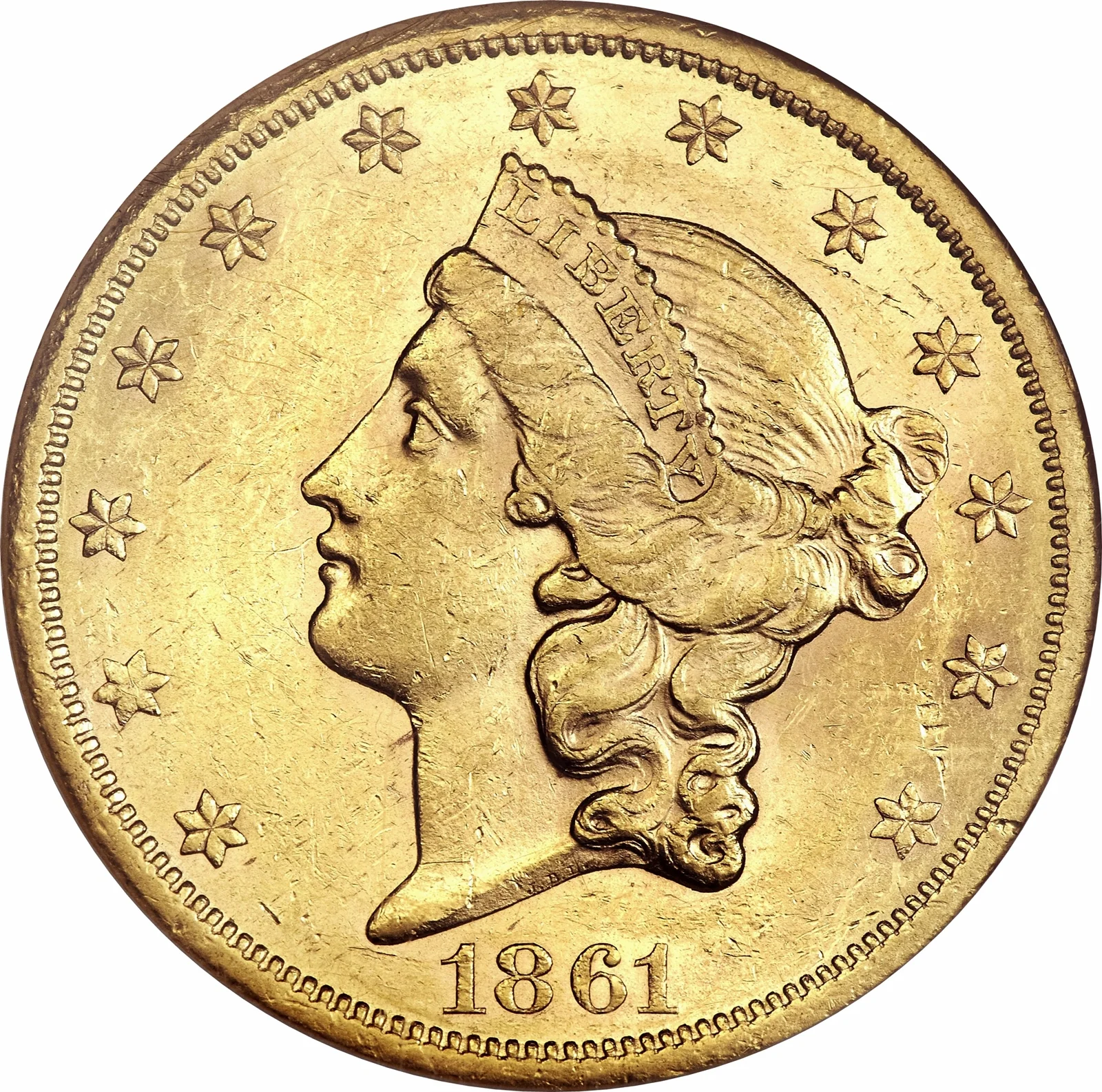
Liberty left, crowned by stars, date beneath.
Inscription:
LIBERTY
1861
1861
Script: Latin
Designer: James Barton Longacre
Reverse
Description:
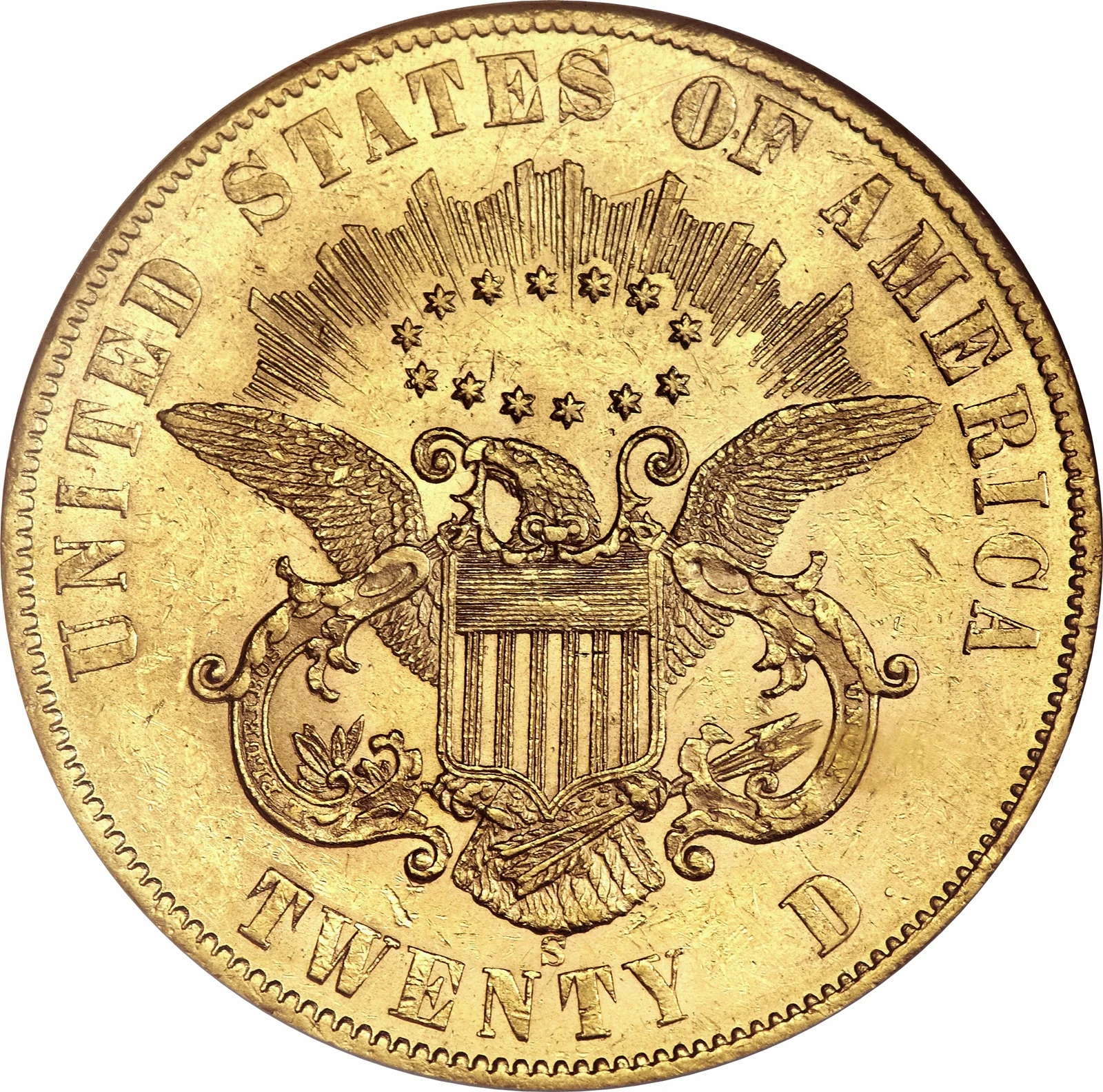
Heraldic eagle with Union shield, clutching arrows and an olive branch, below 13 stars and rays.
Inscription:
UNITED STATES OF AMERICA
E PLURIBUS UNUM
S
TWENTY D
E PLURIBUS UNUM
S
TWENTY D
Script: Latin
Designer: Anthony C. Paquet
Edge
Reeded
Mintings
| Year | Mint Mark | Mintage | Quality | Collection |
|---|---|---|---|---|
| 1861 | — | — | ||
| 1861 | S | 19,250 |
Historical background
In 1861, the United States faced a profound currency crisis triggered by the secession of Southern states and the outbreak of the Civil War. The nation operated without a unified federal paper currency; instead, thousands of state-chartered private banks issued their own banknotes, which circulated at varying discounts based on the perceived soundness of the issuing institution. This system created widespread confusion and inefficiency. Furthermore, the federal government’s finances were strained, as plummeting tariff revenues and a loss of investor confidence made it difficult to fund the war effort through loans alone, pushing the Treasury toward the brink of insolvency.
To address this emergency, Congress passed the Legal Tender Act in February 1862, authorizing the issuance of the first federal paper money not backed by gold or silver, known as “greenbacks.” These notes were declared legal tender for all public and private debts, a revolutionary and controversial step that established a national fiat currency. Simultaneously, to restore confidence and fund the war, the government also continued to borrow by issuing bonds and, through the National Banking Acts of 1863 and 1864, created a system of nationally chartered banks that issued standardized notes backed by U.S. bonds, aiming to drive unreliable state banknotes out of circulation.
Thus, 1861 marked the pivotal beginning of a complete transformation of the American monetary system. The pressures of war forced the federal government to assert unprecedented control over the nation's currency, moving from a decentralized and often chaotic patchwork of private banknotes toward a unified, federally managed paper money system. This shift laid the essential groundwork for the modern financial system and fundamentally altered the relationship between the government, banking, and the economy.
To address this emergency, Congress passed the Legal Tender Act in February 1862, authorizing the issuance of the first federal paper money not backed by gold or silver, known as “greenbacks.” These notes were declared legal tender for all public and private debts, a revolutionary and controversial step that established a national fiat currency. Simultaneously, to restore confidence and fund the war, the government also continued to borrow by issuing bonds and, through the National Banking Acts of 1863 and 1864, created a system of nationally chartered banks that issued standardized notes backed by U.S. bonds, aiming to drive unreliable state banknotes out of circulation.
Thus, 1861 marked the pivotal beginning of a complete transformation of the American monetary system. The pressures of war forced the federal government to assert unprecedented control over the nation's currency, moving from a decentralized and often chaotic patchwork of private banknotes toward a unified, federally managed paper money system. This shift laid the essential groundwork for the modern financial system and fundamentally altered the relationship between the government, banking, and the economy.
💎 Extremely Rare