

1 satang – Thailand
Add to wishlist
Thailand
Context
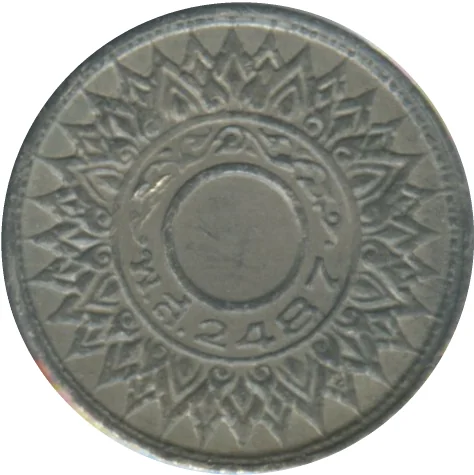
Year: 1944
Thai Year:: 2487
Issuer: Thailand
Ruler: Ananda Mahidol
Currency:
(since 1897)
Demonetized: Yes
Total mintage: 11,920,000
Material
References
Y: #
Numista: #11123
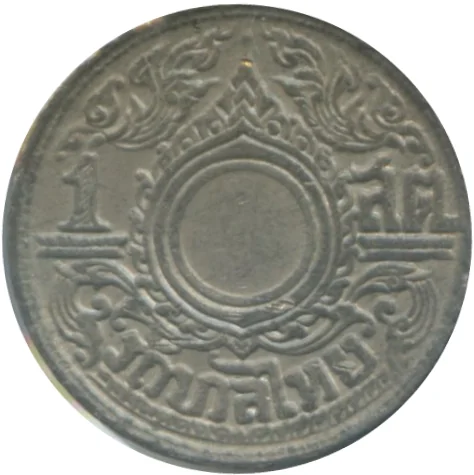
Value
Exchange value: 0.01 THB
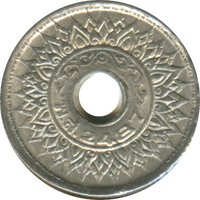
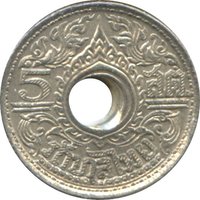
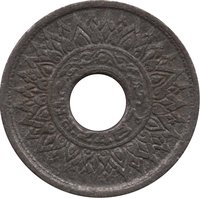
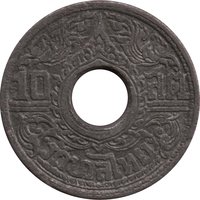
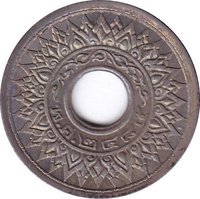
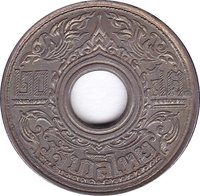
Obverse
Reverse
Edge
Plain
Mintings
| Year | Mint Mark | Mintage | Quality | Collection |
|---|---|---|---|---|
| 1944 | — | 11,920,000 |
Historical background
In 1944, Thailand’s currency situation was defined by the economic distortions of World War II and the country's precarious political alliance with Japan. Following the Japanese invasion in December 1941, Thailand signed a military alliance with Japan and declared war on the Allies. This led to a Japanese-occupied economy, where large occupation costs were imposed on the Thai government, financed primarily by printing money. The Bank of Thailand, established in 1942, was compelled to provide massive credits to the government, leading to a rapid expansion of the money supply and the onset of severe inflation.
The official currency, the baht, remained in circulation but its value was artificially sustained while the economy was redirected to support Japanese military needs. A critical development was the introduction of Japanese "invasion money," known as Japanese government-issued baht, which circulated alongside domestic currency. This further undermined confidence in the monetary system, as the public was aware these notes were unbacked and used to extract Thai resources. Price controls and rationing were implemented to manage shortages, but a thriving black market emerged where real prices soared, reflecting the currency's plummeting purchasing power.
By late 1944, with the war turning against Japan, the Thai economy was under immense strain. The inflationary financing had laid the groundwork for a post-war economic crisis, with foreign reserves depleted and the currency's stability deeply compromised. The clandestine Free Thai Movement, cooperating with the Allies, was already planning for the country's rehabilitation, recognizing that a major monetary reform and the removal of Japanese military currency would be essential first steps after the inevitable Japanese defeat.
The official currency, the baht, remained in circulation but its value was artificially sustained while the economy was redirected to support Japanese military needs. A critical development was the introduction of Japanese "invasion money," known as Japanese government-issued baht, which circulated alongside domestic currency. This further undermined confidence in the monetary system, as the public was aware these notes were unbacked and used to extract Thai resources. Price controls and rationing were implemented to manage shortages, but a thriving black market emerged where real prices soared, reflecting the currency's plummeting purchasing power.
By late 1944, with the war turning against Japan, the Thai economy was under immense strain. The inflationary financing had laid the groundwork for a post-war economic crisis, with foreign reserves depleted and the currency's stability deeply compromised. The clandestine Free Thai Movement, cooperating with the Allies, was already planning for the country's rehabilitation, recognizing that a major monetary reform and the removal of Japanese military currency would be essential first steps after the inevitable Japanese defeat.
🌱 Common