


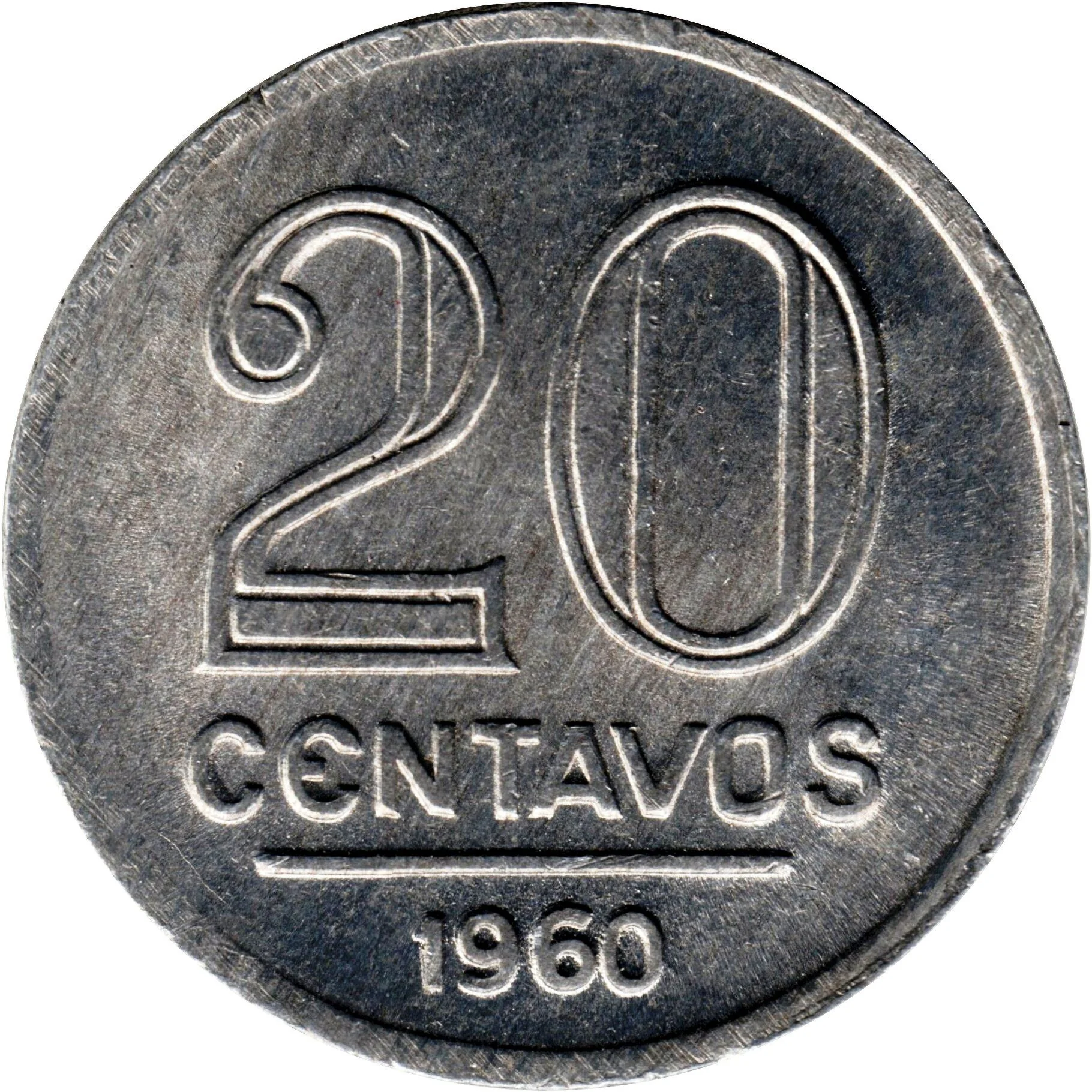
20 Centavos – Brazil
Brazil


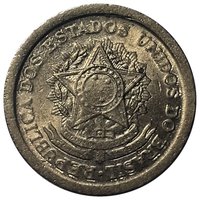
Obverse
Description:
Brazil's state emblem: a central star encircled by 27 smaller stars, the Southern Cross within, flanked by tobacco and coffee plants.
Inscription:
REPUBLICA DOS ESTADOS UNIDOS DO BRASIL
Translation:
Republic of the United States of Brazil
Script: Latin
Language: Portuguese
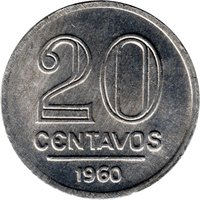
Reverse
Edge
Plain
Mints
| Name | Mark |
|---|---|
| Casa da Moeda do Brasil | — |
Mintings
| Year | Mint Mark | Mintage | Quality | Collection |
|---|---|---|---|---|
| 1956 | — | 6,716,000 | ||
| 1957 | — | 27,110,000 | ||
| 1958 | — | 8,552,000 | ||
| 1959 | — | 4,810,000 | ||
| 1960 | — | 510,000 | ||
| 1961 | — | 2,332,000 |
Historical background
In 1956, Brazil's currency situation was characterized by the cruzeiro operating under a complex system of multiple exchange rates and persistent inflationary pressures. The nation was in the midst of President Juscelino Kubitschek's ambitious "Targets Plan," which prioritized rapid industrialization and the construction of a new capital, Brasília. This expansive development model required massive state investment, much of which was financed by monetary expansion—simply printing more money—leading to a steady devaluation of the currency and eroding purchasing power.
The government managed the cruzeiro through a system of exchange auctions controlled by the Superintendency of Money and Credit (SUMOC). Different rates were applied to various categories of imports and exports, favoring essential goods and capital equipment needed for industrialization while discouraging consumer imports. This created a distorted and bureaucratic foreign exchange market, but it was a deliberate tool to conserve scarce foreign reserves and direct capital toward Kubitschek's development goals. However, these controls also fostered a parallel black market for dollars, where the cruzeiro traded at a significant discount.
Overall, the currency policy of 1956 was one of controlled deterioration, accepting inflation and exchange rate complexity as the cost of accelerated growth. While the strategy successfully fueled an industrial boom, it entrenched structural inflation and set the stage for more severe balance of payments crises in the following decade. The cruzeiro's stability was fundamentally sacrificed to achieve the government's nationalist developmentalist ambitions, marking a pivotal moment in Brazil's long struggle with inflation and external debt.
The government managed the cruzeiro through a system of exchange auctions controlled by the Superintendency of Money and Credit (SUMOC). Different rates were applied to various categories of imports and exports, favoring essential goods and capital equipment needed for industrialization while discouraging consumer imports. This created a distorted and bureaucratic foreign exchange market, but it was a deliberate tool to conserve scarce foreign reserves and direct capital toward Kubitschek's development goals. However, these controls also fostered a parallel black market for dollars, where the cruzeiro traded at a significant discount.
Overall, the currency policy of 1956 was one of controlled deterioration, accepting inflation and exchange rate complexity as the cost of accelerated growth. While the strategy successfully fueled an industrial boom, it entrenched structural inflation and set the stage for more severe balance of payments crises in the following decade. The cruzeiro's stability was fundamentally sacrificed to achieve the government's nationalist developmentalist ambitions, marking a pivotal moment in Brazil's long struggle with inflation and external debt.
Series: 1956 Brazil circulation coins





🌱 Very Common