

100 dollars – Canada
Add to wishlist
Non-circulating coins
Series: The Home Front
Canada
Context
Material
References
KM: #
Numista: #60311
Value
Exchange value: 100 CAD
Bullion value: $1193.98
Inflation-adjusted value: 189.16 CAD
Obverse
Description:
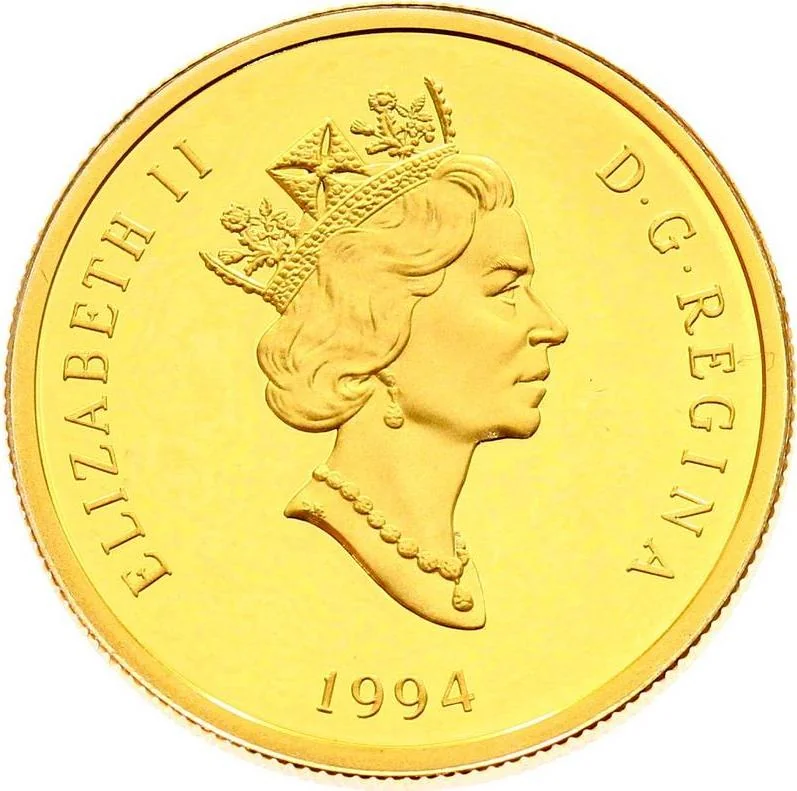
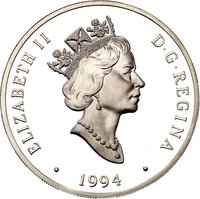
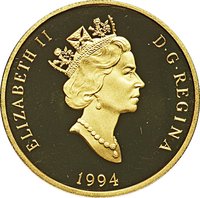
Queen Elizabeth II at 64, wearing the royal diadem and jewels, facing right.
Inscription:
ELIZABETH II D•G•REGINA
1994
1994
Translation:
Elizabeth II, by the Grace of God, Queen
1994
1994
Script: Latin
Language: Latin
Engraver: Dora de Pédery-Hunt
Reverse
Description:
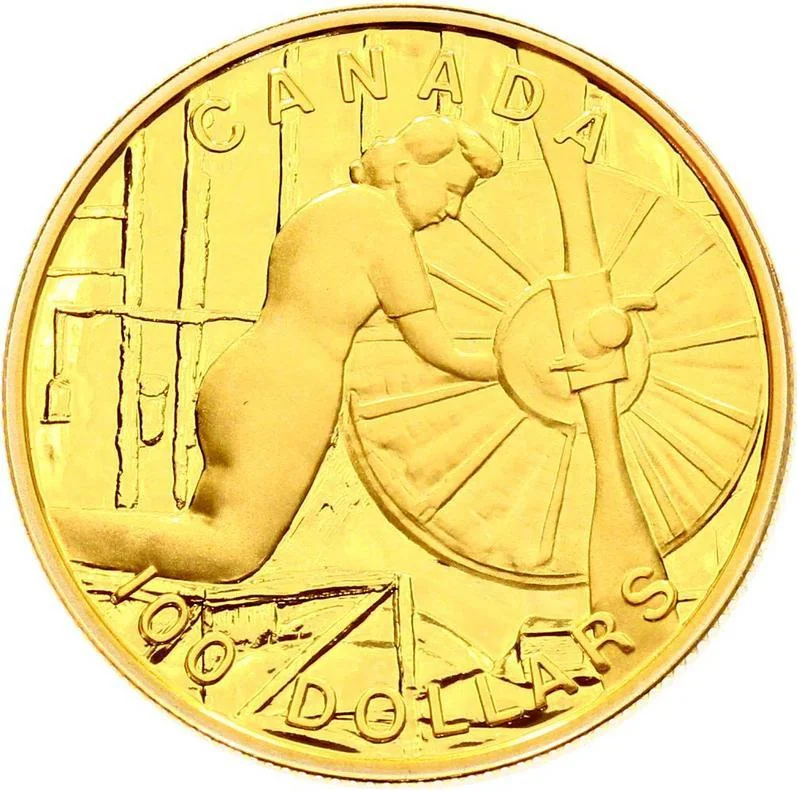
WWI aircraft mechanic, from Clack's painting.
Inscription:
CANADA
100 DOLLARS
100 DOLLARS
Script: Latin
Engravers: Susan Taylor, Ago Aarand
Designer: Paraskevo Clark
Edge
Reeded
Mints
| Name | Mark |
|---|---|
| Royal Canadian Mint of Ottawa | — |
Mintings
| Year | Mint Mark | Mintage | Quality | Collection |
|---|---|---|---|---|
| 1994 | — | 17,603 |
Historical background
In 1994, Canada's currency situation was characterized by a period of significant transition and vulnerability following the tumultuous early 1990s recession. The Canadian dollar, often called the "loonie" after the iconic bird on the one-dollar coin introduced in 1987, was under persistent downward pressure. It traded in a range roughly between 72 and 75 cents U.S., reflecting investor concerns over the country's high public debt and deficit levels, which were among the worst in the G7. This weak currency was a double-edged sword: it bolstered export sectors like manufacturing and forestry by making Canadian goods cheaper abroad, but it also increased the cost of imports and servicing foreign-denominated debt.
The monetary policy landscape was dominated by the Bank of Canada's ongoing commitment to price stability. Under Governor John Crow, the bank had aggressively targeted inflation through high interest rates in the late 1980s and early 1990s, a policy that contributed to the severe recession but was succeeding in taming inflation. By 1994, inflation had been subdued to around 2%, but the bank remained vigilant. The new Governor, Gordon Thiessen, who took office in February 1994, continued this focus, cautiously lowering interest rates to stimulate growth without reigniting inflationary pressures, a delicate balancing act with direct implications for the dollar's value.
Looking forward, the financial pressures of 1994 set the stage for a pivotal shift in fiscal policy. The persistently weak dollar and market skepticism acted as a catalyst for the federal government, led by Finance Minister Paul Martin, to embark on a dramatic program of fiscal consolidation. The landmark 1995 budget would introduce deep spending cuts and a clear plan to eliminate the deficit, a move that ultimately restored international confidence. Therefore, 1994 was the calm before a major storm of reform, a year where the low valuation of the loonie served as a constant reminder of the need for fiscal discipline that would define the remainder of the decade.
The monetary policy landscape was dominated by the Bank of Canada's ongoing commitment to price stability. Under Governor John Crow, the bank had aggressively targeted inflation through high interest rates in the late 1980s and early 1990s, a policy that contributed to the severe recession but was succeeding in taming inflation. By 1994, inflation had been subdued to around 2%, but the bank remained vigilant. The new Governor, Gordon Thiessen, who took office in February 1994, continued this focus, cautiously lowering interest rates to stimulate growth without reigniting inflationary pressures, a delicate balancing act with direct implications for the dollar's value.
Looking forward, the financial pressures of 1994 set the stage for a pivotal shift in fiscal policy. The persistently weak dollar and market skepticism acted as a catalyst for the federal government, led by Finance Minister Paul Martin, to embark on a dramatic program of fiscal consolidation. The landmark 1995 budget would introduce deep spending cuts and a clear plan to eliminate the deficit, a move that ultimately restored international confidence. Therefore, 1994 was the calm before a major storm of reform, a year where the low valuation of the loonie served as a constant reminder of the need for fiscal discipline that would define the remainder of the decade.

✨ Legendary