

500 riels – Cambodia
Add to wishlist
Cambodia
Context
Year: 1994
Thai Year:: 2538
Issuer: Cambodia
Ruler: Norodom Sihanouk
Currency:
(since 1979)
Total mintage: 5,000,000
Material
References
KM: #
Numista: #6024
Value
Exchange value: 500 KHR
Obverse
Description:
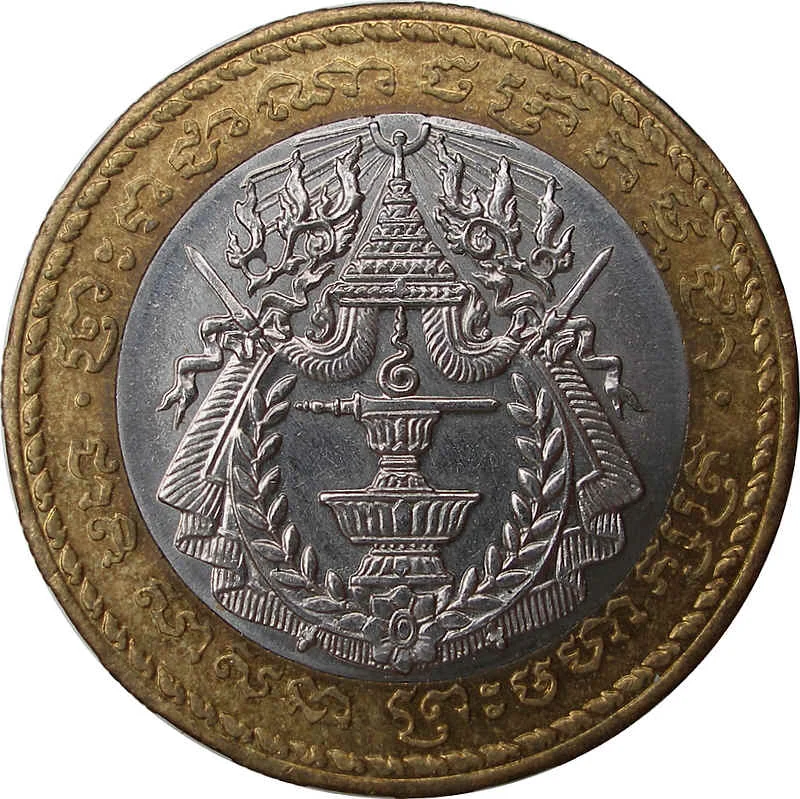
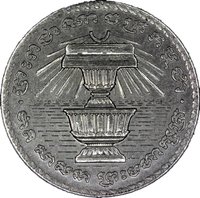
The lesser royal arms of Cambodia.
Reverse
Edge
Segmented reeding
Categories
| Symbols> Coat of Arms |
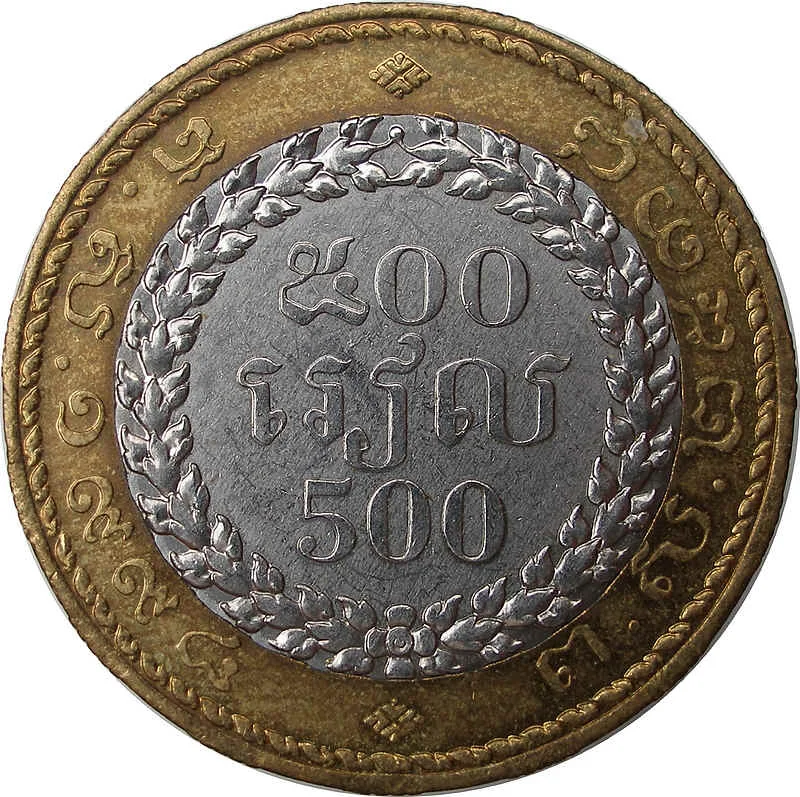
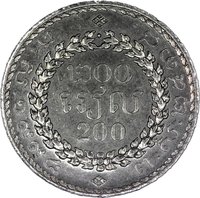
| Symbol> Wreath |
Mints
| Name | Mark |
|---|---|
| Monnaie de Paris | — |
Mintings
| Year | Mint Mark | Mintage | Quality | Collection |
|---|---|---|---|---|
| 1994 | — | 5,000,000 |
Historical background
In 1994, Cambodia's currency situation was characterized by a deeply entrenched dual-system, with the US dollar functioning as the de facto primary currency and the domestic riel occupying a secondary, often marginalized role. Following the collapse of the Khmer Rouge regime and the period of Vietnamese influence, the country was dollarized to an extreme degree. The US dollar was used for large transactions, government finances, urban commerce, and savings, while the Cambodian riel was relegated to small-scale rural transactions and as change for dollar payments. This reflected a profound lack of public confidence in the nascent National Bank of Cambodia and the riel, a legacy of political instability and hyperinflation in the past.
The Royal Government and the newly re-established National Bank of Cambodia (NBC) viewed this extreme dollarization as a major obstacle to economic sovereignty and effective monetary policy. Throughout the early 1990s, and continuing in 1994, authorities pursued a cautious strategy of "de-dollarization" and riel promotion. Key policies included requiring all government expenditures and salaries to be paid in riel, encouraging its use in tax collection, and ensuring a stable exchange rate. The NBC focused on building credibility by maintaining strict control over riel issuance to prevent inflation, a critical step in fostering public trust.
Consequently, 1994 represented a year of fragile transition within a long-term process. The dollar remained overwhelmingly dominant, but the institutional foundations for a national currency were being actively laid. The success of this policy hinged on maintaining political stability and economic growth following the 1993 UN-sponsored elections. The currency situation was a direct barometer of the country's challenging journey from a war-torn, planned economy to a market-oriented system, with the riel's potential revival symbolizing the broader effort to rebuild national institutions and economic independence.
The Royal Government and the newly re-established National Bank of Cambodia (NBC) viewed this extreme dollarization as a major obstacle to economic sovereignty and effective monetary policy. Throughout the early 1990s, and continuing in 1994, authorities pursued a cautious strategy of "de-dollarization" and riel promotion. Key policies included requiring all government expenditures and salaries to be paid in riel, encouraging its use in tax collection, and ensuring a stable exchange rate. The NBC focused on building credibility by maintaining strict control over riel issuance to prevent inflation, a critical step in fostering public trust.
Consequently, 1994 represented a year of fragile transition within a long-term process. The dollar remained overwhelmingly dominant, but the institutional foundations for a national currency were being actively laid. The success of this policy hinged on maintaining political stability and economic growth following the 1993 UN-sponsored elections. The currency situation was a direct barometer of the country's challenging journey from a war-torn, planned economy to a market-oriented system, with the riel's potential revival symbolizing the broader effort to rebuild national institutions and economic independence.
🌱 Very Common