

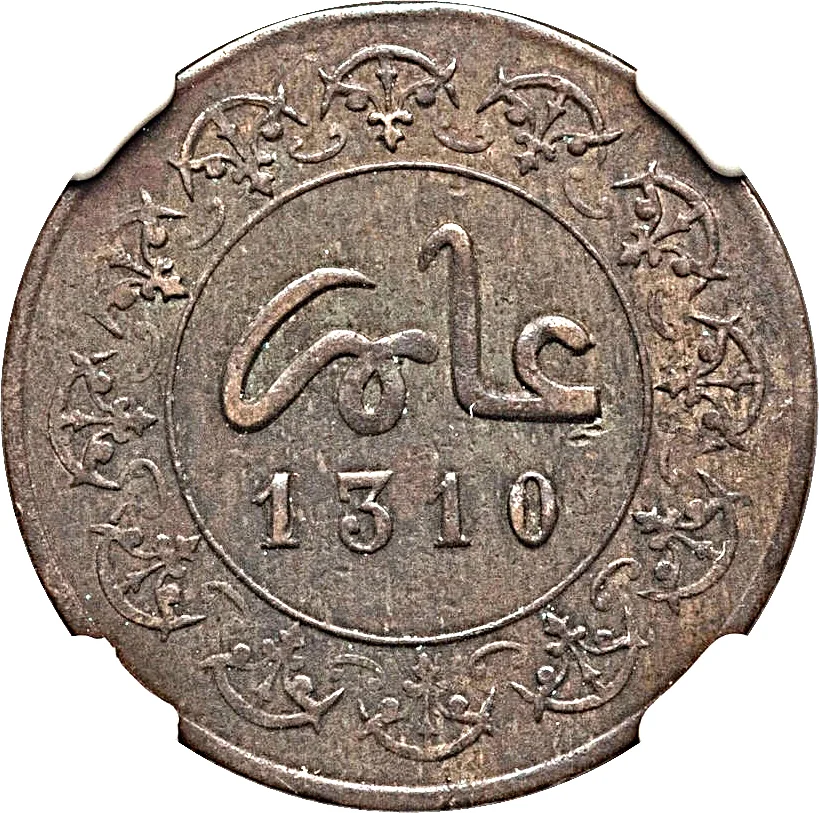
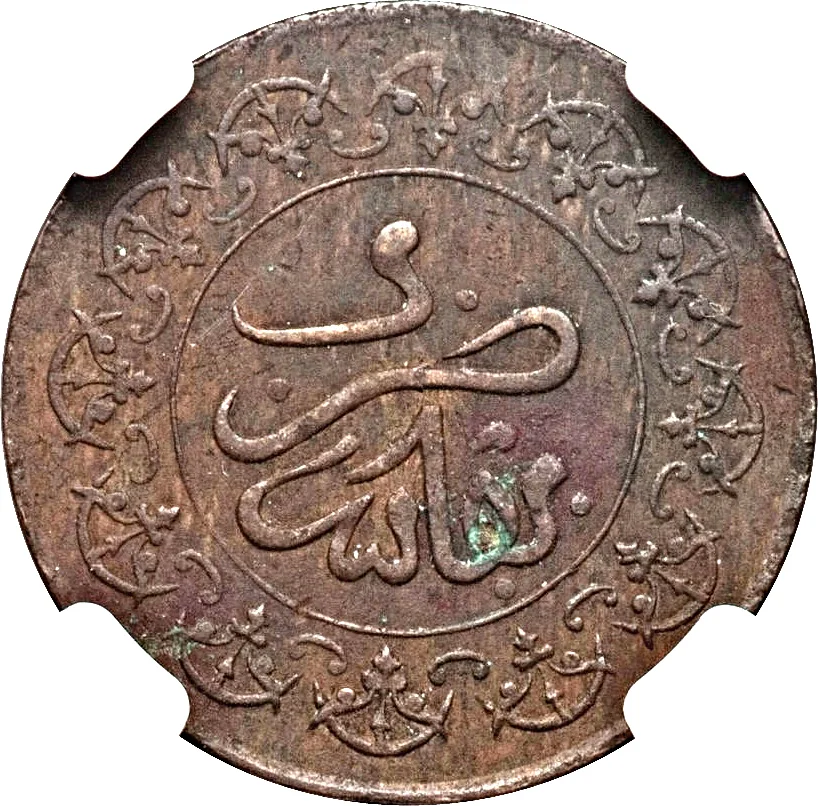
1 falus – Morocco
Add to wishlist
Morocco
Context
Material
References
Y: #
Numista: #60074
Value
Exchange value: 1⁄200 MAH
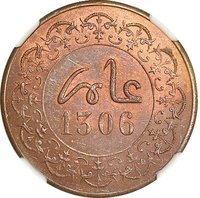
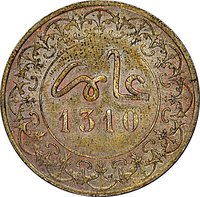
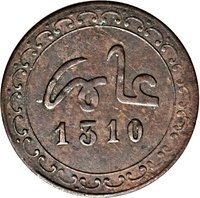
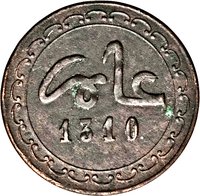
Obverse
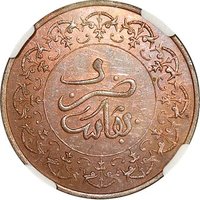
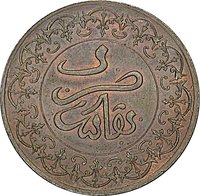
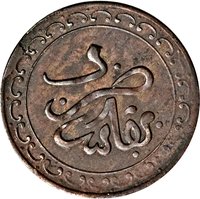
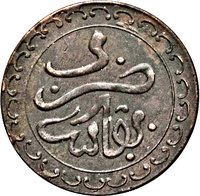
Reverse
Edge
Plain
Mintings
| Year | Mint Mark | Mintage | Quality | Collection |
|---|---|---|---|---|
| 1889 | — | — | ||
| 1893 | — | — |
Historical background
In 1889, Morocco's currency situation was characterized by a complex and unstable monetary duality. The country circulated both a domestic silver coinage, primarily the dirham and the rial, and a variety of foreign currencies, most notably the Spanish peseta and the British sovereign. This lack of a unified, state-controlled currency system created chronic commercial confusion and facilitated economic exploitation. The value of coins was determined by their intrinsic metal content and weight, leading to constant fluctuations and arbitrage, which undermined both domestic trade and Morocco's financial sovereignty.
This monetary chaos was a direct symptom of Morocco's deepening political and fiscal crisis within the international sphere. The Alawite state, weakened by internal rebellion and immense foreign debt, had lost control of its finances. Following the 1880 Madrid Conference, European powers had secured extensive commercial and legal privileges (capitulations). By 1889, France, Spain, and Britain were actively competing for economic dominance, and their currencies circulated freely, effectively creating spheres of monetary influence. The Moroccan government's inability to mint sufficient, high-quality coinage to meet demand further ceded monetary authority to foreign interests.
Consequently, the currency situation of 1889 was a critical pressure point leading toward the country's eventual colonization. The monetary anarchy hampered economic development, frustrated foreign investors and creditors, and became a key pretext for European intervention to "stabilize" the country's finances. Within two decades, this financial control would formalize into the 1906 Algeciras Conference, which placed Morocco's state bank under international supervision, and ultimately the establishment of the French and Spanish protectorates in 1912, which finally imposed modern, unified currency systems.
This monetary chaos was a direct symptom of Morocco's deepening political and fiscal crisis within the international sphere. The Alawite state, weakened by internal rebellion and immense foreign debt, had lost control of its finances. Following the 1880 Madrid Conference, European powers had secured extensive commercial and legal privileges (capitulations). By 1889, France, Spain, and Britain were actively competing for economic dominance, and their currencies circulated freely, effectively creating spheres of monetary influence. The Moroccan government's inability to mint sufficient, high-quality coinage to meet demand further ceded monetary authority to foreign interests.
Consequently, the currency situation of 1889 was a critical pressure point leading toward the country's eventual colonization. The monetary anarchy hampered economic development, frustrated foreign investors and creditors, and became a key pretext for European intervention to "stabilize" the country's finances. Within two decades, this financial control would formalize into the 1906 Algeciras Conference, which placed Morocco's state bank under international supervision, and ultimately the establishment of the French and Spanish protectorates in 1912, which finally imposed modern, unified currency systems.
Series: 1889 Morocco circulation coins

💎 Extremely Rare