

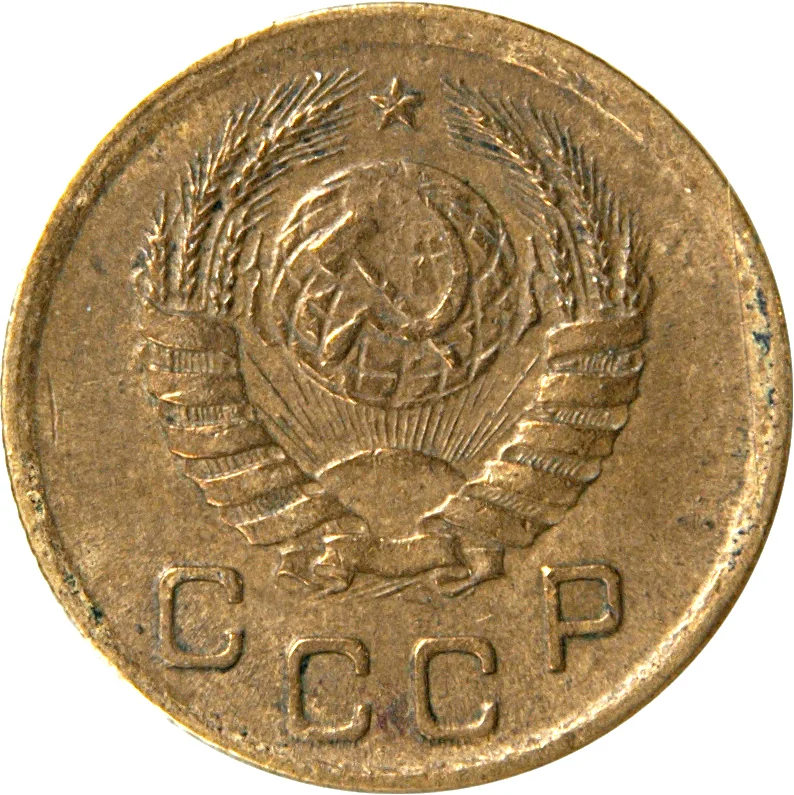
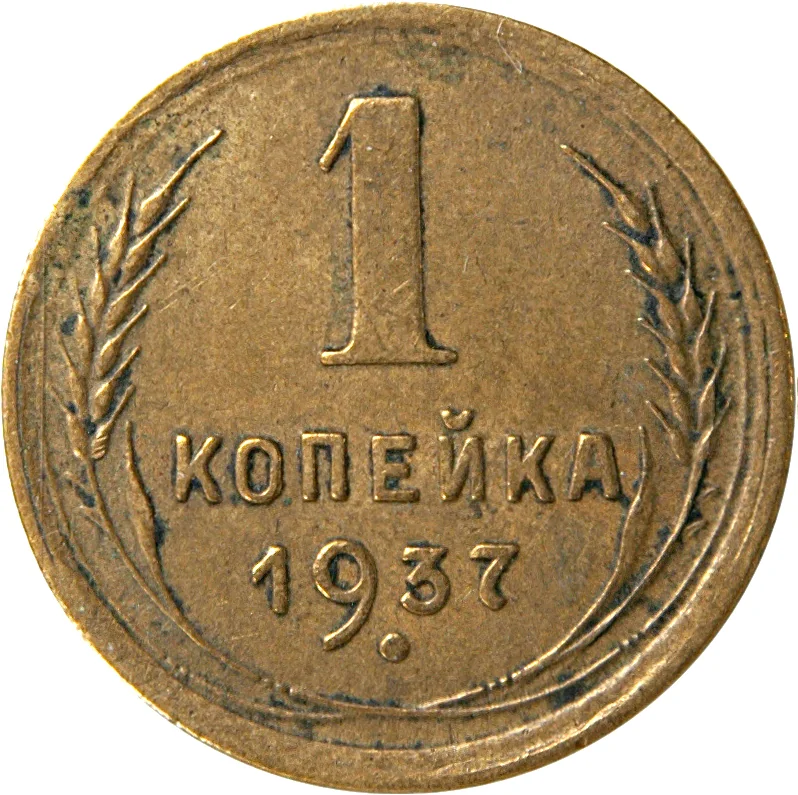
1 kopeck – Soviet Union
Add to wishlist
Russia
Context
Years: 1937–1946
Country: Russia
Issuer: Soviet Union
Period:
(1922—1991)
Currency:
(1924—1947)
Demonetized: Yes
Material
Diameter: 15 mm
Weight: 1 g
Thickness: 0.9 mm
Shape: Round
Composition: Aluminium bronze
Magnetic: No
Technique: Milled
Alignment: Medal alignment
flip
References
Y: #
Numista: #5988
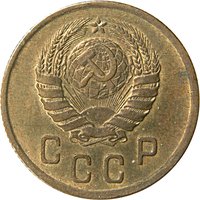
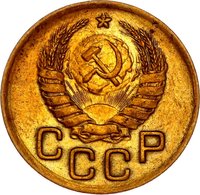
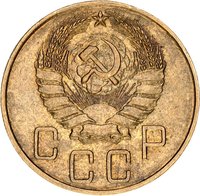
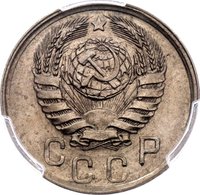
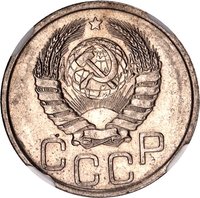
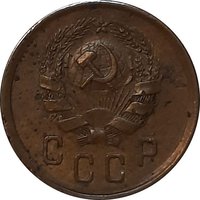
Obverse
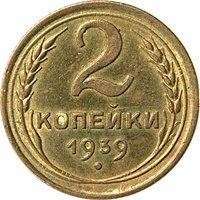
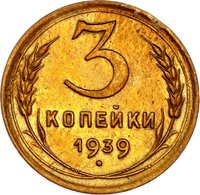
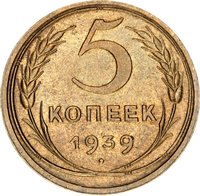
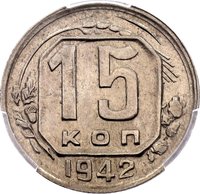
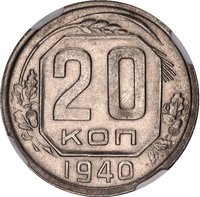
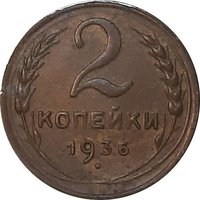
Reverse
Edge
Reeded
Categories
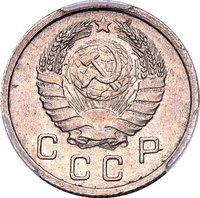
| Symbols> Coat of Arms |
| Symbol> Hammer and sickle |
| Symbol> Wreath |
Mintings
| Year | Mint Mark | Mintage | Quality | Collection |
|---|---|---|---|---|
| 1937 | — | — | ||
| 1938 | — | — | ||
| 1939 | — | — | ||
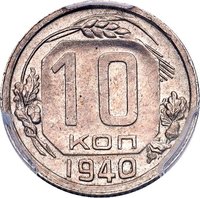
| 1940 | — | — | ||
| 1941 | — | — | ||
| 1945 | — | — | ||
| 1946 | — | — |
Historical background
In 1937, the Soviet Union’s currency system was a product of its unique command economy, characterized by strict state control, chronic shortages, and a complex duality between cash and non-cash money. The ruble was not a convertible currency on world markets and its value was administratively set by the state, bearing little relation to its actual purchasing power or to foreign exchange rates. The economy operated on a two-circuit monetary system: non-cash "bank money" was used for transactions between state enterprises according to the Five-Year Plan, while cash rubles were used to pay wages and for transactions in the limited consumer sector. This separation was intended to prevent inflationary pressures from the consumer sphere from disrupting industrial planning.
The year fell within the tumultuous period of the Second Five-Year Plan (1933–1937) and the height of the Great Purge, which also impacted the financial bureaucracy. Despite official claims of stability, the population experienced significant hidden inflation. While prices for rationed goods in state stores were fixed, the availability of these goods was severely limited, forcing most citizens to rely more heavily on the collective farm markets (kolkhoznye rynki). In these markets, prices were determined by supply and demand and were substantially higher, often several times the state price for bread or meat, effectively eroding real wages. This created a pervasive gap between the official value of the ruble and the reality of its purchasing power for everyday citizens.
Furthermore, 1937 saw the culmination of a major secret operation by the NKVD to withdraw currency from circulation, linked to the political terror. Under the pretext of removing "counter-revolutionary elements," vast sums of cash were confiscated from arrested individuals and from the population during house searches, which also served to mop up excess liquidity. Economically, the state focused its resources on heavy industry and rearmament, with the shadow of looming war dictating priorities. Consequently, the currency situation for the average Soviet citizen was one of surface stability masking widespread scarcity, where access to goods was a far more pressing concern than the nominal number of rubles one possessed.
The year fell within the tumultuous period of the Second Five-Year Plan (1933–1937) and the height of the Great Purge, which also impacted the financial bureaucracy. Despite official claims of stability, the population experienced significant hidden inflation. While prices for rationed goods in state stores were fixed, the availability of these goods was severely limited, forcing most citizens to rely more heavily on the collective farm markets (kolkhoznye rynki). In these markets, prices were determined by supply and demand and were substantially higher, often several times the state price for bread or meat, effectively eroding real wages. This created a pervasive gap between the official value of the ruble and the reality of its purchasing power for everyday citizens.
Furthermore, 1937 saw the culmination of a major secret operation by the NKVD to withdraw currency from circulation, linked to the political terror. Under the pretext of removing "counter-revolutionary elements," vast sums of cash were confiscated from arrested individuals and from the population during house searches, which also served to mop up excess liquidity. Economically, the state focused its resources on heavy industry and rearmament, with the shadow of looming war dictating priorities. Consequently, the currency situation for the average Soviet citizen was one of surface stability masking widespread scarcity, where access to goods was a far more pressing concern than the nominal number of rubles one possessed.
🌱 Very Common