

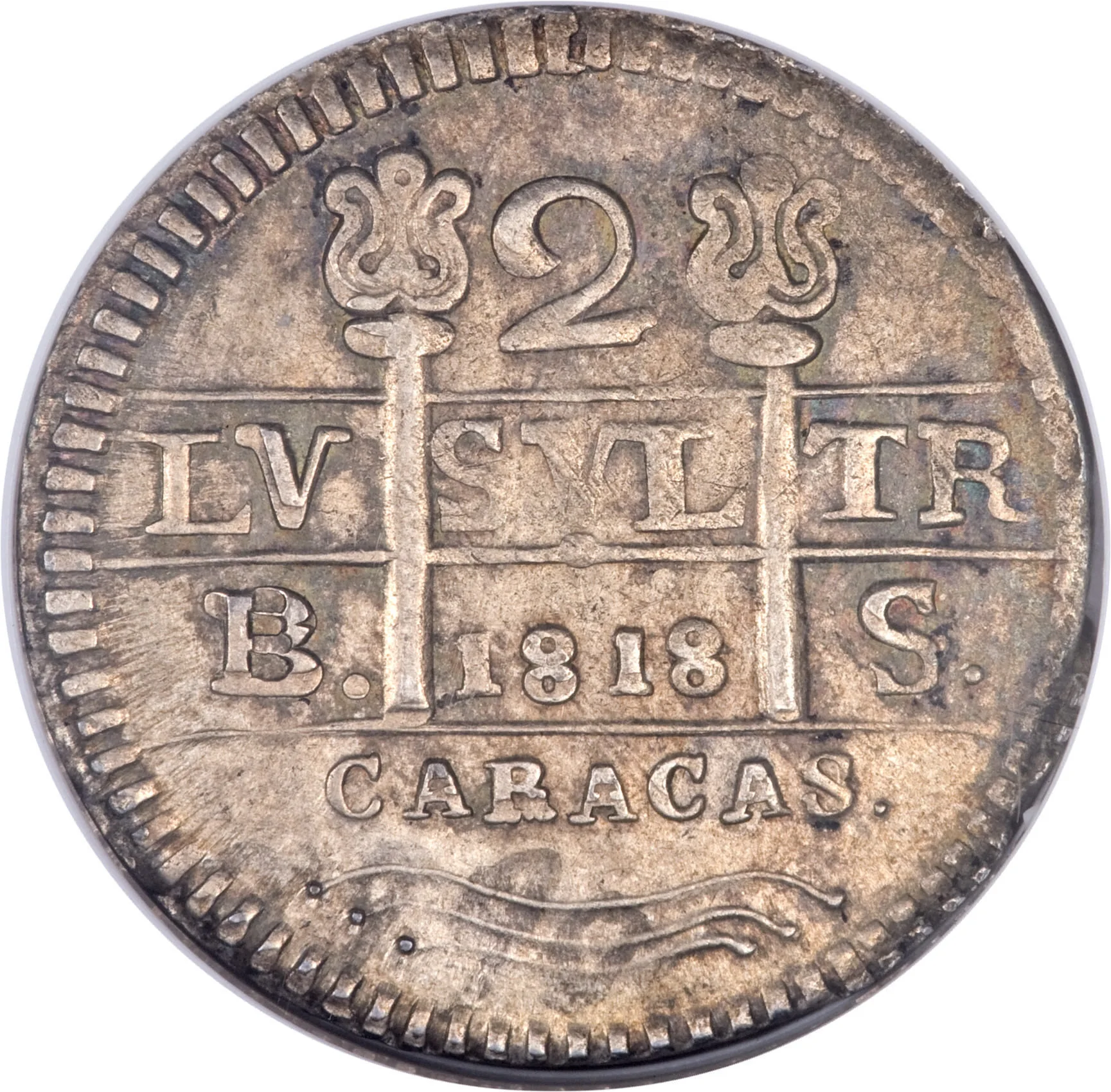
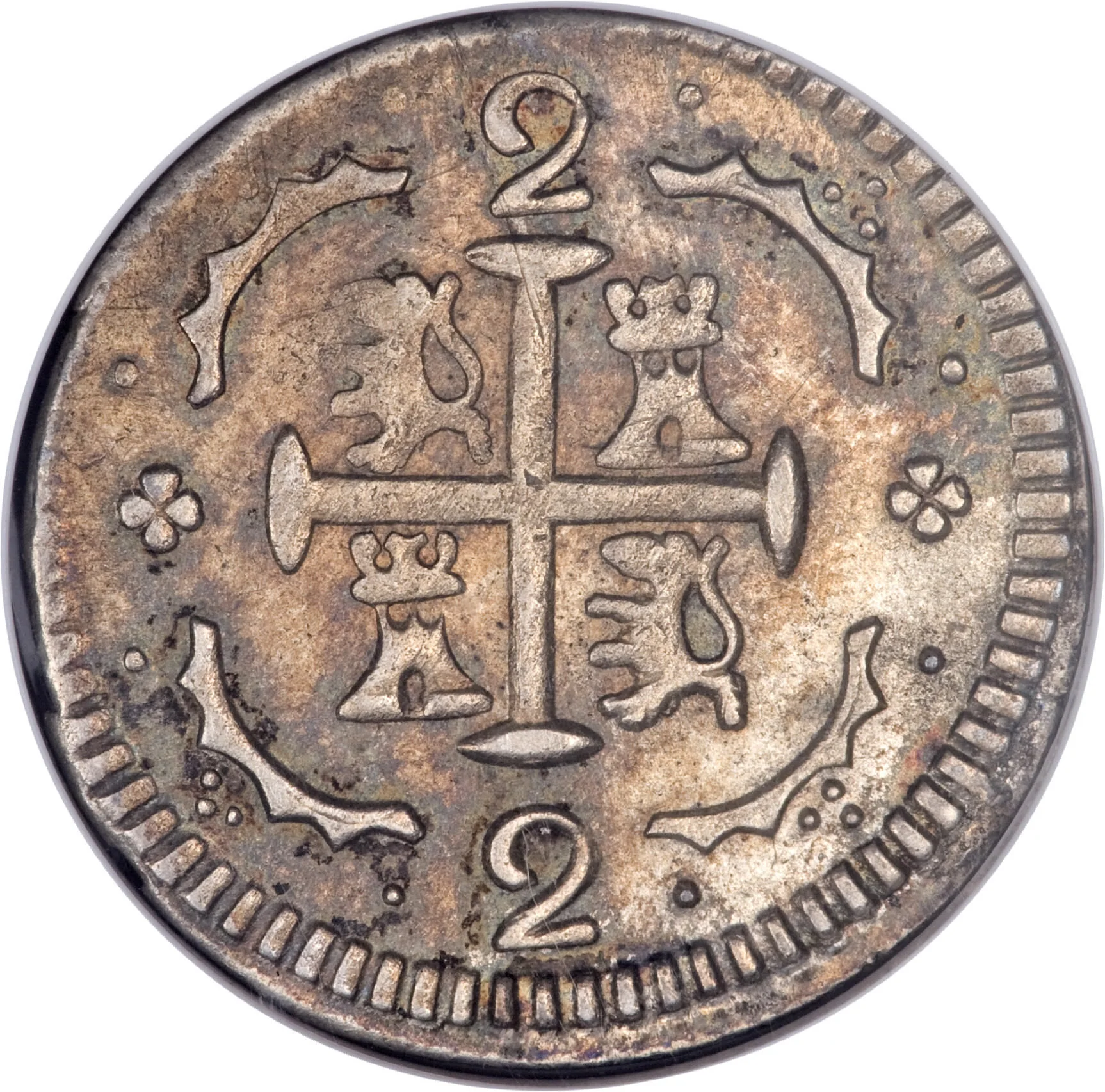
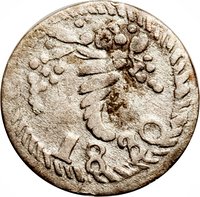
Obverse
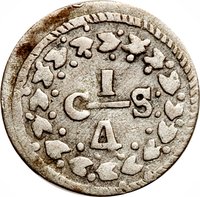
Reverse
Edge
Mints
| Name | Mark |
|---|---|
| Caracas | — |
Mintings
| Year | Mint Mark | Mintage | Quality | Collection |
|---|---|---|---|---|
| 1830 | — | 268,000 |
Historical background
In 1830, Caracas found itself at the financial heart of a nascent and fragile republic—the newly independent Republic of Venezuela, which had just seceded from Gran Colombia. The currency situation was chaotic and transitional, reflecting the economic turmoil of the independence wars. The monetary landscape was a disjointed patchwork, with various forms of money in simultaneous circulation: debased and clipped Spanish colonial coins (like pesos and reales), a limited supply of foreign coins (particularly British sovereigns and French francs), and a concerning volume of paper money issued during the Gran Colombian period, which held little public confidence and was rapidly depreciating.
This monetary confusion was a direct consequence of a bankrupt state treasury and the severe disruption of the vital agricultural export economy, particularly cacao. With minimal precious metal reserves to mint new coins and a lack of centralized monetary authority, the government of President José Antonio Páez faced the immediate challenge of establishing financial sovereignty and stability. Barter remained a common practice in many transactions, while in commercial circles, exchange rates fluctuated wildly based on the perceived quality and origin of each physical coin, making trade cumbersome and unpredictable.
In response, the Páez administration took decisive steps in 1830 to impose order, laying the foundation for a national currency. The government demonetized the unstable Gran Colombian paper money and, through a decree on March 29, formally adopted the silver peso fuerte (strong peso) as the official monetary unit, divided into 10 reales. While the aspiration was a unified silver standard, the practical reality in Caracas' markets for years thereafter remained one of slow transition, as the state struggled to procure enough bullion to mint sufficient quantities of the new national coinage to fully displace the heterogeneous mix of old and foreign currencies in everyday use.
This monetary confusion was a direct consequence of a bankrupt state treasury and the severe disruption of the vital agricultural export economy, particularly cacao. With minimal precious metal reserves to mint new coins and a lack of centralized monetary authority, the government of President José Antonio Páez faced the immediate challenge of establishing financial sovereignty and stability. Barter remained a common practice in many transactions, while in commercial circles, exchange rates fluctuated wildly based on the perceived quality and origin of each physical coin, making trade cumbersome and unpredictable.
In response, the Páez administration took decisive steps in 1830 to impose order, laying the foundation for a national currency. The government demonetized the unstable Gran Colombian paper money and, through a decree on March 29, formally adopted the silver peso fuerte (strong peso) as the official monetary unit, divided into 10 reales. While the aspiration was a unified silver standard, the practical reality in Caracas' markets for years thereafter remained one of slow transition, as the state struggled to procure enough bullion to mint sufficient quantities of the new national coinage to fully displace the heterogeneous mix of old and foreign currencies in everyday use.
✨ Legendary