

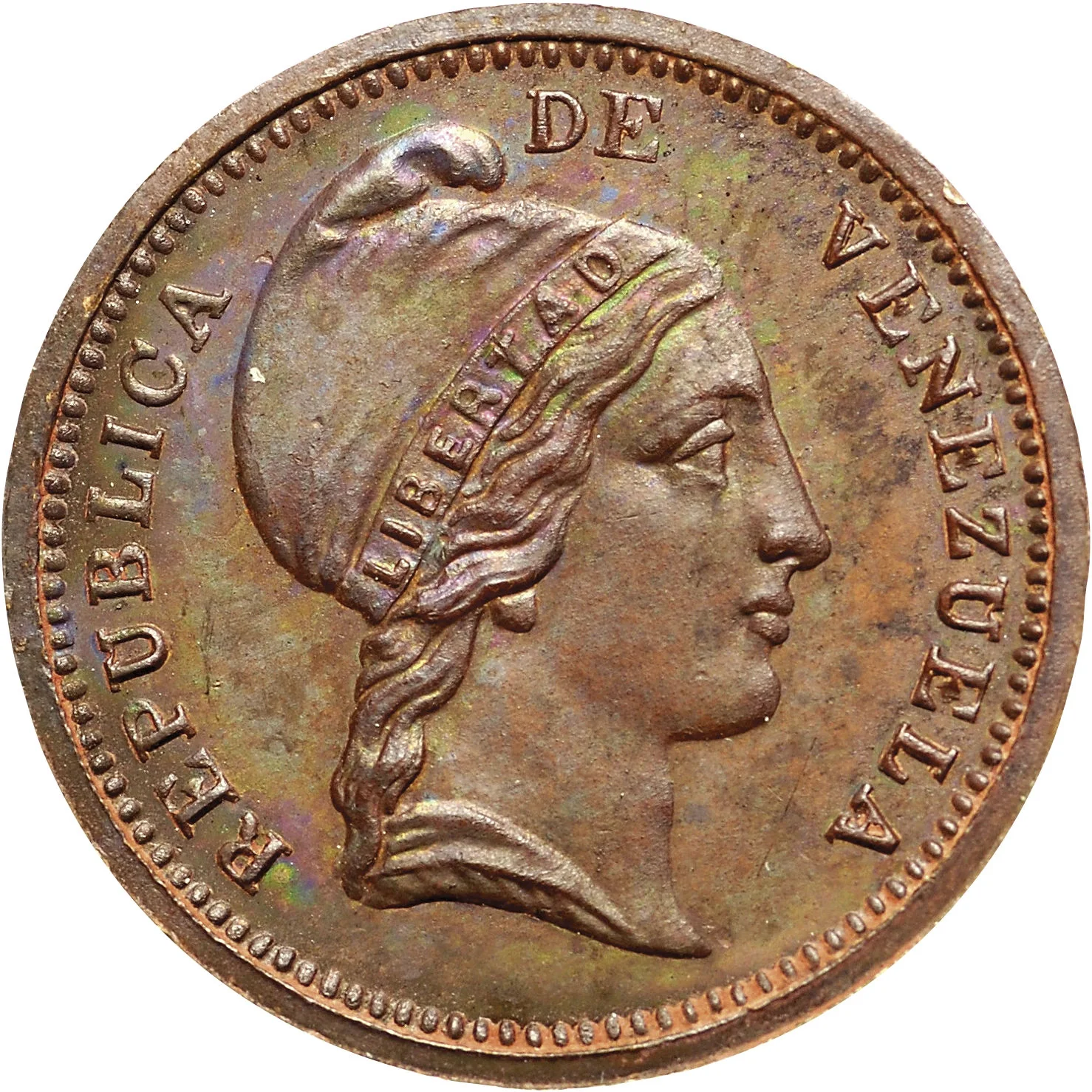
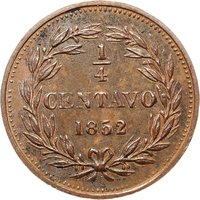
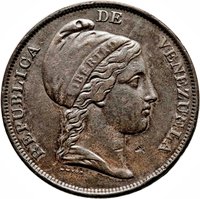
Obverse
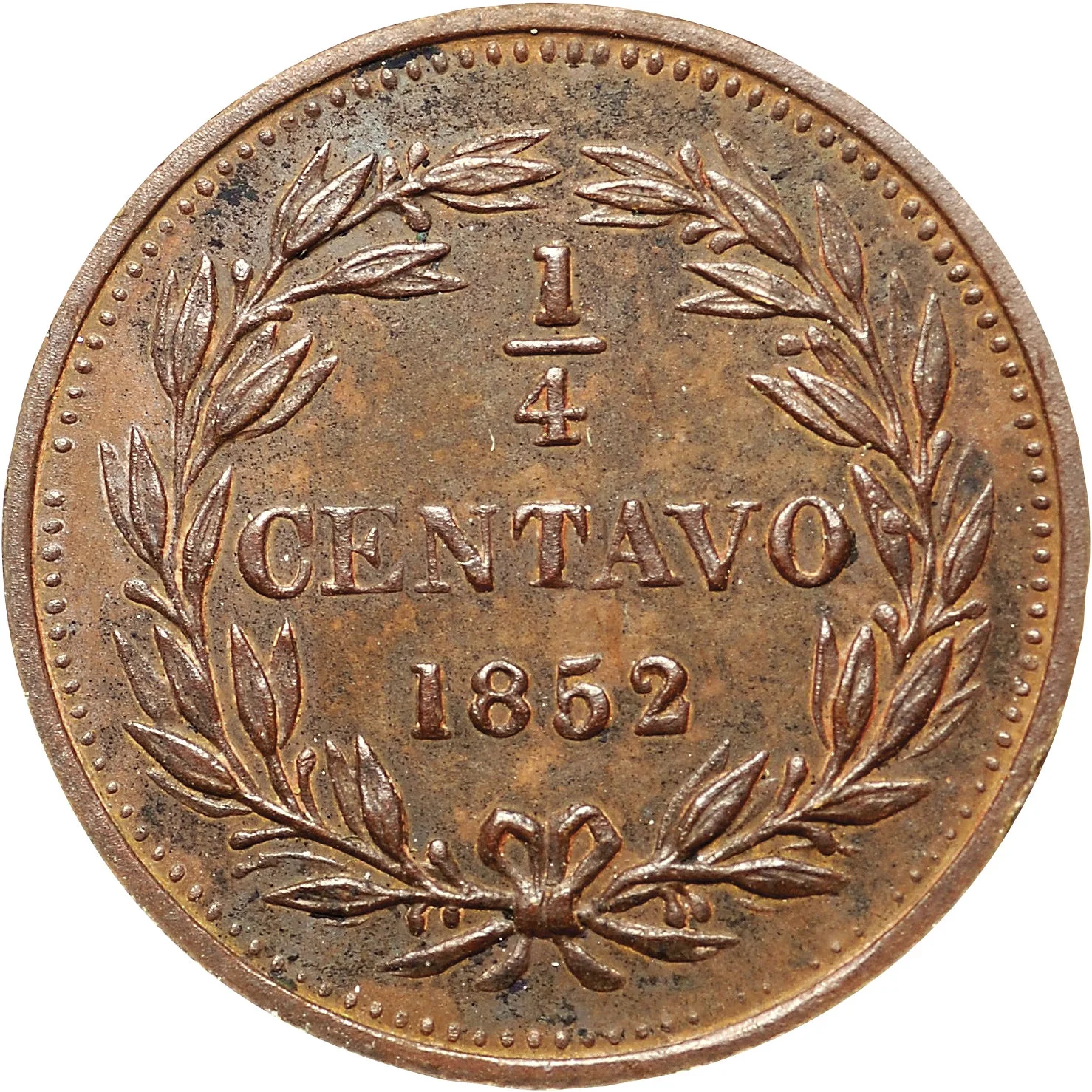
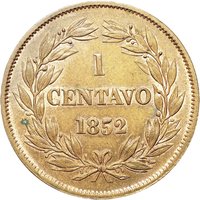
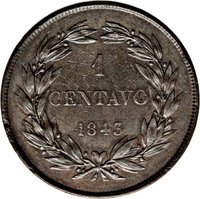
Reverse
Edge
Diagonally reeded edge
Mints
| Name | Mark |
|---|---|
| Royal Mint (Tower Hill) | — |
Mintings
| Year | Mint Mark | Mintage | Quality | Collection |
|---|---|---|---|---|
| 1852 | — | 4,000,000 |
Historical background
In 1852, Venezuela operated under a complex and fragmented monetary system, a legacy of its colonial past and the turbulent early decades of independence. The official currency was the silver Venezuelan peso, divided into 8 reales, which was theoretically tied to the global bimetallic standard. However, the domestic economy suffered from a severe shortage of precious metal coinage. This scarcity was due to limited domestic minting capacity, chronic trade deficits that drained silver abroad, and the hoarding of specie by a cautious populace. Consequently, the physical money in daily circulation was a chaotic mix of worn Spanish colonial coins, coins from other Latin American nations (like Colombian and Peruvian pesos), and even cut pieces of foreign silver.
To fill the void, a vast quantity of low-value copper coinage and privately issued paper money, known as papel moneda, circulated widely. This paper, issued by provincial authorities, merchant houses, and even military commanders, was often of dubious credit and subject to wild fluctuations in value. The result was a multi-tiered system where transactions were negotiated based on the type of currency being used, leading to confusion, rampant counterfeiting, and significant transaction costs. The value of these substitute currencies varied dramatically by region, undermining national economic integration and hindering commerce.
This unstable environment reflected the broader political and economic weaknesses of the era. The government of President José Gregorio Monagas, while focused on major political reforms like the abolition of slavery, lacked the administrative strength and fiscal discipline to impose a uniform, trusted currency. The monetary chaos of 1852 thus exemplified the challenges of building a modern nation-state, where economic credibility was as elusive as political stability, and would persist as a critical issue for successive Venezuelan governments throughout the 19th century.
To fill the void, a vast quantity of low-value copper coinage and privately issued paper money, known as papel moneda, circulated widely. This paper, issued by provincial authorities, merchant houses, and even military commanders, was often of dubious credit and subject to wild fluctuations in value. The result was a multi-tiered system where transactions were negotiated based on the type of currency being used, leading to confusion, rampant counterfeiting, and significant transaction costs. The value of these substitute currencies varied dramatically by region, undermining national economic integration and hindering commerce.
This unstable environment reflected the broader political and economic weaknesses of the era. The government of President José Gregorio Monagas, while focused on major political reforms like the abolition of slavery, lacked the administrative strength and fiscal discipline to impose a uniform, trusted currency. The monetary chaos of 1852 thus exemplified the challenges of building a modern nation-state, where economic credibility was as elusive as political stability, and would persist as a critical issue for successive Venezuelan governments throughout the 19th century.
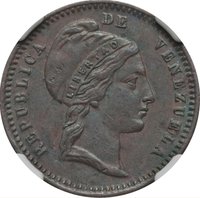
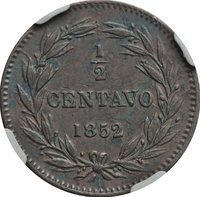
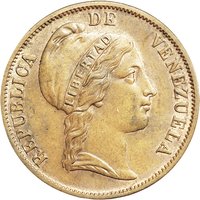
💎 Extremely Rare