

2000 Lei – Romania
Romania
Context

Material
Diameter: 24 mm
Weight: 5.1 g
Thickness: 1.55 mm
Shape: Round
Composition: Nickel brass
Magnetic: No
Technique: Milled
Alignment: Coin alignment
flip
References
KM: #Click to copy to clipboard69
Numista: #5927
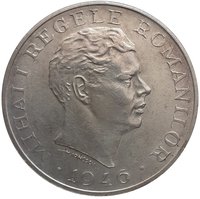
Obverse
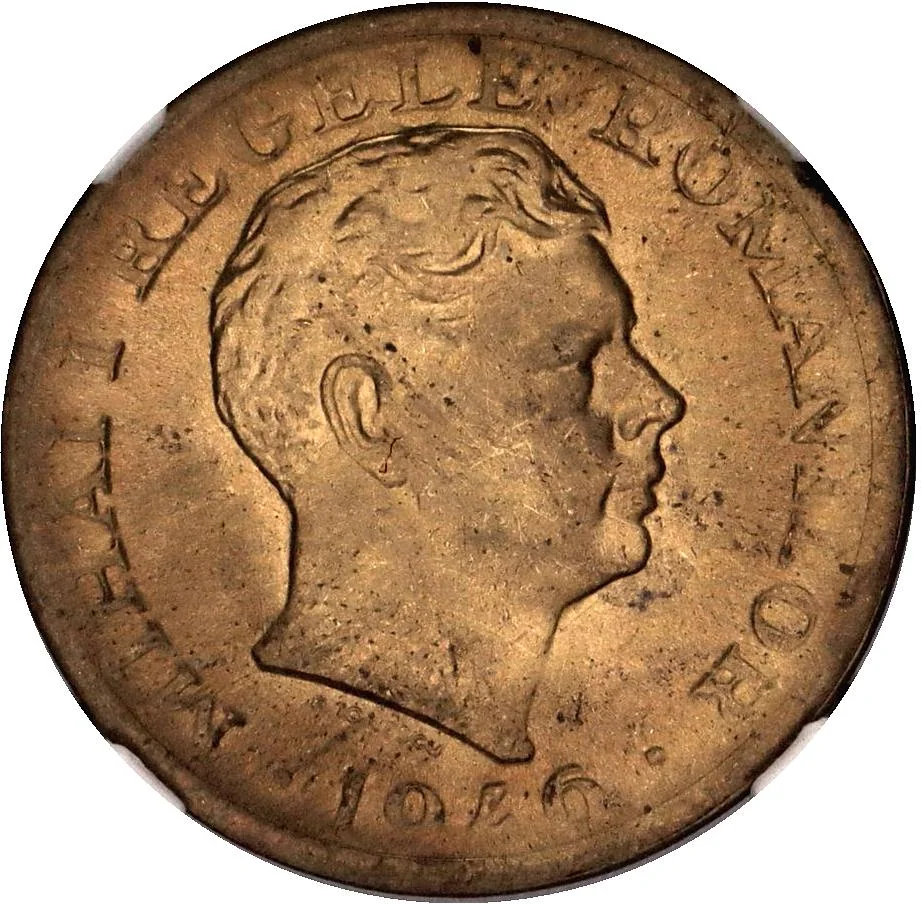
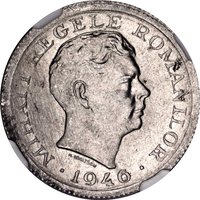
Description:
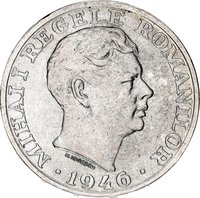
Right, engraver below cut.
Inscription:
MIHAI I REGELE ROMANILOR
1946
H. IONESCU
1946
H. IONESCU
Translation:
Michael I King of the Romanians
1946
H. Ionescu
1946
H. Ionescu
Script: Latin
Language: Romanian
Engraver: Haralambie Ionescu
Reverse
Edge
Categories
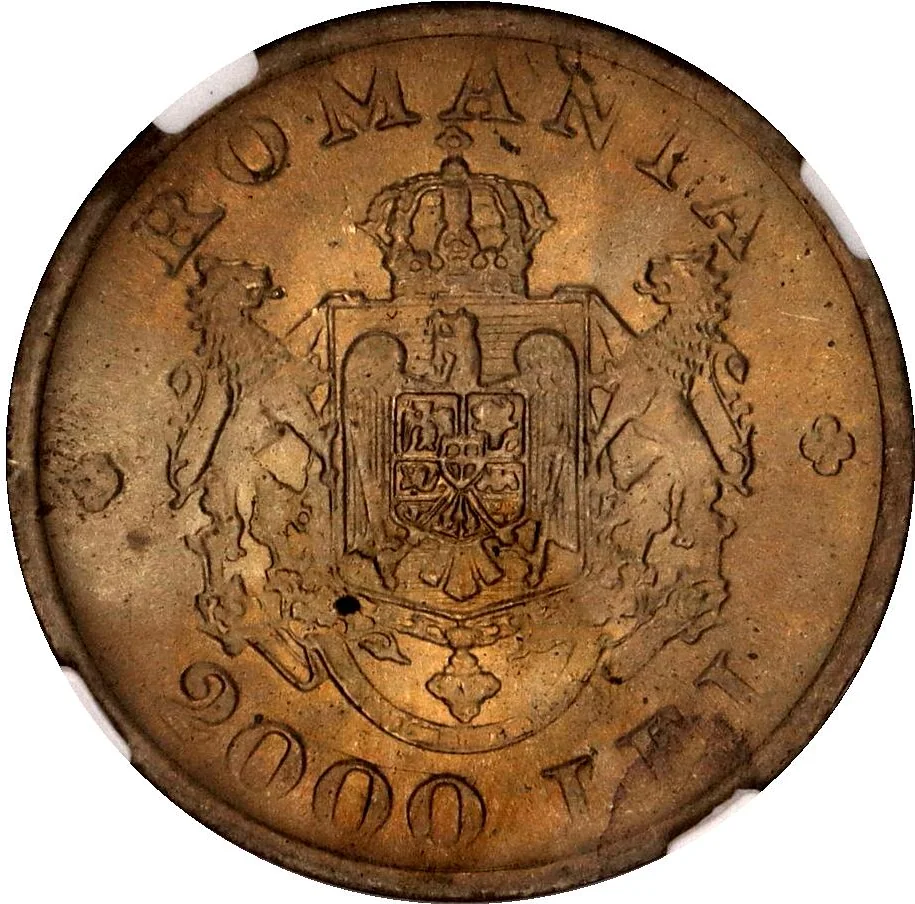
| Symbols> Coat of Arms |
| Person> Monarch |
Mints
| Name | Mark |
|---|---|
| State Mint | — |
Mintings
| Year | Mint Mark | Mintage | Quality | Collection |
|---|---|---|---|---|
| 1946 | — | 24,619,000 |
Historical background
In 1946, Romania was in the throes of a severe monetary and economic crisis, a direct consequence of the immense physical and financial destruction of World War II. The National Bank, under the control of the Soviet-dominated government, had resorted to massive currency issuance to cover state deficits, including war reparations to the USSR and the costs of a burgeoning state apparatus. This led to runaway hyperinflation, rendering the pre-war Leu virtually worthless; prices could double in a matter of hours, and citizens needed sacks of banknotes for basic goods, devastating savings and wages.
The situation was deliberately chaotic, with multiple currencies in circulation. Alongside the devalued official lei, the Soviet Red Army ruble held forced legal tender status, a symbol of occupation and economic extraction. Furthermore, the government issued a new, separate currency for the recently reacquired region of Northern Transylvania. This deliberate fragmentation of the monetary space undermined any remaining public confidence and facilitated the state's consolidation of control over the economy, paving the way for a radical solution.
This solution arrived in mid-1947, but was prepared in 1946: a full-scale currency reform. The background of 1946 is thus one of intentional destabilization, setting the stage for the communist authorities to annihilate the old economic order. The planned reform, enacted in August 1947, would not be a simple redenomination but a confiscatory tool. It drastically limited the amount of old lei that could be exchanged for the new currency, effectively wiping out the savings of the former middle classes, peasants, and anyone deemed an enemy of the new regime, completing the financial groundwork for a socialist command economy.
The situation was deliberately chaotic, with multiple currencies in circulation. Alongside the devalued official lei, the Soviet Red Army ruble held forced legal tender status, a symbol of occupation and economic extraction. Furthermore, the government issued a new, separate currency for the recently reacquired region of Northern Transylvania. This deliberate fragmentation of the monetary space undermined any remaining public confidence and facilitated the state's consolidation of control over the economy, paving the way for a radical solution.
This solution arrived in mid-1947, but was prepared in 1946: a full-scale currency reform. The background of 1946 is thus one of intentional destabilization, setting the stage for the communist authorities to annihilate the old economic order. The planned reform, enacted in August 1947, would not be a simple redenomination but a confiscatory tool. It drastically limited the amount of old lei that could be exchanged for the new currency, effectively wiping out the savings of the former middle classes, peasants, and anyone deemed an enemy of the new regime, completing the financial groundwork for a socialist command economy.
🌱 Very Common