

Haiti
Context
Years: 1907–1908
Issuer: Haiti 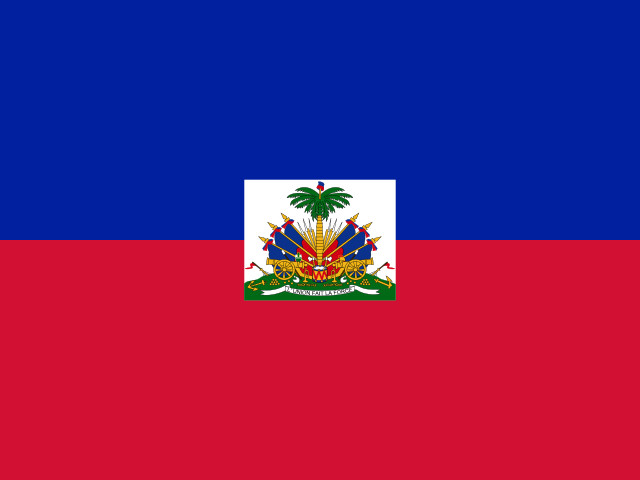
Period:
(1859—1957)
Currency:
(since 1872)
Demonetized: Yes
Total mintage: 2,800,000
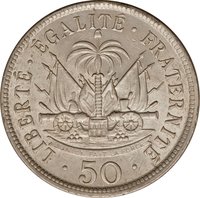
Material
References
KM: #Click to copy to clipboard56
Numista: #5922
Value
Exchange value: 0.50 HTG
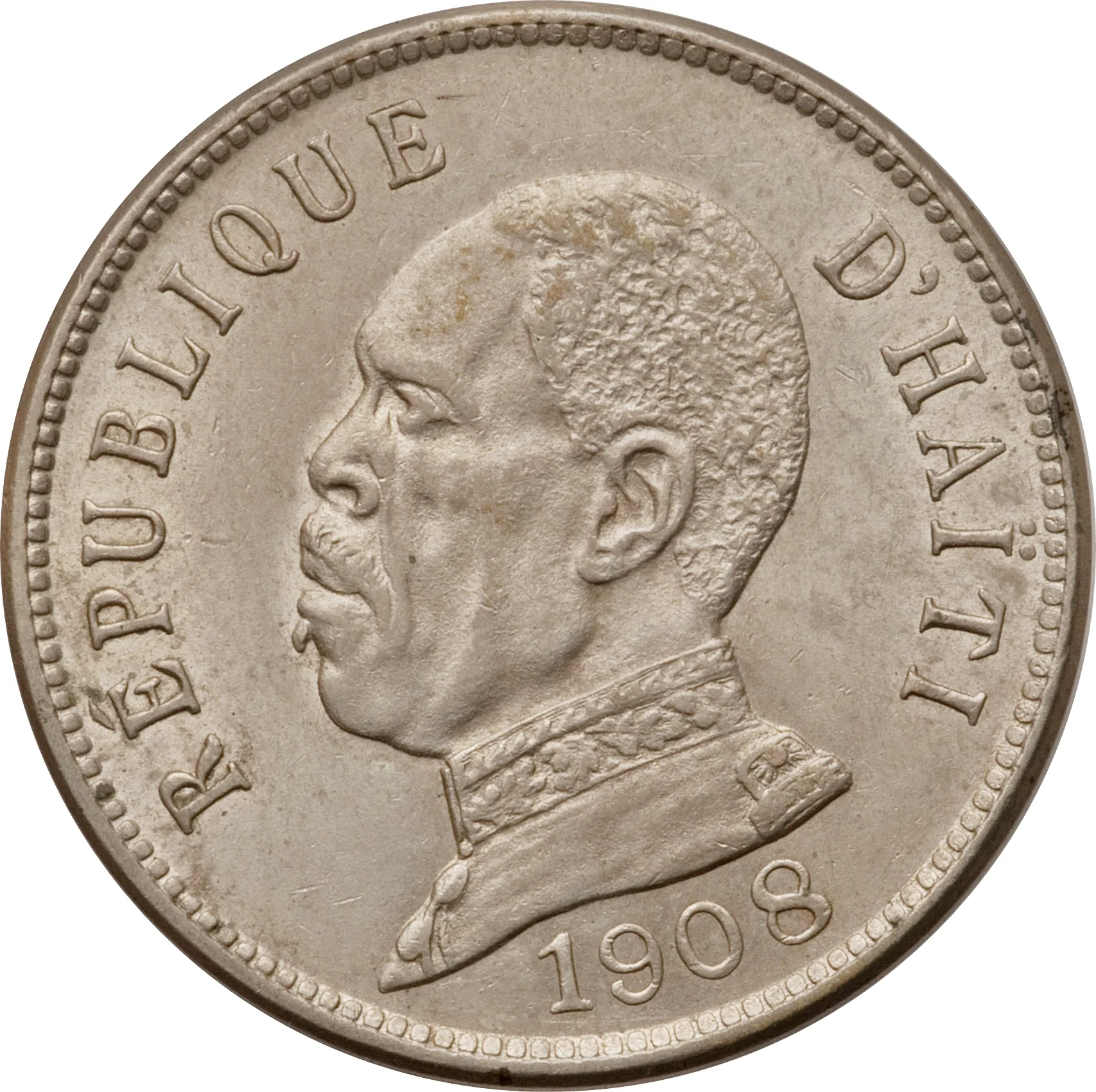
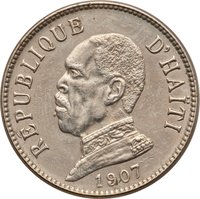
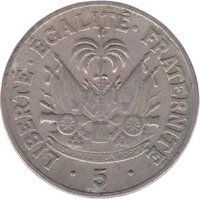
Obverse
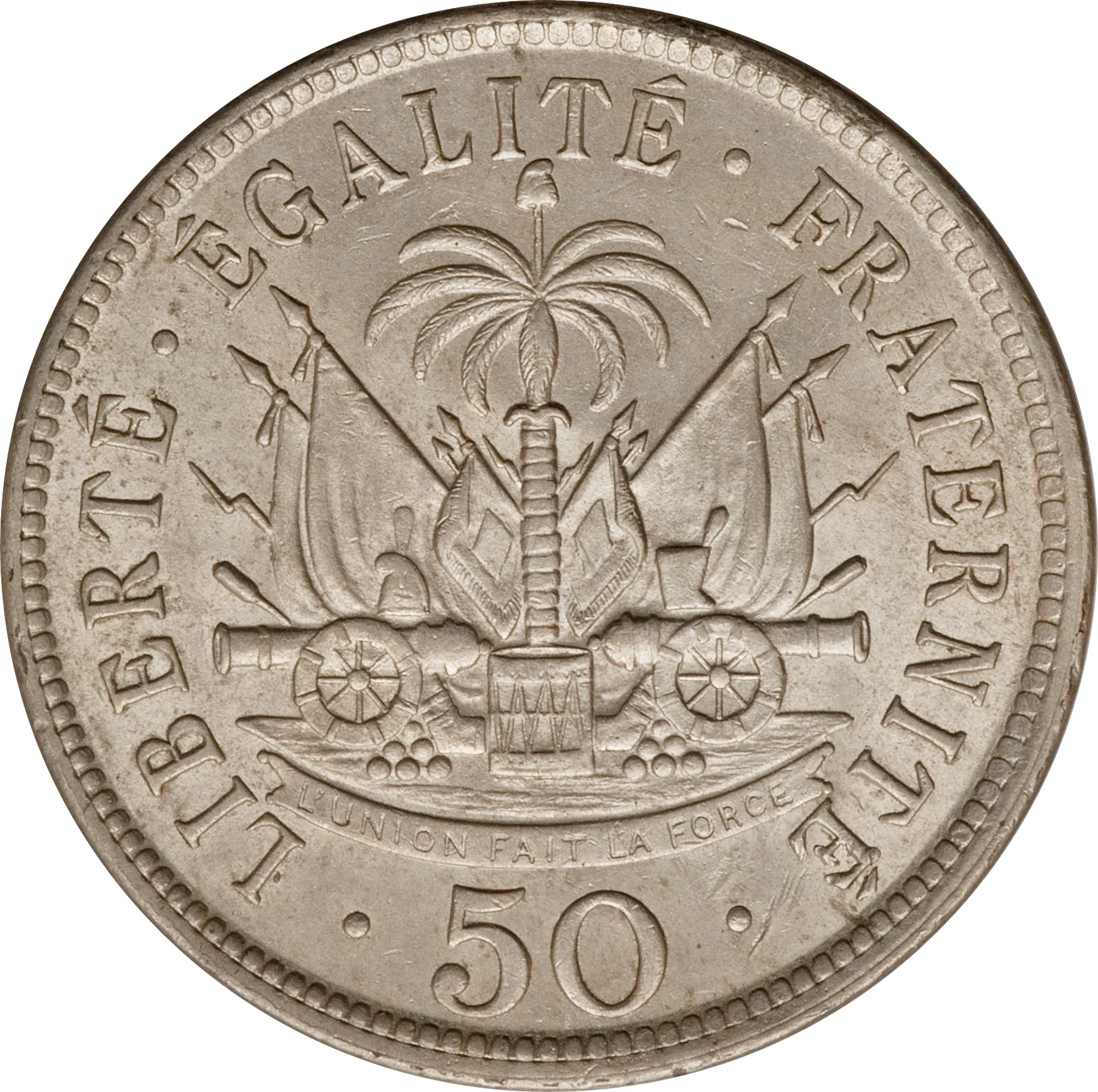
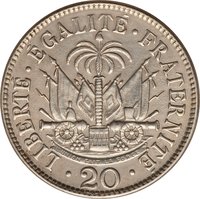
Reverse
Edge
Plain
Mints
| Name | Mark |
|---|---|
| Scovill Manufacturing Company | — |
Mintings
| Year | Mint Mark | Mintage | Quality | Collection |
|---|---|---|---|---|
| 1907 | — | 2,000,000 | ||
| 1907 | — | — | Proof | |
| 1908 | — | 800,000 | ||
| 1908 | — | — | Proof |
Historical background
In 1907, Haiti’s currency situation was defined by profound instability and foreign financial control, a direct legacy of the 1910 National Bank of Haiti contract that was already being negotiated. The country operated on a bimetallic system nominally tied to the French franc, but in practice, the gourde was a fractional, depreciated currency plagued by chronic shortage and debasement. Much of the physical currency in circulation consisted of low-value, worn copper and silver coins, while paper money was mistrusted and scarce. This monetary confusion stifled commerce, facilitated corruption, and created a system where the U.S. dollar and other foreign coins often circulated at a premium, further undermining the national currency.
The root of this instability lay in Haiti’s crippling foreign debt. To service loans primarily from French banks, the Haitian government had committed nearly all its customs revenue, the state's primary income source. This fiscal stranglehold left the treasury perpetually insolvent and unable to reform the monetary system. The situation created a vicious cycle: debt payments drained specie (gold and silver) from the country, leading to currency depreciation, which in turn made importing essential goods more expensive and deepened the economic crisis.
It was within this context that the pivotal contract for a new National Bank of Haiti was being finalized in 1907, with the Haitian government granting the concession to a consortium of French, German, and (critically) American investors. This bank, which would begin operations in 1910, was granted a monopoly on currency issuance and state funds. Thus, the 1907 monetary landscape was one of transition toward deeper foreign control, setting the stage for the U.S.-dominated bank that would later facilitate the American financial protectorate and, ultimately, the military occupation of Haiti in 1915.
The root of this instability lay in Haiti’s crippling foreign debt. To service loans primarily from French banks, the Haitian government had committed nearly all its customs revenue, the state's primary income source. This fiscal stranglehold left the treasury perpetually insolvent and unable to reform the monetary system. The situation created a vicious cycle: debt payments drained specie (gold and silver) from the country, leading to currency depreciation, which in turn made importing essential goods more expensive and deepened the economic crisis.
It was within this context that the pivotal contract for a new National Bank of Haiti was being finalized in 1907, with the Haitian government granting the concession to a consortium of French, German, and (critically) American investors. This bank, which would begin operations in 1910, was granted a monopoly on currency issuance and state funds. Thus, the 1907 monetary landscape was one of transition toward deeper foreign control, setting the stage for the U.S.-dominated bank that would later facilitate the American financial protectorate and, ultimately, the military occupation of Haiti in 1915.
🌱 Very Common