

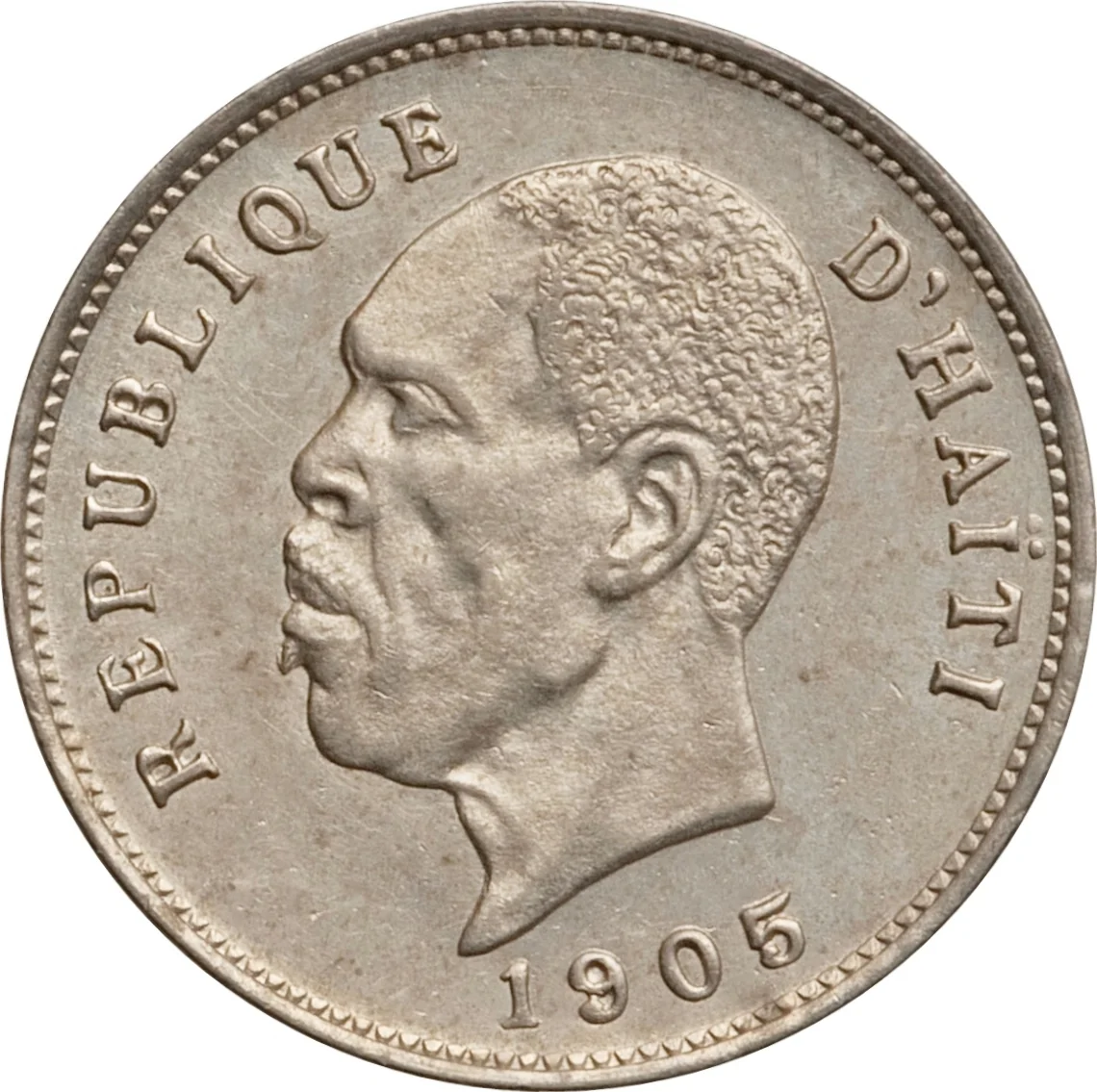
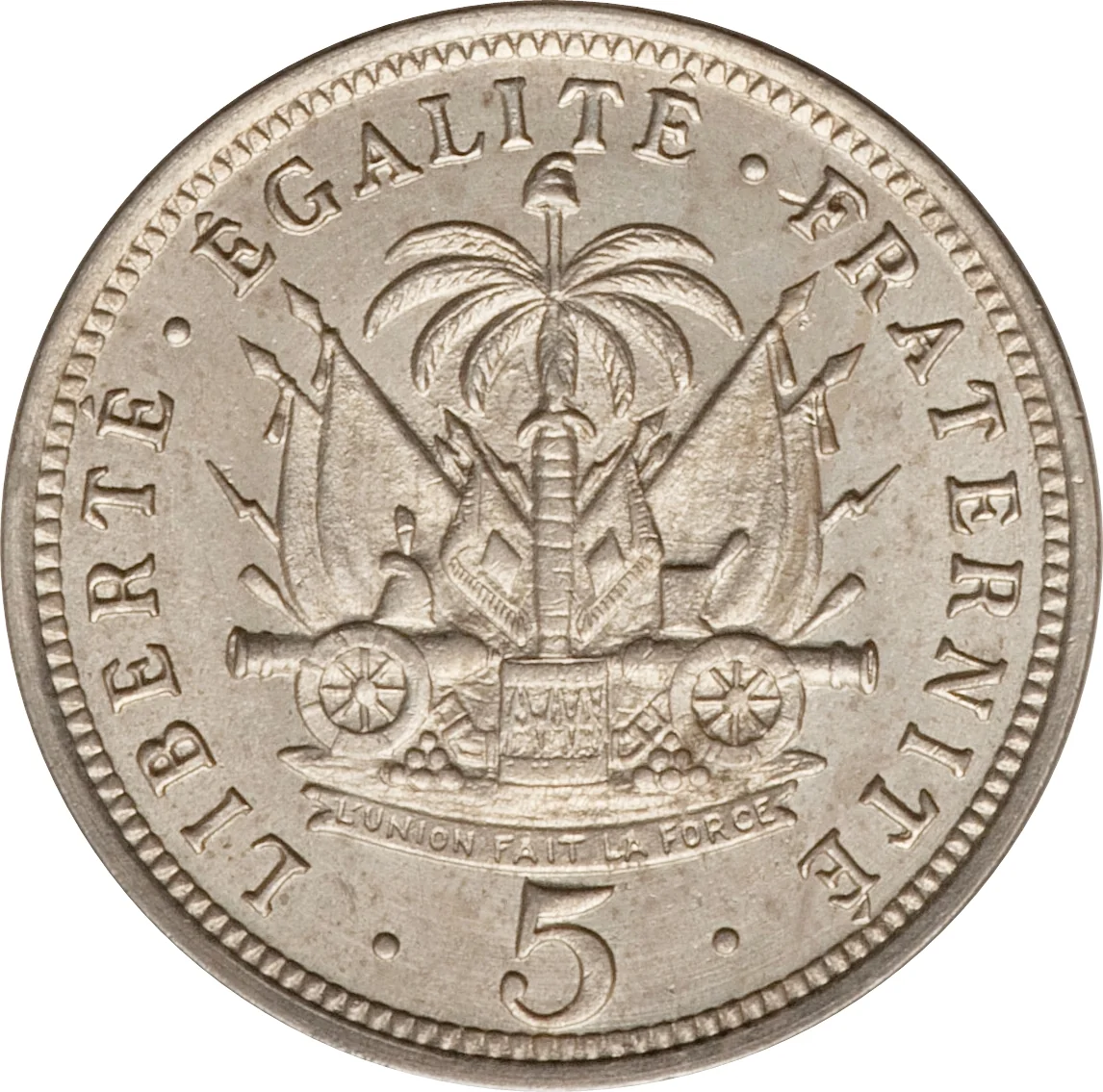
5 Centimes – Haiti
Haiti
Context
Years: 1904–1905
Issuer: Haiti 
Period:
(1859—1957)
Currency:
(since 1872)
Demonetized: Yes
Total mintage: 22,000,000
Material
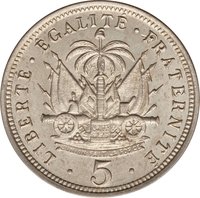
References
KM: #Click to copy to clipboard53
Numista: #5919
Value
Exchange value: 0.05 HTG
Obverse
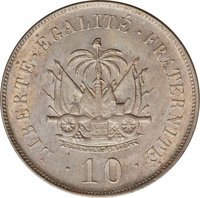
Reverse
Edge
Plain
Categories
| Symbols> Coat of Arms |
| Person> Military leader |
| Person> Politician |
Mints
| Name | Mark |
|---|---|
| Scovill Manufacturing Company | — |
Mintings
| Year | Mint Mark | Mintage | Quality | Collection |
|---|---|---|---|---|
| 1904 | — | 2,000,000 | ||
| 1904 | — | — | Proof | |
| 1905 | — | 20,000,000 | ||
| 1905 | — | — | Proof |
Historical background
In 1904, Haiti’s currency situation was defined by profound instability and foreign intervention, a direct legacy of the 19th century. The national currency, the Haitian gourde, was theoretically pegged to the French franc, but in practice, the country suffered from a chaotic monetary system. This included the circulation of depreciated paper money alongside coins from various nations, leading to widespread confusion and facilitating fraud. The government's chronic budget deficits and reliance on printing money to cover expenses had created severe inflation, eroding public trust and hindering both domestic commerce and foreign investment.
This financial disarray was inextricably linked to Haiti's political turmoil and its crippling foreign debt. Most significantly, the aftermath of the National Bank of Haiti's controversial founding in 1881, which was controlled by French interests, continued to cast a long shadow. By 1904, the bank held a monopoly on currency issuance and acted as the state treasury, yet its policies often prioritized the repayment of foreign loans—held primarily by French and German creditors—over Haiti's economic needs. This arrangement drained the country's gold reserves and subordinated its fiscal sovereignty to European financial interests.
The currency crisis of 1904 was a key pressure point that would soon lead to a dramatic foreign takeover of Haitian finances. Just one year later, in 1905, the Haitian government, desperate to stabilize its currency and consolidate its overwhelming debts, would sign a new agreement with a French bank. This agreement further entrenched foreign control and set the stage for the even more devastating American intervention a decade later, which would see the United States assume complete control of Haiti's treasury and customs revenue in 1915. Thus, the monetary confusion of 1904 represented a critical juncture on Haiti's path toward full-scale financial occupation.
This financial disarray was inextricably linked to Haiti's political turmoil and its crippling foreign debt. Most significantly, the aftermath of the National Bank of Haiti's controversial founding in 1881, which was controlled by French interests, continued to cast a long shadow. By 1904, the bank held a monopoly on currency issuance and acted as the state treasury, yet its policies often prioritized the repayment of foreign loans—held primarily by French and German creditors—over Haiti's economic needs. This arrangement drained the country's gold reserves and subordinated its fiscal sovereignty to European financial interests.
The currency crisis of 1904 was a key pressure point that would soon lead to a dramatic foreign takeover of Haitian finances. Just one year later, in 1905, the Haitian government, desperate to stabilize its currency and consolidate its overwhelming debts, would sign a new agreement with a French bank. This agreement further entrenched foreign control and set the stage for the even more devastating American intervention a decade later, which would see the United States assume complete control of Haiti's treasury and customs revenue in 1915. Thus, the monetary confusion of 1904 represented a critical juncture on Haiti's path toward full-scale financial occupation.
🌱 Common