

10 Su – South Vietnam
Vietnam
Context
Year: 1953
Country: Vietnam 
Issuer: South Vietnam
Currency:
(1953—1975)
Demonetized: Yes
Total mintage: 20,000,000
Material
References
KM: #Click to copy to clipboard1
Numista: #5903
Obverse
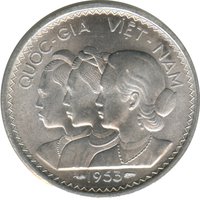
Description:
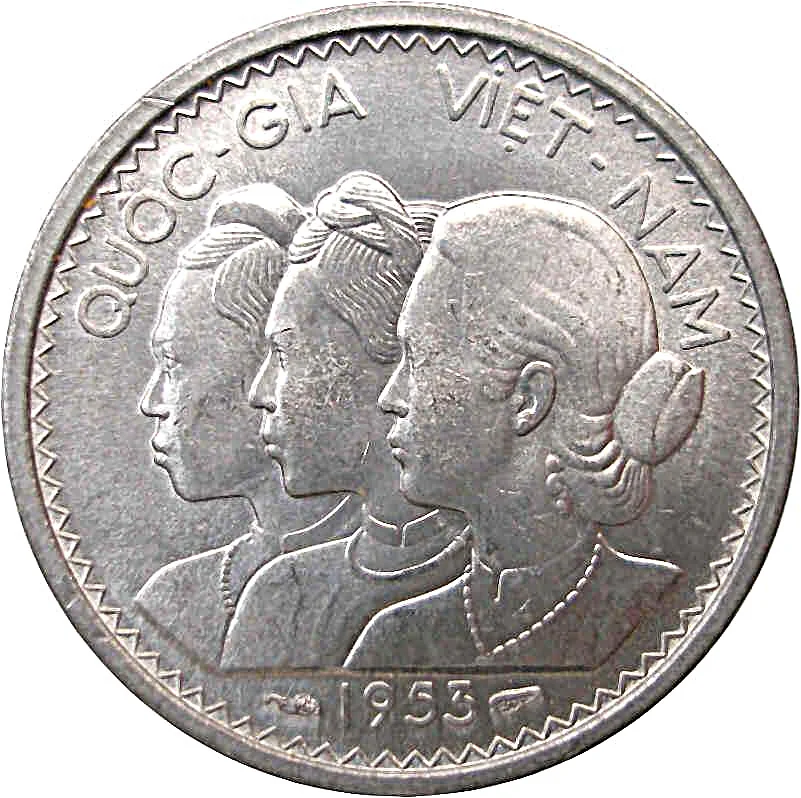
Three women in left-facing profile.
Inscription:
QUỐC-GIA VIỆT-NAM
1953
1953
Translation:
STATE OF VIETNAM
1953
1953
Script: Latin
Language: Vietnamese
Engraver: Lucien Georges Bazor
Reverse
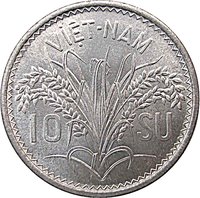
Description:
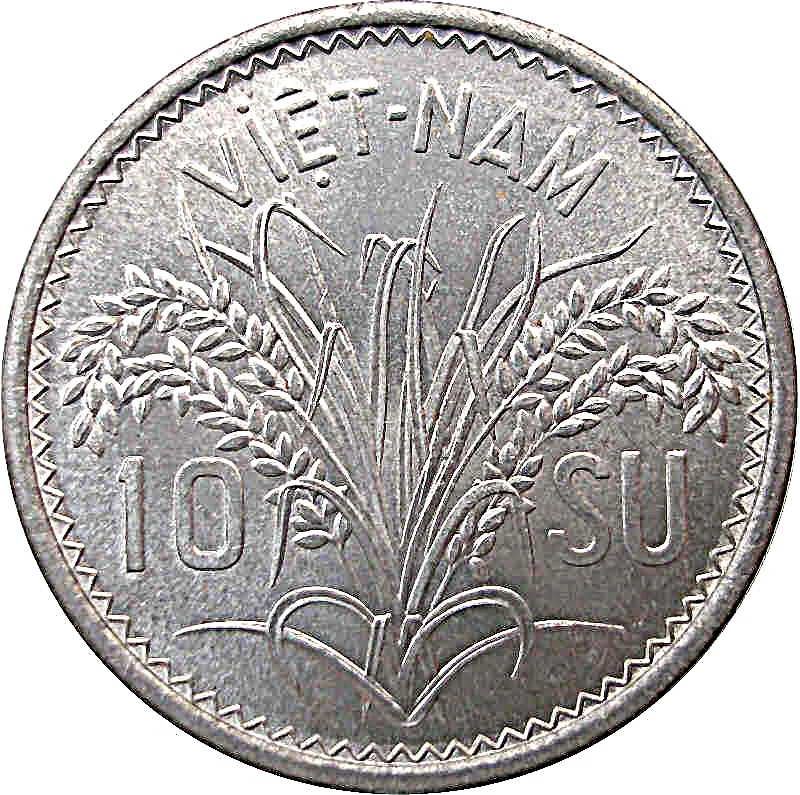
A rice plant.
Inscription:
VIỆT-NAM
10 SU
10 SU
Translation:
Vietnam
10 Su
10 Su
Script: Latin
Language: Vietnamese
Engraver: Lucien Georges Bazor
Edge
Plain
Mints
| Name | Mark |
|---|---|
| Monnaie de Paris | — |
Mintings
| Year | Mint Mark | Mintage | Quality | Collection |
|---|---|---|---|---|
| 1953 | — | 20,000,000 |
Historical background
In 1953, the currency situation in South Vietnam was a complex legacy of colonial rule and ongoing war. The primary currency was the Indochinese Piastre (ICP), issued by the Institut d’Emission des Etats du Cambodge, du Laos et du Vietnam. This currency was pegged to the French Franc at a fixed rate, a system established under French colonial administration. However, this peg was highly artificial and overvalued the piastre, which benefited French import interests but distorted the local economy, stifling indigenous exports and encouraging a black market for foreign exchange.
The monetary landscape was further fragmented by the First Indochina War. While the French Union forces and the State of Vietnam (the French-associated government) controlled the piastre in urban areas, the Viet Minh issued their own revolutionary currency in the territories they controlled. This "liberation money" was used to fund their war effort and establish a separate economic system, creating a zone of competing currencies. Additionally, the widespread use of the French Franc and even the US Dollar in certain transactions highlighted the lack of confidence in the piastre and the region's economic instability.
Overall, the currency system in 1953 was unsustainable. The fixed peg drained French foreign reserves, while the overvaluation fueled inflation and smuggling. This economic weakness undermined the political authority of the French-backed State of Vietnam, as the currency situation became a symbol of colonial economic control and inefficiency. The stage was set for major monetary reforms, which would begin in 1954 with the introduction of the South Vietnamese Piastre as the French withdrew, marking the start of a new, yet still tumultuous, chapter in the country's financial history.
The monetary landscape was further fragmented by the First Indochina War. While the French Union forces and the State of Vietnam (the French-associated government) controlled the piastre in urban areas, the Viet Minh issued their own revolutionary currency in the territories they controlled. This "liberation money" was used to fund their war effort and establish a separate economic system, creating a zone of competing currencies. Additionally, the widespread use of the French Franc and even the US Dollar in certain transactions highlighted the lack of confidence in the piastre and the region's economic instability.
Overall, the currency system in 1953 was unsustainable. The fixed peg drained French foreign reserves, while the overvaluation fueled inflation and smuggling. This economic weakness undermined the political authority of the French-backed State of Vietnam, as the currency situation became a symbol of colonial economic control and inefficiency. The stage was set for major monetary reforms, which would begin in 1954 with the introduction of the South Vietnamese Piastre as the French withdrew, marking the start of a new, yet still tumultuous, chapter in the country's financial history.
🌱 Common