

Obverse
Description:
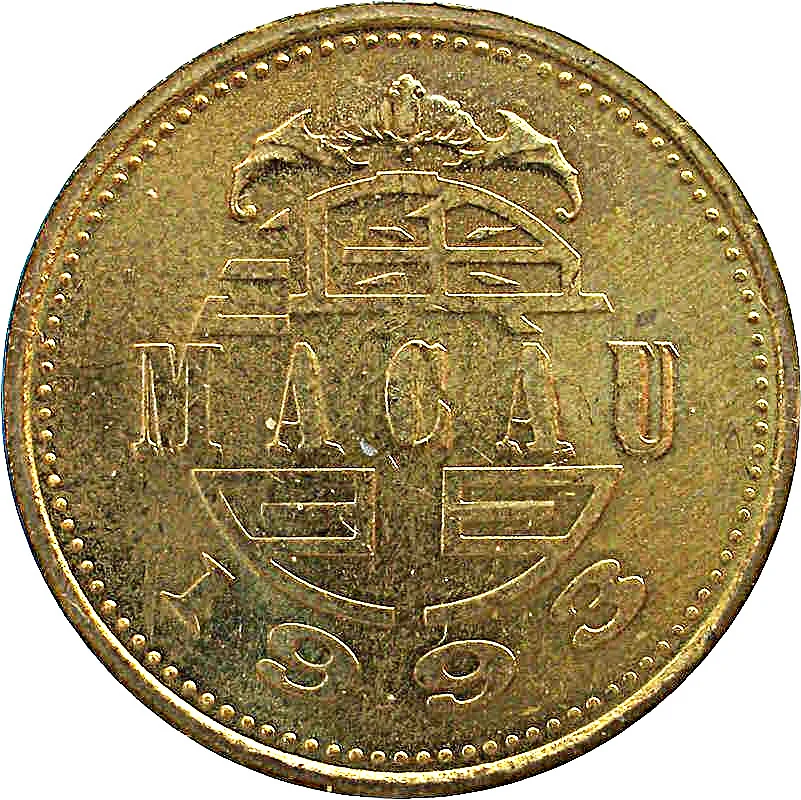
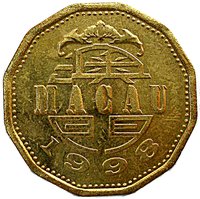
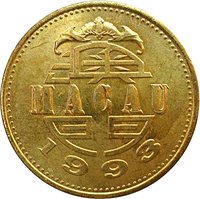
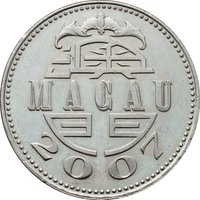
Bat design with Chinese characters "澳" (top) and "門" (bottom), flanking "MACAU" and the date.
Inscription:
M A C A U
1 9 9 3
澳門
1 9 9 3
澳門
Translation:
MACAU
1993
MACAO
1993
MACAO
Languages: Portuguese, Chinese
Engraver: Justino Lei
Reverse
Description:
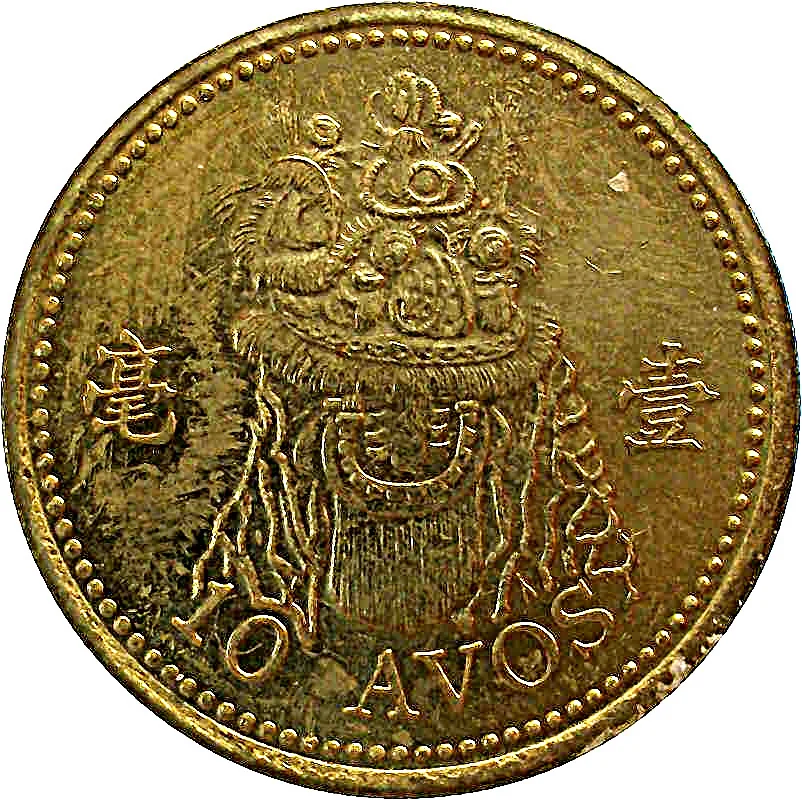
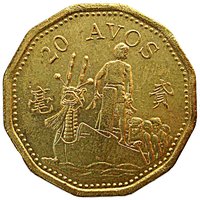
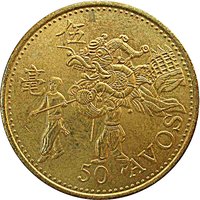
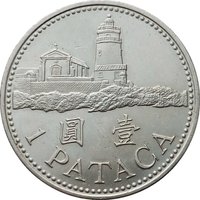
Lion dance crown with "one ho" value and mint marks.
Inscription:
毫 壹
10 AVOS
10 AVOS
Translation:
One Hao
Ten Avos
Ten Avos
Languages: Chinese, Portuguese
Engraver: Justino Lei
Edge
Plain
Mints
| Name | Mark |
|---|---|
| Royal Mint | — |
Mintings
| Year | Mint Mark | Mintage | Quality | Collection |
|---|---|---|---|---|
| 1993 | — | 200,000,000 | ||
| 1998 | — | — | ||
| 2005 | — | — | ||
| 2007 | — | — | ||
| 2010 | — | — |
Historical background
In 1993, Macau's currency situation was defined by a unique and pragmatic dual circulation system, a legacy of its colonial status and geographical reality. The Portuguese pataca (MOP), issued by the Banco Nacional Ultramarino, remained the official legal tender. However, the Hong Kong dollar (HKD) was widely accepted and often preferred for larger transactions, particularly in tourism, real estate, and foreign trade. This was due to Hong Kong's dominant economic influence, the pataca's limited international convertibility, and the fact that the pataca itself was pegged to the Hong Kong dollar at a fixed rate of approximately 1.03 patacas to 1 Hong Kong dollar, which was in turn pegged to the US dollar.
The monetary landscape was managed under the authority of the Portuguese administration, with the Instituto Emissor de Macau (Monetary and Foreign Exchange Authority of Macau) established in 1989 to oversee currency issuance and financial stability. The economy, heavily reliant on gambling and tourism, saw a significant influx of Hong Kong dollars, which created a de facto dollarized environment in many sectors. This system provided stability by anchoring the pataca to a strong and internationally recognized currency, but it also meant Macau's monetary policy was largely dictated by the decisions of the Hong Kong Monetary Authority and, by extension, US Federal Reserve policy.
Looking ahead, 1993 was a period of monetary stability but also one of looming political transition. With the 1999 handover to China already agreed upon, questions about the long-term future of the pataca circulated. However, there was no immediate pressure for change, as the system functioned efficiently for the enclave's small, open economy. The fundamental currency arrangement—the pataca's peg and its coexistence with the Hong Kong dollar—would prove resilient, continuing unchanged through the handover and well into the 21st century as a key feature of Macau's special administrative region status.
The monetary landscape was managed under the authority of the Portuguese administration, with the Instituto Emissor de Macau (Monetary and Foreign Exchange Authority of Macau) established in 1989 to oversee currency issuance and financial stability. The economy, heavily reliant on gambling and tourism, saw a significant influx of Hong Kong dollars, which created a de facto dollarized environment in many sectors. This system provided stability by anchoring the pataca to a strong and internationally recognized currency, but it also meant Macau's monetary policy was largely dictated by the decisions of the Hong Kong Monetary Authority and, by extension, US Federal Reserve policy.
Looking ahead, 1993 was a period of monetary stability but also one of looming political transition. With the 1999 handover to China already agreed upon, questions about the long-term future of the pataca circulated. However, there was no immediate pressure for change, as the system functioned efficiently for the enclave's small, open economy. The fundamental currency arrangement—the pataca's peg and its coexistence with the Hong Kong dollar—would prove resilient, continuing unchanged through the handover and well into the 21st century as a key feature of Macau's special administrative region status.
🌱 Very Common