

2 mithqual – Sinkiang Province
Add to wishlist
China
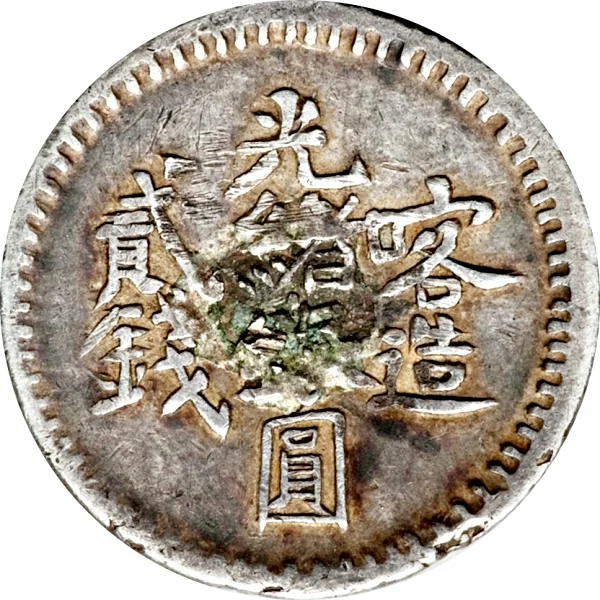
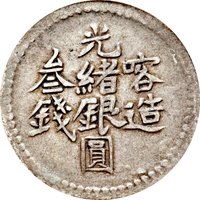
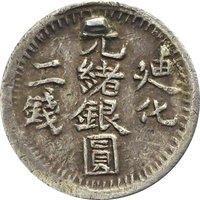
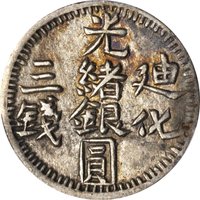
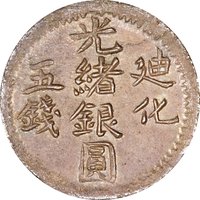
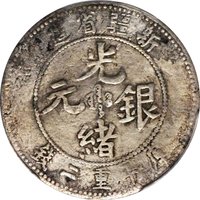
Obverse
Description:
Eight Chinese characters read vertically.
Inscription:
光
貳緒喀
錢銀造
圓
貳緒喀
錢銀造
圓
Translation:
Guangxu Era Made Silver Coin Two Cents
Language: Chinese
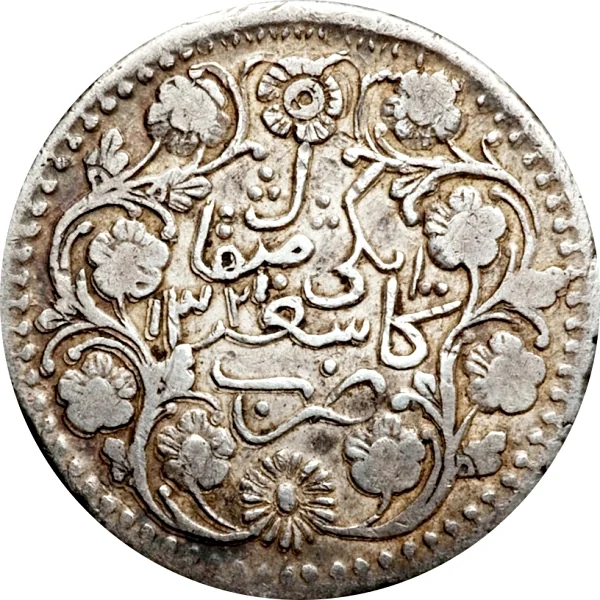
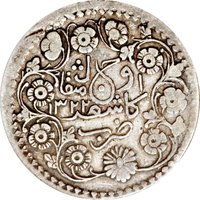
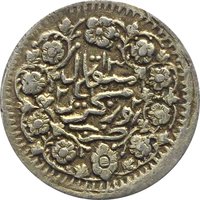
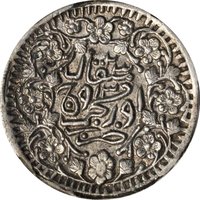
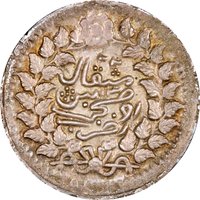
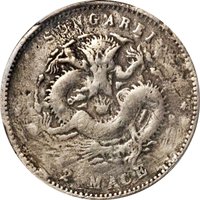
Reverse
Description:
Arabic legend encircled by wreath.
Inscription:
١٣٢١
كى مثقال
كاشنو
ضو ب
كى مثقال
كاشنو
ضو ب
Translation:
1321
One Mithqal
Kashan
Zarb
One Mithqal
Kashan
Zarb
Language: Persian
Edge
Plain
Mintings
| Year | Mint Mark | Mintage | Quality | Collection |
|---|---|---|---|---|
| 1903 | — | — | ||
| 1903 | — | — | ||
| 1904 | — | — |
Historical background
In 1903, the currency situation in Sinkiang (Xinjiang) Province was a complex and fragmented reflection of its position at the crossroads of empires. The official currency was the Xinjiang Tael Note, a paper currency issued by the provincial authorities under the late Qing Dynasty. These notes, denominated in taels (a unit of silver weight), were not backed by a standard silver reserve and their value fluctuated widely, often depreciating significantly, especially the farther one traveled from the provincial capital of Dihua (Ürümqi). This instability eroded public trust and hampered official trade.
Alongside this weak paper currency, a multitude of physical coins circulated, creating a chaotic monetary environment. Chinese cash coins (with a square hole) strung in hundreds for larger transactions were ubiquitous for small daily purchases. More importantly, substantial silver coinage circulated, primarily in the form of Sino-Russian "Dragon" dollars and Russian Tsarist rubles. These silver coins, particularly the ruble, were highly trusted due to their consistent silver content and were dominant in northern Xinjiang and along trade routes, underscoring the region's deep economic integration with Russian Central Asia.
This monetary duality was a direct consequence of Xinjiang's geopolitical and economic reality. The province was a critical hub on the Silk Road, with caravan trade linking China proper, Russia, and British India. The prevalence of Russian currency highlighted St. Petersburg's growing economic influence, which operated through the Russian-dominated Tarbagatai and Ili trade networks. Meanwhile, in the south, Indian rupees and even gold dust saw some circulation due to trade over the Karakoram passes. Thus, in 1903, Xinjiang's currency was less a unified system and more a contested landscape of paper, silver, and copper, where the credibility of distant Qing authority competed with the hard silver of neighboring empires.
Alongside this weak paper currency, a multitude of physical coins circulated, creating a chaotic monetary environment. Chinese cash coins (with a square hole) strung in hundreds for larger transactions were ubiquitous for small daily purchases. More importantly, substantial silver coinage circulated, primarily in the form of Sino-Russian "Dragon" dollars and Russian Tsarist rubles. These silver coins, particularly the ruble, were highly trusted due to their consistent silver content and were dominant in northern Xinjiang and along trade routes, underscoring the region's deep economic integration with Russian Central Asia.
This monetary duality was a direct consequence of Xinjiang's geopolitical and economic reality. The province was a critical hub on the Silk Road, with caravan trade linking China proper, Russia, and British India. The prevalence of Russian currency highlighted St. Petersburg's growing economic influence, which operated through the Russian-dominated Tarbagatai and Ili trade networks. Meanwhile, in the south, Indian rupees and even gold dust saw some circulation due to trade over the Karakoram passes. Thus, in 1903, Xinjiang's currency was less a unified system and more a contested landscape of paper, silver, and copper, where the credibility of distant Qing authority competed with the hard silver of neighboring empires.
✨ Legendary