

10 Cash – Kiangsi Province
China
Context
Year: 1902
Country: China 
Issuer: Kiangsi Province
Ruler: Guangxu
Currency:
(1902—1949)
Demonetized: Yes
Material
References
Y: #Click to copy to clipboard153.2-3
Numista: #58293
Obverse
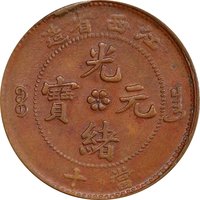
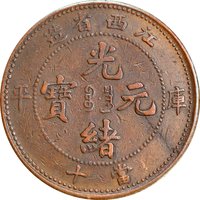
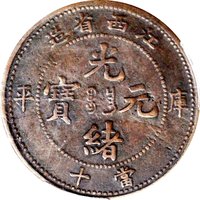
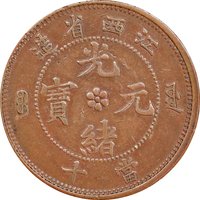
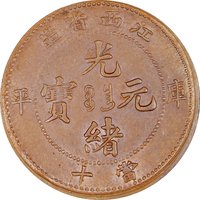
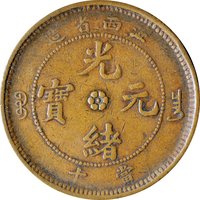
Description:
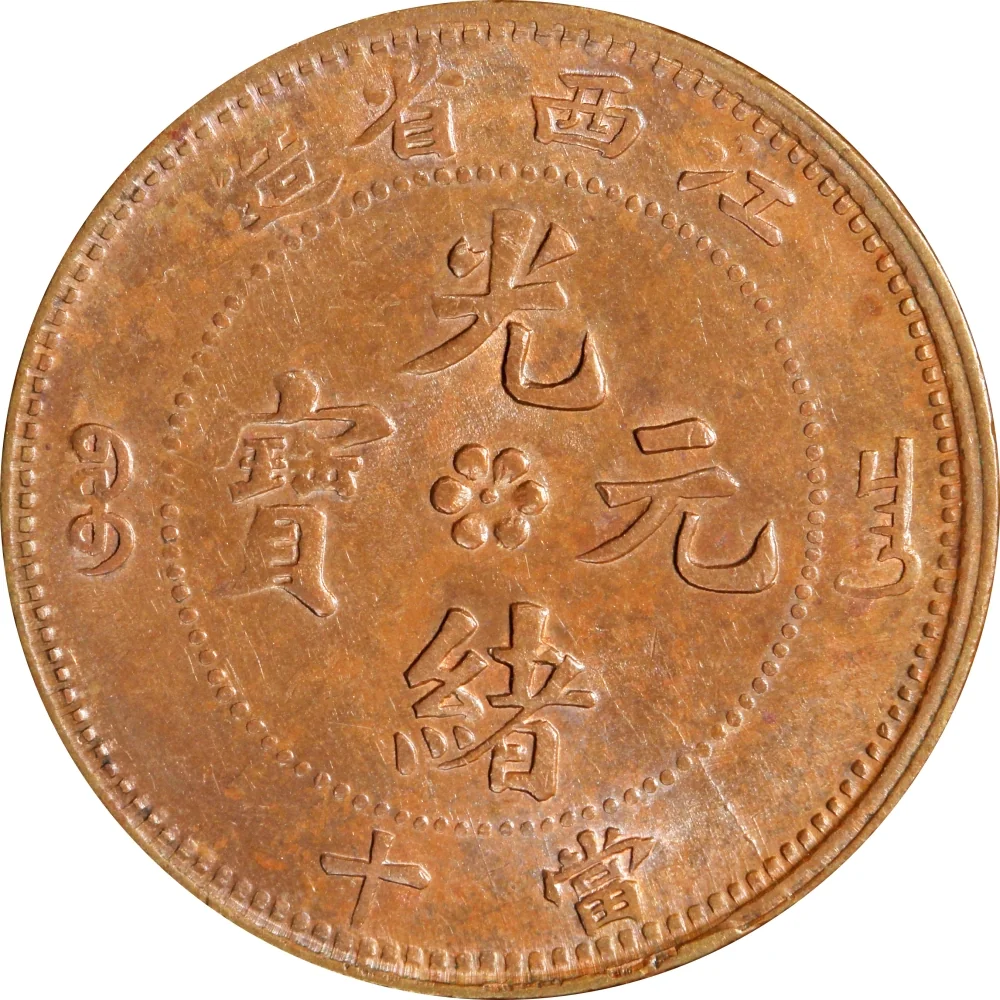
Four Chinese ideograms read vertically, centered on a flower, with Manchu text flanking them and encircled by more characters.
Inscription:
造省西江
ᠪᠣᠣ ᠴᠠᠩ
光
寶元
緒
十當
ᠪᠣᠣ ᠴᠠᠩ
光
寶元
緒
十當
Translation:
BOO CHANG
GUANG-XU
TREASURE
TEN CASH
GUANG-XU
TREASURE
TEN CASH
Scripts: Chinese, Mongolian / Manchu
Languages: Manchu, Classical Chinese
Reverse
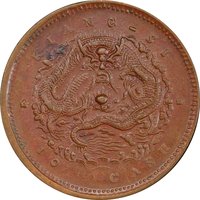
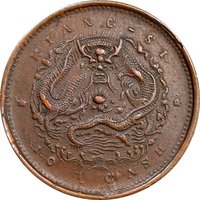
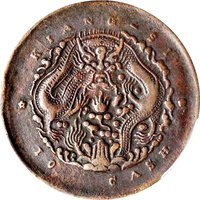
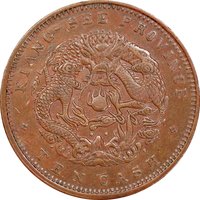
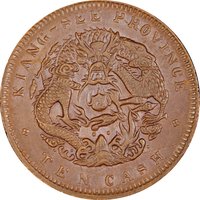
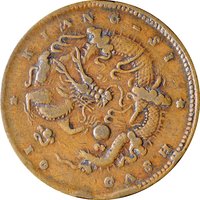
Description:
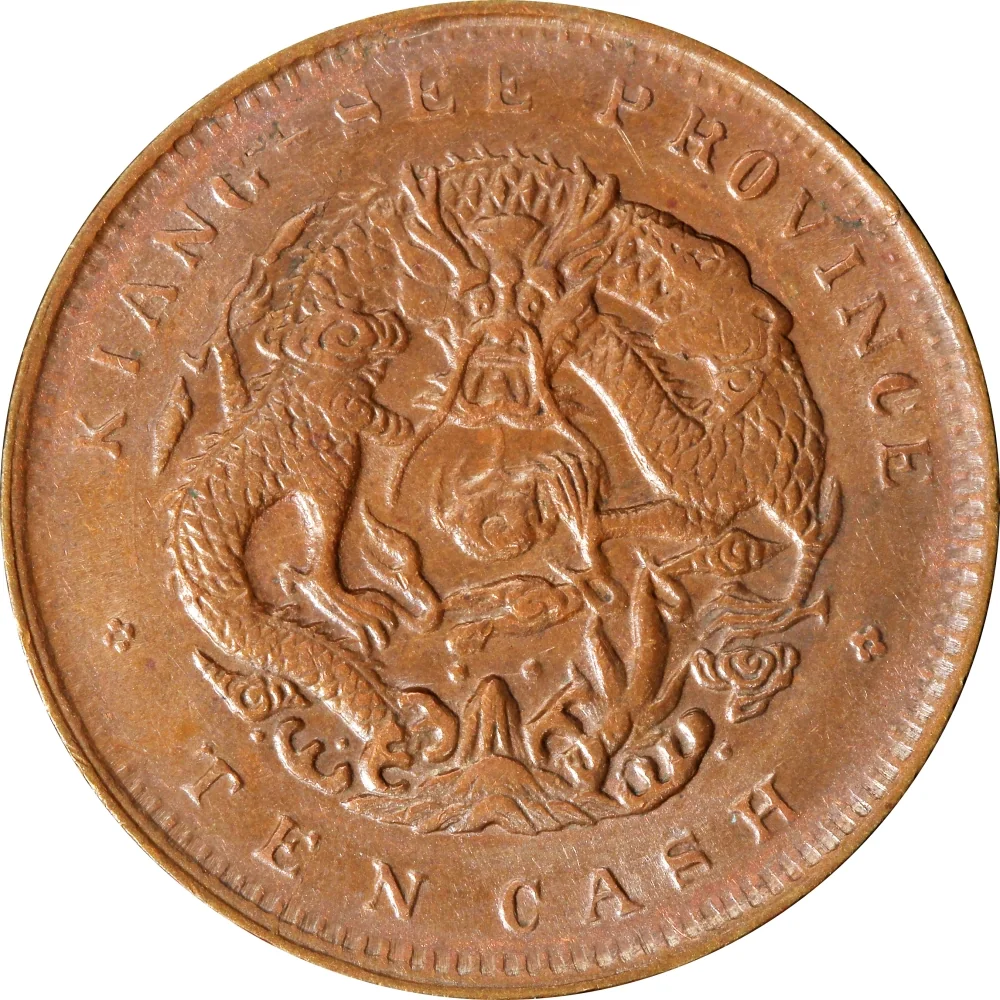
Dragon and pearl above a mountain, encircled by English text.
Inscription:
KIANG-SEE PROVINCE
TEN CASH
TEN CASH
Script: Latin
Edge
Plain
Mintings
| Year | Mint Mark | Mintage | Quality | Collection |
|---|---|---|---|---|
| 1902 | — | — |
Historical background
In 1902, Kiangsi (modern Jiangxi) Province operated within a complex and deteriorating monetary system, characteristic of the late Qing Dynasty. The official currency remained the silver tael, a unit of weight rather than a coined denomination, which complicated trade as its purity and weight varied regionally. Alongside this, strings of copper cash coins (wen) served as the everyday currency for the common populace, with exchange rates between silver and copper fluctuating based on local supply and market conditions. This bimetallic system was under immense strain, as provincial finances were crippled by indemnity payments from the Boxer Protocol (1901), which drained silver reserves and increased tax burdens on the local economy.
The currency situation was further destabilized by the influx of foreign silver dollars, primarily Mexican "Eagle" dollars and British trade dollars, which circulated widely in treaty ports and commercial centers due to their standardized weight and reliability. These foreign coins often traded at a premium over the awkward sycee silver, undermining the Qing monetary authority. Furthermore, to meet fiscal shortfalls, provincial authorities and even private merchants issued their own banknotes and debased copper coinage, leading to a proliferation of currencies of questionable value. This created a chaotic environment where counterfeiting was rampant, and public trust in both paper notes and copper coinage was eroding.
For the people of Kiangsi, these monetary disorders translated into tangible hardship. Fluctuations in the silver-to-copper exchange rate were particularly damaging, as peasants sold crops for copper but often had to pay taxes assessed in silver, effectively causing their real tax burden to spike unpredictably. The currency chaos stifled internal trade, discouraged investment, and contributed to rising social discontent. Thus, in 1902, Kiangsi's monetary landscape was a microcosm of the Qing's broader systemic failures: fragmented, externally influenced, and increasingly incapable of supporting the province's economic needs, setting the stage for the financial reforms and upheavals that would follow in the final decade of the dynasty.
The currency situation was further destabilized by the influx of foreign silver dollars, primarily Mexican "Eagle" dollars and British trade dollars, which circulated widely in treaty ports and commercial centers due to their standardized weight and reliability. These foreign coins often traded at a premium over the awkward sycee silver, undermining the Qing monetary authority. Furthermore, to meet fiscal shortfalls, provincial authorities and even private merchants issued their own banknotes and debased copper coinage, leading to a proliferation of currencies of questionable value. This created a chaotic environment where counterfeiting was rampant, and public trust in both paper notes and copper coinage was eroding.
For the people of Kiangsi, these monetary disorders translated into tangible hardship. Fluctuations in the silver-to-copper exchange rate were particularly damaging, as peasants sold crops for copper but often had to pay taxes assessed in silver, effectively causing their real tax burden to spike unpredictably. The currency chaos stifled internal trade, discouraged investment, and contributed to rising social discontent. Thus, in 1902, Kiangsi's monetary landscape was a microcosm of the Qing's broader systemic failures: fragmented, externally influenced, and increasingly incapable of supporting the province's economic needs, setting the stage for the financial reforms and upheavals that would follow in the final decade of the dynasty.
💎 Extremely Rare