

10 piastres – Lebanon
Add to wishlist
Lebanon
Context
Year: 1955
Issuer: Lebanon
Period:
(since 1943)
Currency:
(since 1939)
Demonetized: Yes
Total mintage: 2,175,000
Material
Diameter: 21.8 mm
Weight: 3.94 g
Thickness: 1.48 mm
Shape: Round
Composition: Aluminium bronze
Magnetic: No
Technique: Milled
Alignment: Medal alignment
flip
References
KM: #
Numista: #5825
Value
Exchange value: 0.10 LBP
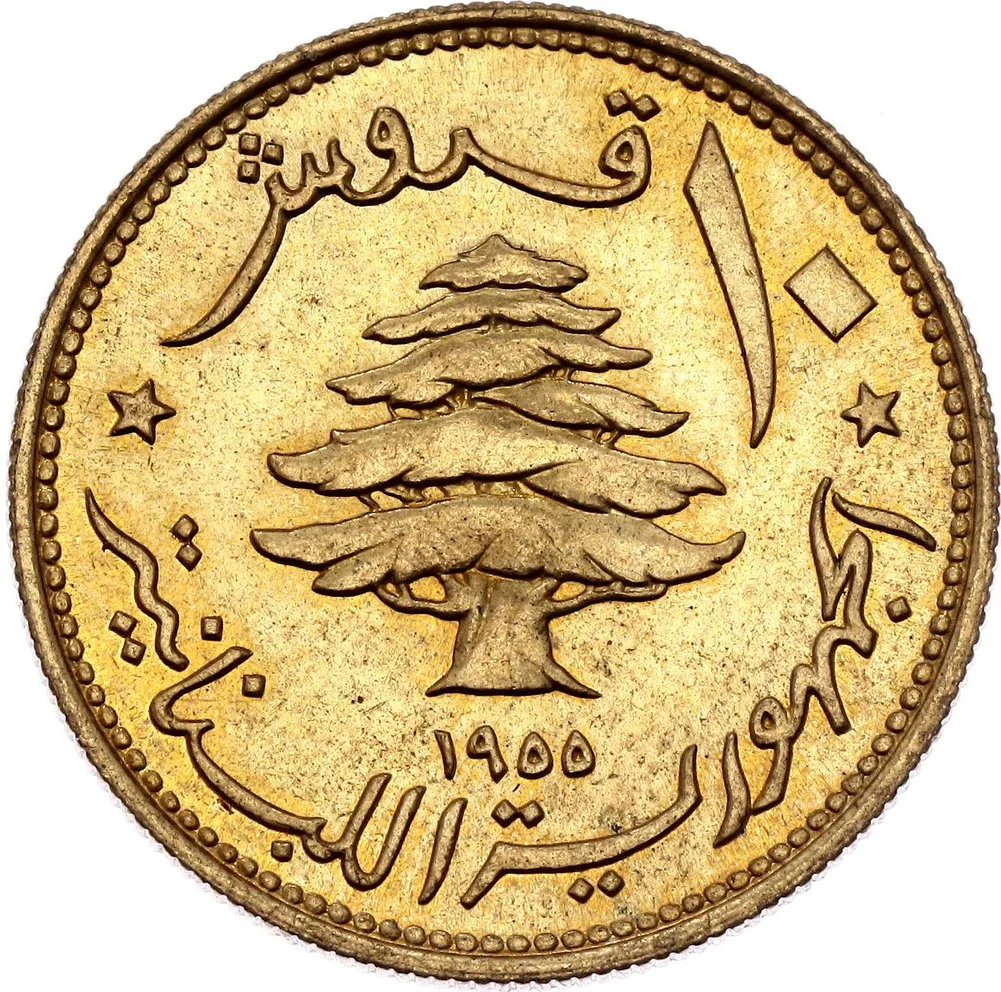
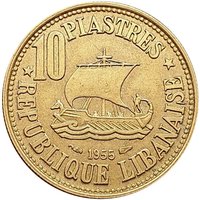
Obverse
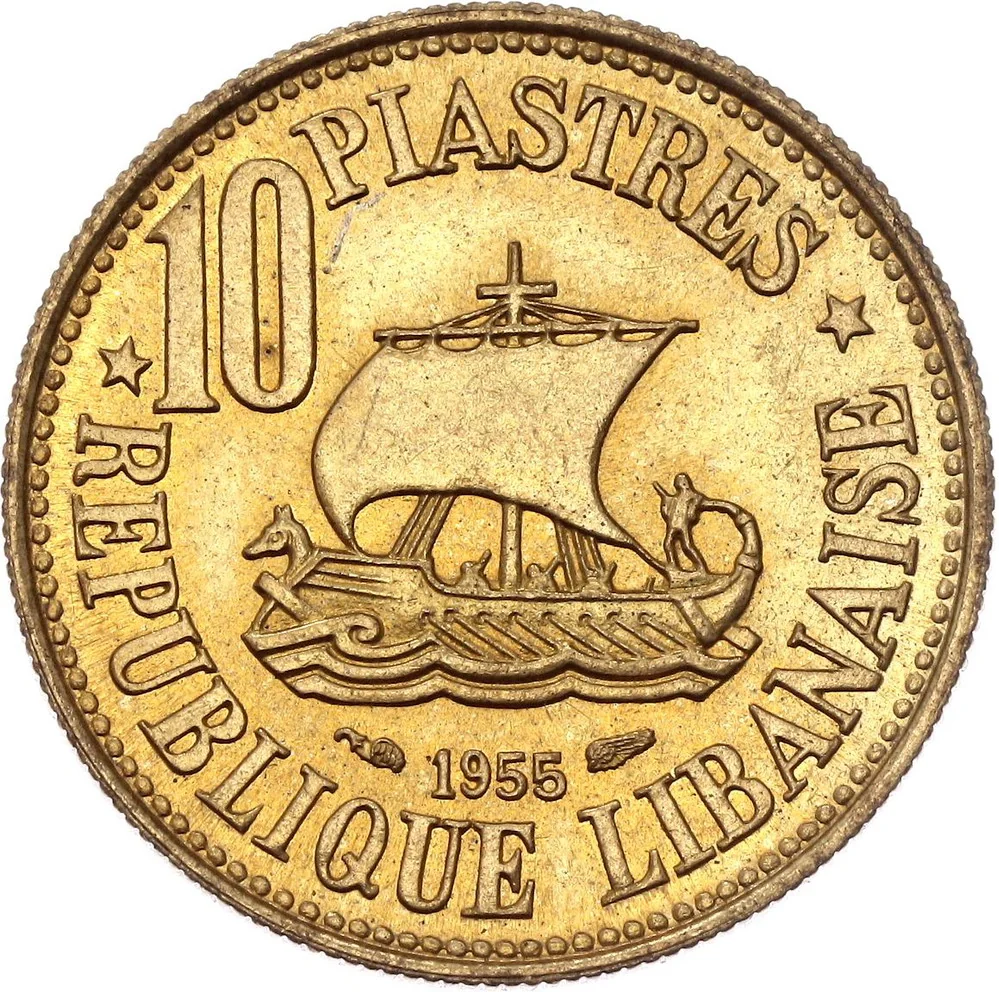
Reverse
Edge
Reeded
Categories
| Plant> Tree |
| Transportation> Watercraft |
Mints
| Name | Mark |
|---|---|
| SOMP | — |
Mintings
| Year | Mint Mark | Mintage | Quality | Collection |
|---|---|---|---|---|
| 1955 | — | 2,175,000 |
Historical background
In 1955, Lebanon's currency situation was one of notable stability and confidence, underpinned by the Lebanese pound's (LBP) peg to the French franc and, by extension, the gold standard. This period fell within the broader era known as Lebanon's "Golden Age" (mid-1950s to mid-1970s), characterized by a booming service-oriented economy, a thriving banking sector, and Beirut's rise as a regional financial hub. The Banque du Liban (Central Bank of Lebanon), established just two years prior in 1953, managed the currency with a conservative approach, maintaining substantial gold and foreign exchange reserves to fully back the pound, which fostered strong trust both domestically and internationally.
The currency's stability was a direct contributor to and a symptom of Lebanon's economic prosperity. The fixed exchange rate facilitated predictable trade and attracted capital inflows, reinforcing Beirut's role as an intermediary for regional finance and commerce. The banking secrecy law of 1956, enacted shortly after this period, would further cement this status. Consequently, there was no parallel or black market for foreign currency to speak of; the official rate was universally accepted, and the Lebanese pound was considered a strong and reliable store of value.
However, this enviable position was not without underlying vulnerabilities. The economy's openness and reliance on services, tourism, and transit trade made it sensitive to regional political shifts. Furthermore, the currency's strength was partially dependent on continuous inflows of capital, and the fixed peg limited monetary policy flexibility to address future economic shocks. While the crises of severe inflation, banking collapse, and currency devaluation were decades away, the very rigidity and external dependencies of the successful 1955 system contained the seeds of future instability, which would be brutally exposed by the civil war (1975-1990) and its aftermath.
The currency's stability was a direct contributor to and a symptom of Lebanon's economic prosperity. The fixed exchange rate facilitated predictable trade and attracted capital inflows, reinforcing Beirut's role as an intermediary for regional finance and commerce. The banking secrecy law of 1956, enacted shortly after this period, would further cement this status. Consequently, there was no parallel or black market for foreign currency to speak of; the official rate was universally accepted, and the Lebanese pound was considered a strong and reliable store of value.
However, this enviable position was not without underlying vulnerabilities. The economy's openness and reliance on services, tourism, and transit trade made it sensitive to regional political shifts. Furthermore, the currency's strength was partially dependent on continuous inflows of capital, and the fixed peg limited monetary policy flexibility to address future economic shocks. While the crises of severe inflation, banking collapse, and currency devaluation were decades away, the very rigidity and external dependencies of the successful 1955 system contained the seeds of future instability, which would be brutally exposed by the civil war (1975-1990) and its aftermath.
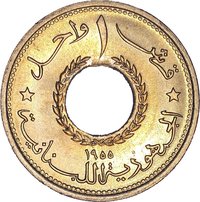
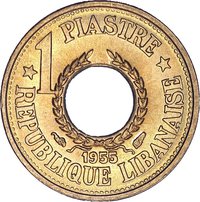
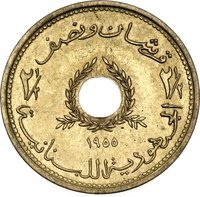
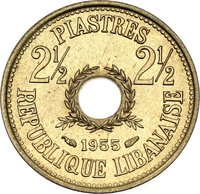
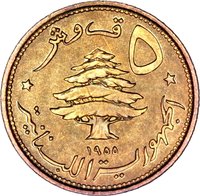
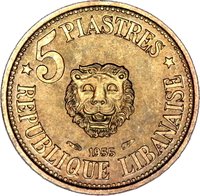
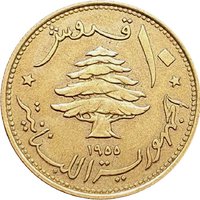
Series: 1955 Lebanon circulation coins
🌱 Common