

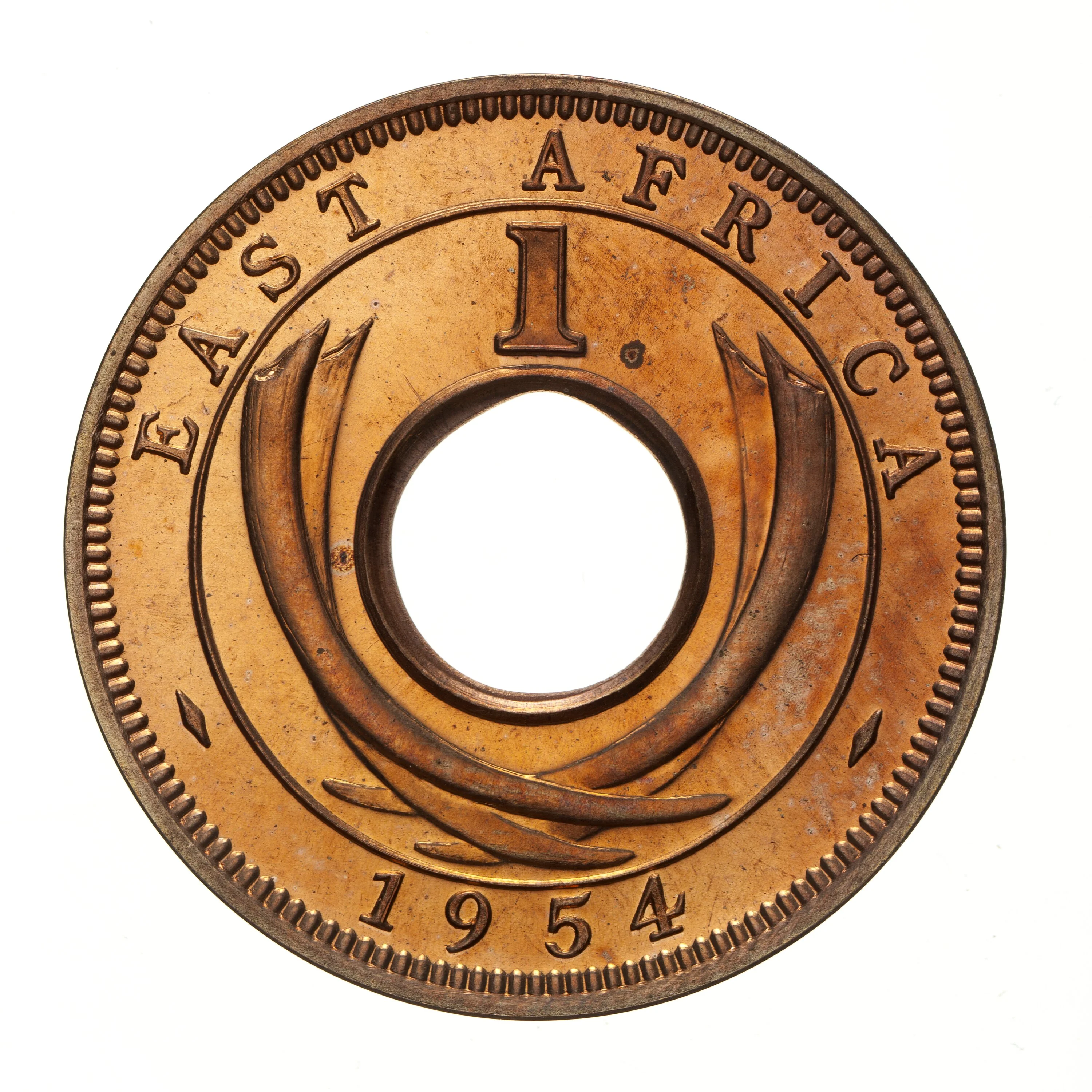
1 Cent – East Africa
Context
Years: 1954–1962
Issuer: East Africa
Ruler: Elizabeth II
Currency:
(1921—1967)
Demonetized: Yes
Total mintage: 102,600,000
Material
Diameter: 20 mm
Weight: 1.94 g
Thickness: 1 mm
Shape: Round with a round hole
Composition: Bronze
Magnetic: No
Technique: Milled
Alignment: Medal alignment
flip
References
KM: #Click to copy to clipboard35
Numista: #5818
Obverse
Description:
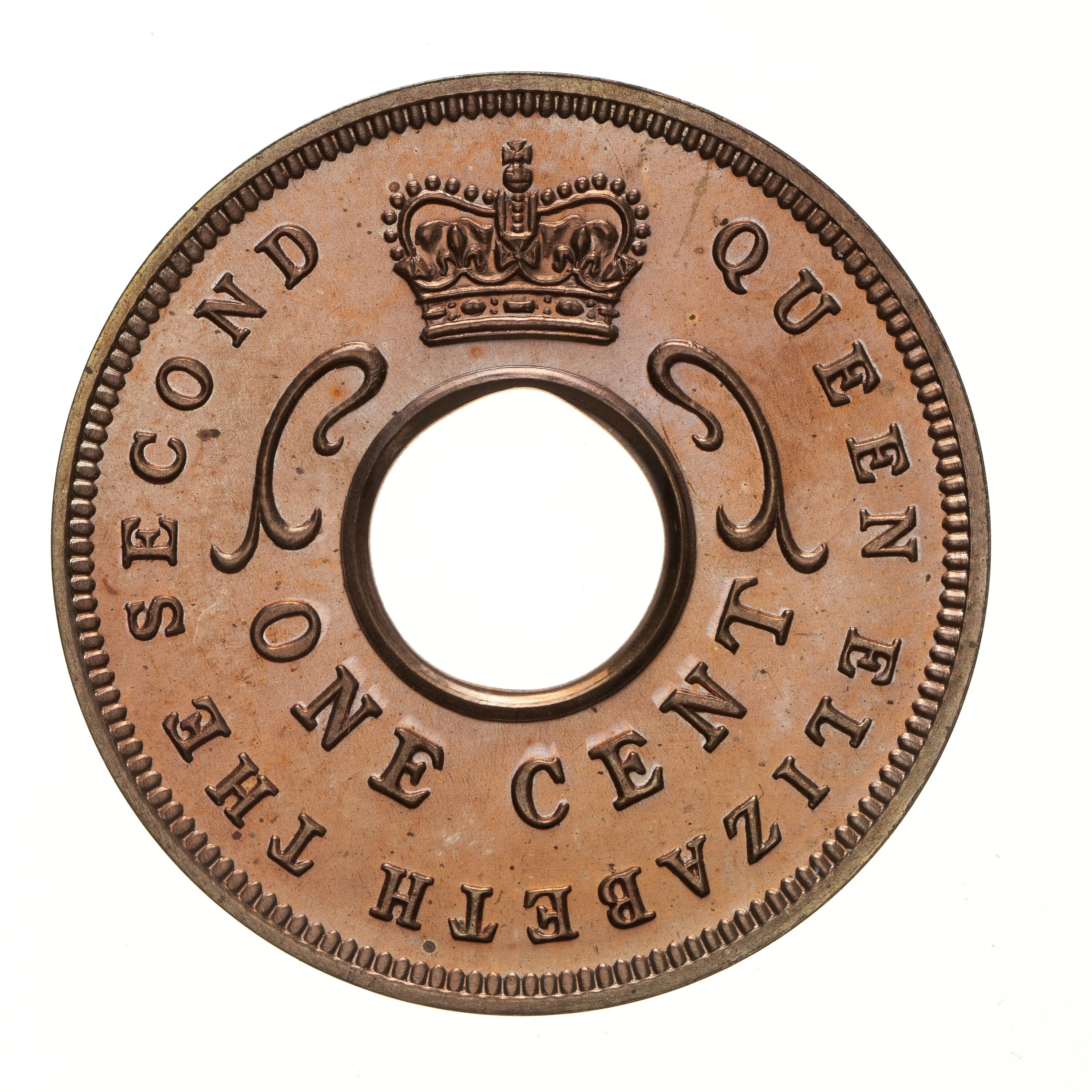
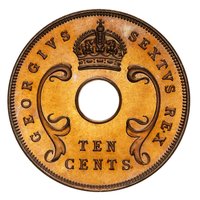
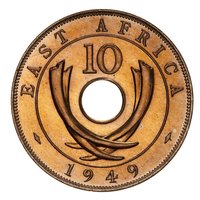
Center hole separates crown and denomination. Mint letter(s) tiny below hole.
Inscription:
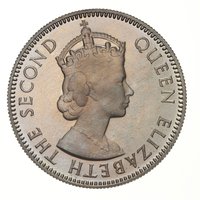
QUEEN ELIZABETH THE SECOND
H
ONE CENT
H
ONE CENT
Script: Latin
Reverse
Edge
Plain
Mints
| Name | Mark |
|---|---|
| Royal Mint (Tower Hill) | — |
| Heaton and Sons / The Mint Birmingham | H |
| Kings Norton Metal Company | KN |
Mintings
Historical background
In 1954, East Africa’s currency landscape was defined by the East African Shilling, a unified currency managed by the East African Currency Board (EACB). Established in 1919 and headquartered in London, the EACB served the British territories of Kenya, Uganda, Tanganyika, and Zanzibar. The system was a classic colonial currency board arrangement, where the local currency was fully backed by sterling reserves held in London and pegged at a fixed rate to the British Pound. This ensured stability and facilitated trade within the region and with the British Empire, but it also meant monetary policy was entirely subordinated to the needs of the sterling area, with no independent capacity to address local economic conditions.
The period was one of apparent stability but underlying tension. The post-World War II economic boom and commodity exports like coffee, cotton, and sisal supported the currency's credibility. However, the system drew criticism for its inherent colonial structure. The pooling of reserves in London was seen as a drain of capital from the colonies, limiting local investment. Furthermore, the benefits of a common currency were uneven, often favouring Kenya, which had a more developed settler economy and was the region's commercial hub. This created friction among the territories, each with differing economic priorities and stages of development.
By the mid-1950s, the political winds were shifting with the rise of nationalist movements across the region. While the currency board would continue to operate for over a decade, the demands for self-government and economic autonomy began to question its future. The year 1954 thus represents the late colonial peak of a unified monetary system, operating efficiently on the surface but increasingly at odds with the political and economic aspirations of the territories it served, foreshadowing its eventual dissolution into separate national currencies after independence.
The period was one of apparent stability but underlying tension. The post-World War II economic boom and commodity exports like coffee, cotton, and sisal supported the currency's credibility. However, the system drew criticism for its inherent colonial structure. The pooling of reserves in London was seen as a drain of capital from the colonies, limiting local investment. Furthermore, the benefits of a common currency were uneven, often favouring Kenya, which had a more developed settler economy and was the region's commercial hub. This created friction among the territories, each with differing economic priorities and stages of development.
By the mid-1950s, the political winds were shifting with the rise of nationalist movements across the region. While the currency board would continue to operate for over a decade, the demands for self-government and economic autonomy began to question its future. The year 1954 thus represents the late colonial peak of a unified monetary system, operating efficiently on the surface but increasingly at odds with the political and economic aspirations of the territories it served, foreshadowing its eventual dissolution into separate national currencies after independence.
🌱 Very Common