

1 paisa – Hyderabad-Elichpur Feudatory
Add to wishlist
India
Context
Material
References
Numista: #58113
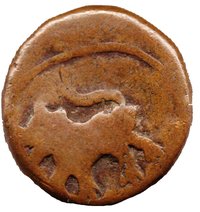
Obverse
Description:
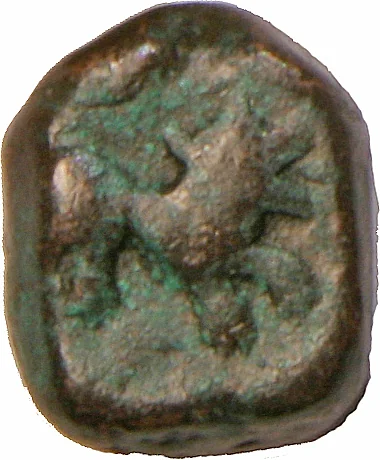
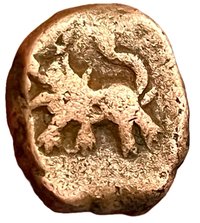
Lion facing right.
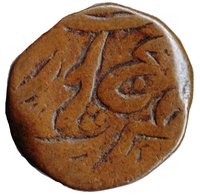
Reverse
Edge
Mintings
| Year | Mint Mark | Mintage | Quality | Collection |
|---|---|---|---|---|
| — | — | — |
Historical background
In 1834, the Hyderabad-Elichpur (Berar) feudatory region was caught in a complex and deteriorating currency situation, characteristic of the wider monetary disorder within the Nizam's dominions. The primary unit was the Hyderabadi Rupee, a silver coin, but its circulation was severely hampered by chronic shortages of precious metal. This scarcity was exacerbated by the region's economic stagnation, heavy tribute payments to the Nizam, and the political instability following the decline of the Maratha Confederacy, of which the Elichpur (Bhonsle) rulers were once a part. Consequently, a multitude of older, debased, and foreign coins, including Mughal, Maratha, and even Company rupees, circulated at fluctuating values, creating confusion and hindering trade.
The core of the problem lay in the severe debasement of the coinage. Local authorities and mints, facing fiscal desperation, frequently issued coins with significantly lower silver content than their face value proclaimed. This practice led to a loss of public confidence, Gresham's Law dynamics (where "bad money drives out good"), and the hoarding of full-weight coins. Furthermore, the East India Company, which was increasingly the dominant political and military power in the region following the treaties of 1818 and 1822, primarily circulated its own standardized Company Rupee. This created a dual-system where the Company's currency was preferred for larger transactions and revenue payments, undermining the local feudal currency.
This monetary chaos had direct political implications. The inability to manage a stable currency was a symptom of the feudatory's weakening sovereignty and administrative decline. It complicated revenue collection, fostered corruption at local mints, and strained economic relations with neighboring territories and the British. The situation in 1834 thus represented a transitional phase, where the old feudal monetary order was collapsing, paving the way for the eventual full integration of the region into the British Indian monetary system, a process that would accelerate after the British takeover of Berar in 1853.
The core of the problem lay in the severe debasement of the coinage. Local authorities and mints, facing fiscal desperation, frequently issued coins with significantly lower silver content than their face value proclaimed. This practice led to a loss of public confidence, Gresham's Law dynamics (where "bad money drives out good"), and the hoarding of full-weight coins. Furthermore, the East India Company, which was increasingly the dominant political and military power in the region following the treaties of 1818 and 1822, primarily circulated its own standardized Company Rupee. This created a dual-system where the Company's currency was preferred for larger transactions and revenue payments, undermining the local feudal currency.
This monetary chaos had direct political implications. The inability to manage a stable currency was a symptom of the feudatory's weakening sovereignty and administrative decline. It complicated revenue collection, fostered corruption at local mints, and strained economic relations with neighboring territories and the British. The situation in 1834 thus represented a transitional phase, where the old feudal monetary order was collapsing, paving the way for the eventual full integration of the region into the British Indian monetary system, a process that would accelerate after the British takeover of Berar in 1853.
⭐ Rare