

1 paisa – Hyderabad-Elichpur Feudatory
Add to wishlist
India
Context
Material
Diameter: 16 mm
Weight: 12.8 g
Thickness: 6 mm
Shape: Irregular round
Composition: Copper
Magnetic: No
References
Numista: #44102
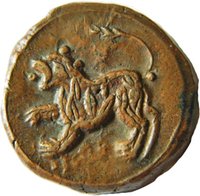
Obverse
Description:
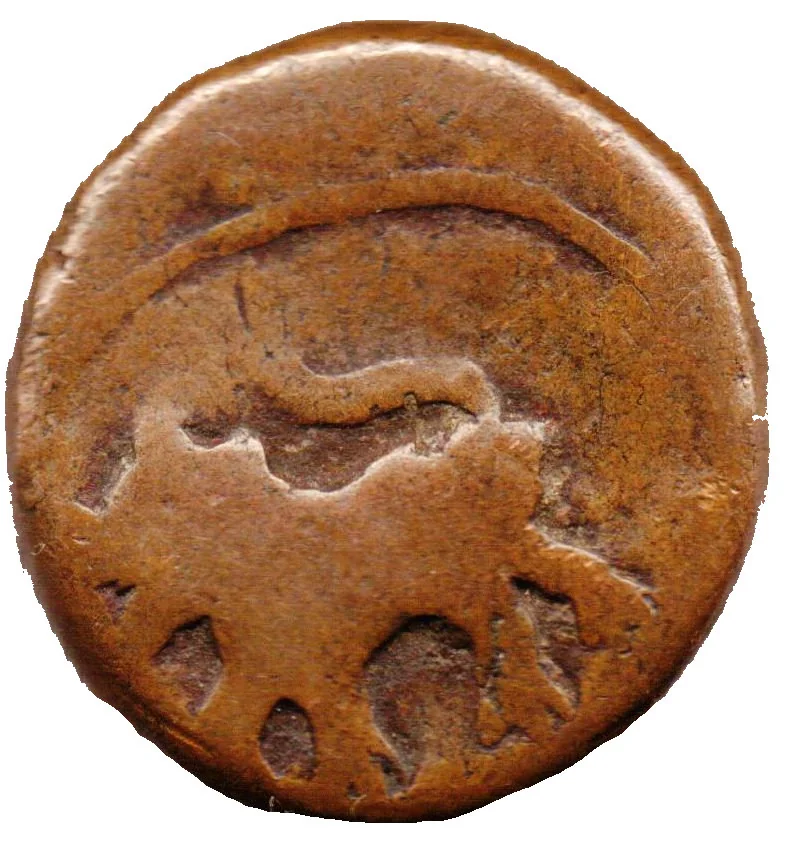
Lion, tail raised.
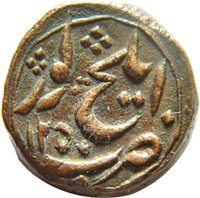
Reverse
Description:
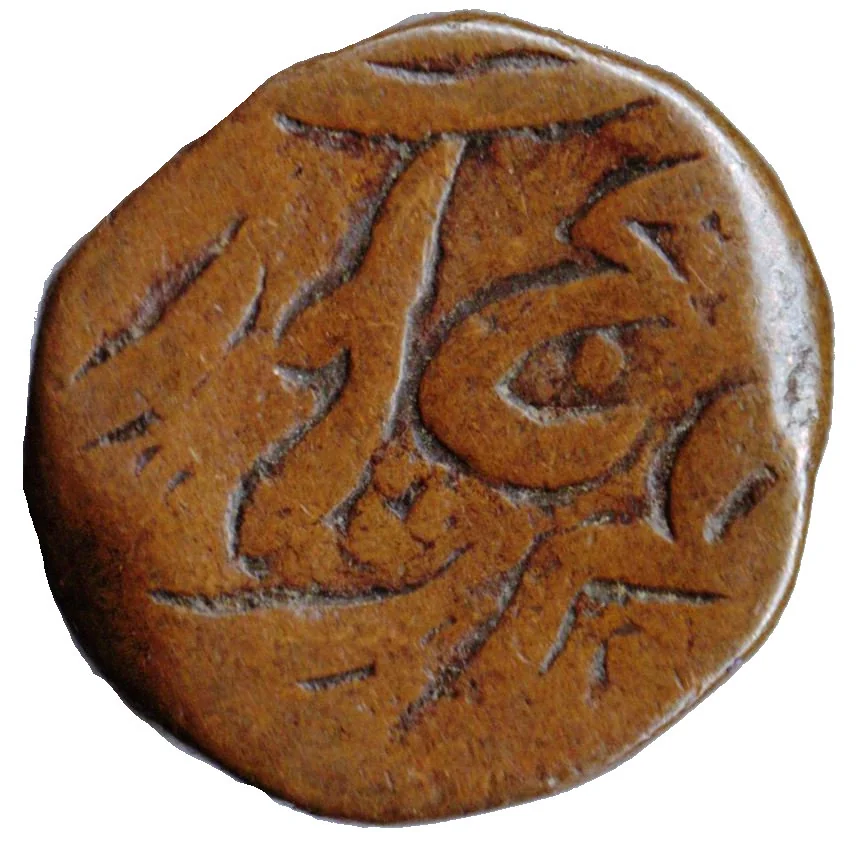
نام ضرابخانه
Edge
Plain
Mintings
| Year | Mint Mark | Mintage | Quality | Collection |
|---|---|---|---|---|
| 1835 | — | — | ||
| 1847 | — | — | ||
| 1869 | — | — |
Historical background
In 1835, the Hyderabad-Elichpur (Ellichpur) feudatory, referring to the region around present-day Amravati in Maharashtra, operated within the complex monetary system of the Hyderabad State under the Nizam's rule. The primary currency was the Hyderabadi Rupee, a silver coin distinct from the British East India Company's rupee, though both circulated. The Nizam's currency system was decentralized, with various mints across the state, leading to variations in coinage weight and purity. Alongside these, older Mughal-era rupees and even Maratha chhapas (hammered coins) from the recent Berar region past remained in circulation, creating a heterogeneous monetary environment where the value of coins depended heavily on their intrinsic silver content and local acceptance.
The specific "feudatory" context is crucial, as local jagirdars (landholders) and officials in the Elichpur area often exercised significant autonomy. They collected revenue in recognized rupees but also engaged in the widespread practice of "sikka" or the right of coinage. It was common for local authorities to strike their own copper and silver coins, or more frequently, to counterstamp existing Hyderabad State or Company rupees with their own marks. This served to validate the coin for local use, assert authority, and sometimes extract seigniorage. Consequently, a transaction in 1835 Elichpur might involve a Hyderabad rupee stamped with a local noble's symbol, a British rupee, and various small copper dams for fractional purchases.
This period, however, marked a transition. The British East India Company, following the treaties after the Third Anglo-Maratha War (1818), held increasing political and economic sway as the "Paramount Power." While the Nizam retained internal sovereignty, British Indian rupees began to circulate more widely, creating a bimetallic and multi-standard system. The lack of uniform coinage often complicated trade and revenue collection, foreshadowing the greater monetary integration and standardization that would be imposed across India after the British Crown took direct control in 1858. Thus, the currency situation in 1835 Elichpur was a layered tapestry of declining indigenous minting rights, persistent local practices, and the creeping influence of colonial monetary consolidation.
The specific "feudatory" context is crucial, as local jagirdars (landholders) and officials in the Elichpur area often exercised significant autonomy. They collected revenue in recognized rupees but also engaged in the widespread practice of "sikka" or the right of coinage. It was common for local authorities to strike their own copper and silver coins, or more frequently, to counterstamp existing Hyderabad State or Company rupees with their own marks. This served to validate the coin for local use, assert authority, and sometimes extract seigniorage. Consequently, a transaction in 1835 Elichpur might involve a Hyderabad rupee stamped with a local noble's symbol, a British rupee, and various small copper dams for fractional purchases.
This period, however, marked a transition. The British East India Company, following the treaties after the Third Anglo-Maratha War (1818), held increasing political and economic sway as the "Paramount Power." While the Nizam retained internal sovereignty, British Indian rupees began to circulate more widely, creating a bimetallic and multi-standard system. The lack of uniform coinage often complicated trade and revenue collection, foreshadowing the greater monetary integration and standardization that would be imposed across India after the British Crown took direct control in 1858. Thus, the currency situation in 1835 Elichpur was a layered tapestry of declining indigenous minting rights, persistent local practices, and the creeping influence of colonial monetary consolidation.
⭐ Somewhat Rare