

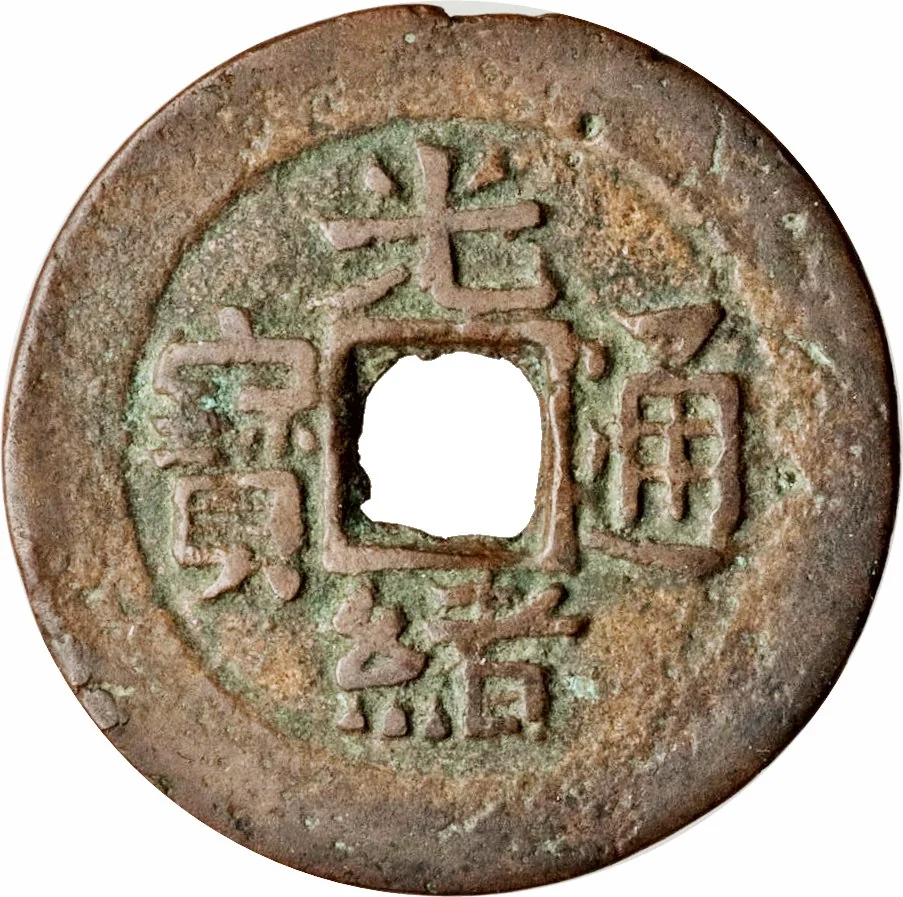
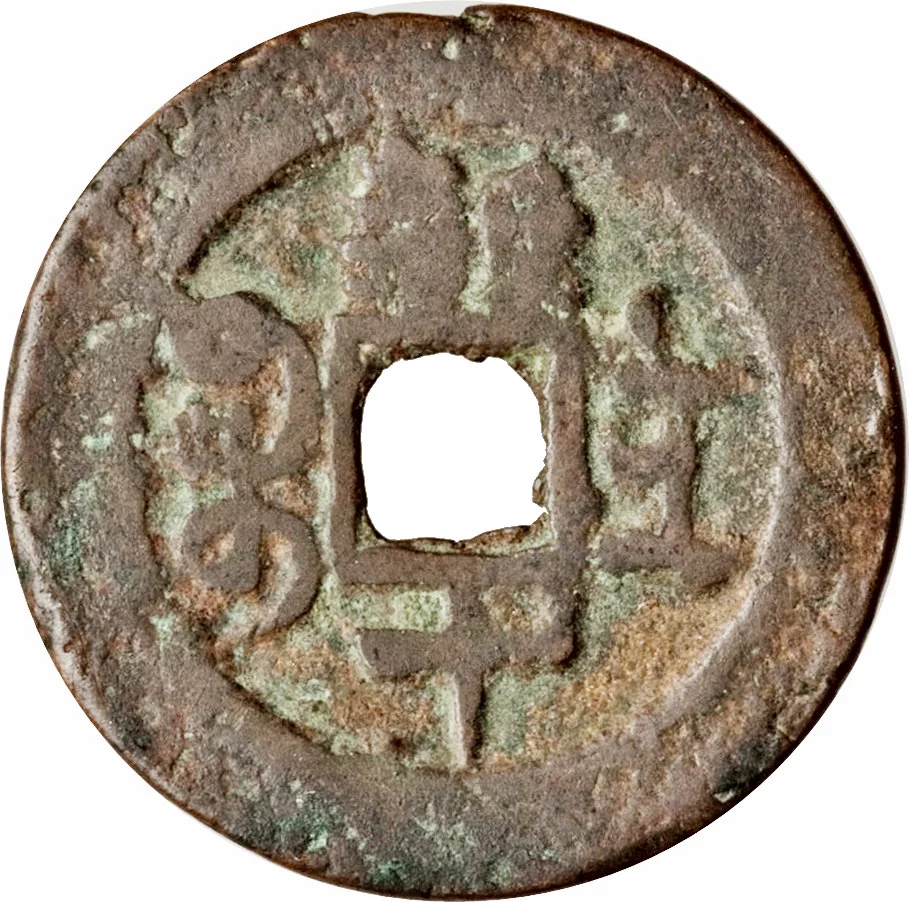
10 Cash – South Xinjiang
China
Context
Years: 1886–1906
Country: China 
Issuer: South Xinjiang
Ruler: Guangxu
Currency:
(1759—1909)
Demonetized: Yes
Material
Diameter: 25 mm
Weight: 3.4 g
Shape: Round with a square hole
Composition: Copper
Magnetic: No
Technique: Cast
Alignment: Medal alignment
flip
References
KM: #Click to copy to clipboard9
Numista: #58031
Obverse
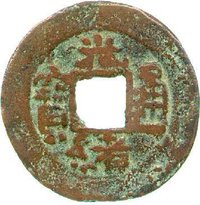
Description:
Four Chinese characters read vertically, right to left.
Inscription:
光
寶 通
绪
寶 通
绪
Translation:
Guangxu
Tong Bao
Tong Bao
Scripts: Chinese (traditional, regular script)
Language: Chinese
Reverse
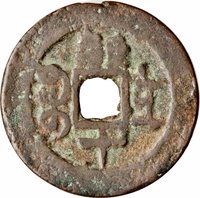
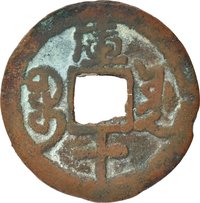
Description:
One Chinese ideogram above and below, one Manchu word left and right.
Inscription:
新
ᠪᠣᠣ ᠰᡳᡝ
十
ᠪᠣᠣ ᠰᡳᡝ
十
Translation:
Boo sie
Ten
Ten
Edge
Plain
Mints
| Name | Mark |
|---|---|
| Urumchi Mint | — |
Mintings
| Year | Mint Mark | Mintage | Quality | Collection |
|---|---|---|---|---|
| — | — | — |
Historical background
In 1886, the currency situation in South Xinjiang (the Tarim Basin region) was characterized by profound complexity and instability, a direct legacy of its position at the crossroads of empires. Following the Qing reconquest of the region from the Yakub Beg-led state in 1877-78, imperial authorities sought to reassert monetary control. The primary goal was to replace the diverse silver and copper coinage that had circulated during the period of independence and local rule with standardized Qing coinage, specifically Xinjiang red cash (Hongqian). These distinctive, low-value copper coins with a high alloy content were minted locally under imperial authority, intended to unify the currency and symbolize Qing sovereignty.
However, in practice, the monetary landscape remained fragmented and chaotic. The red cash competed with older pul coins from Kashgar and Yarkand, which remained in wide circulation and were trusted by the local populace. More significantly, substantial amounts of Russian silver rubles and gold coins flowed into the region through burgeoning cross-border trade, often preferred for large transactions due to their higher and more reliable silver content. This created a multi-tiered system where Russian coins served as high-value trade currency, while a mix of local and official copper coins facilitated everyday market exchanges, all with fluctuating and locally determined exchange rates.
This currency disorder presented a significant obstacle to Qing administrative and economic consolidation. It hampered tax collection, complicated military logistics, and reflected the broader challenges of integrating a culturally distinct, geographically remote frontier region into the imperial economy. The situation in 1886 thus encapsulates a transitional and turbulent period, where the Qing state's efforts to impose monetary order were actively contested by pre-existing local practices and the powerful economic influence of the Russian Empire.
However, in practice, the monetary landscape remained fragmented and chaotic. The red cash competed with older pul coins from Kashgar and Yarkand, which remained in wide circulation and were trusted by the local populace. More significantly, substantial amounts of Russian silver rubles and gold coins flowed into the region through burgeoning cross-border trade, often preferred for large transactions due to their higher and more reliable silver content. This created a multi-tiered system where Russian coins served as high-value trade currency, while a mix of local and official copper coins facilitated everyday market exchanges, all with fluctuating and locally determined exchange rates.
This currency disorder presented a significant obstacle to Qing administrative and economic consolidation. It hampered tax collection, complicated military logistics, and reflected the broader challenges of integrating a culturally distinct, geographically remote frontier region into the imperial economy. The situation in 1886 thus encapsulates a transitional and turbulent period, where the Qing state's efforts to impose monetary order were actively contested by pre-existing local practices and the powerful economic influence of the Russian Empire.

💎 Very Rare