

300 dollars – Canada
Add to wishlist
Canada
Context
Material
References
KM: #
Numista: #57996
Value
Exchange value: 300 CAD
Bullion value: $5373.00
Inflation-adjusted value: 425.56 CAD
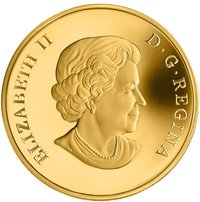
Obverse
Description:
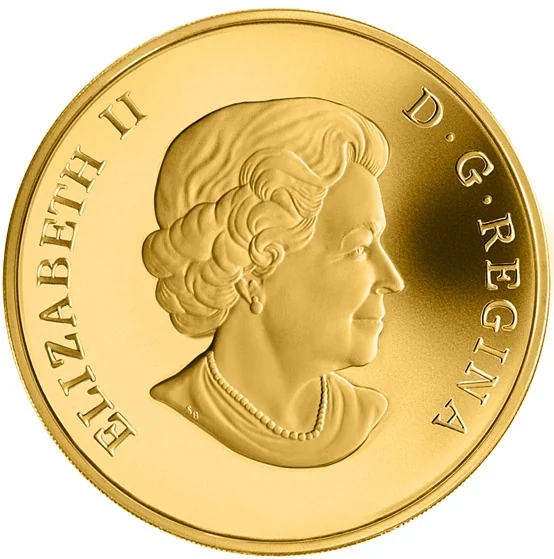
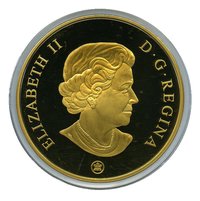
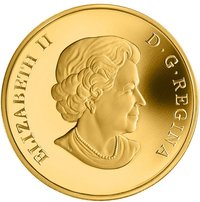
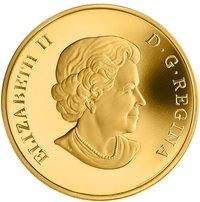
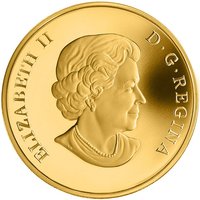
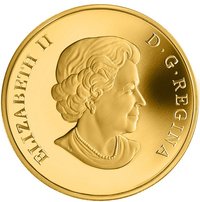
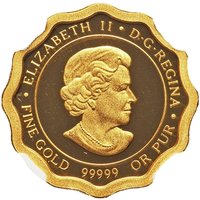
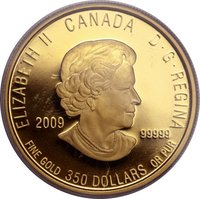
Queen Elizabeth II at 77, facing right, wearing a necklace and earrings.
Inscription:
ELIZABETH II D•G•REGINA
Translation:
Elizabeth II by the Grace of God, Queen
Script: Latin
Language: Latin
Engraver: Susan Taylor
Designer: Susanna Blunt
Reverse
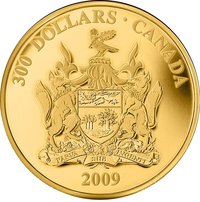
Description:
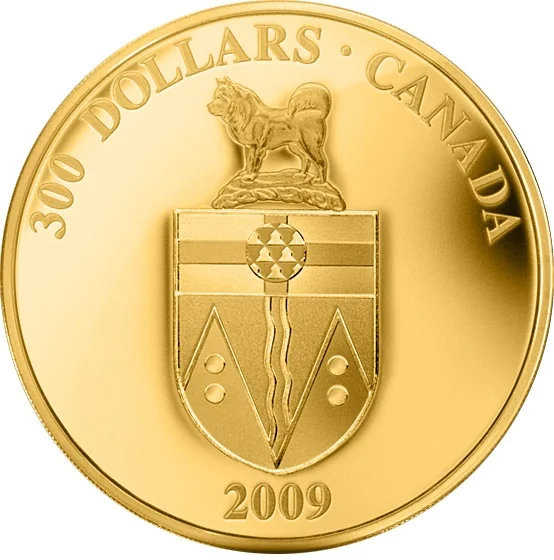
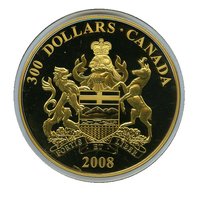
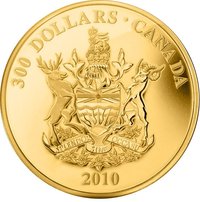
Yukon coat of arms
Inscription:
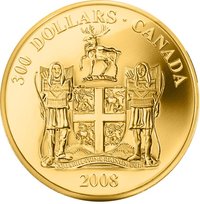
300 DOLLARS • CANADA
2009
2009
Script: Latin
Engraver: Marcos Hallam
Edge
Serrated
Categories
| Symbols> Coat of Arms |
Mints
| Name | Mark |
|---|---|
| Royal Canadian Mint of Ottawa | — |
Mintings
| Year | Mint Mark | Mintage | Quality | Collection |
|---|---|---|---|---|
| 2009 | — | 325 | Proof |
Historical background
In 2009, Canada's currency situation was dominated by the global financial crisis and its dramatic impact on the Canadian dollar (CAD). The year began with the loonie, as it is colloquially known, in a state of significant weakness, trading near a multi-year low of approximately 77 US cents in early March. This depreciation was a direct result of a global "flight to safety," where investors fled to the perceived security of the US dollar, and a concurrent collapse in commodity prices. As a resource-based currency, the CAD was severely pressured by the sharp decline in oil, minerals, and other export commodities, which crippled a core pillar of the Canadian economy.
The trajectory of the year, however, saw a remarkable reversal. As global financial markets began to stabilize in the spring and signs of economic recovery emerged, investor risk appetite returned. Coupled with a rebound in commodity prices, particularly oil, this shift triggered a sustained rally for the Canadian dollar. By October, the loonie had surged to parity with the US dollar, a level not seen since the summer of 2008. This rapid appreciation was a double-edged sword: while it reduced the cost of imports and foreign travel for Canadians, it posed a serious threat to the country's export-oriented manufacturing and industrial sectors, especially in central Canada, by making their goods more expensive abroad.
Throughout this volatility, the Bank of Canada, under Governor Mark Carney, maintained a highly accommodative monetary policy to combat the recession. The central bank cut its key overnight lending rate to a historic low of 0.25% in April and committed to keeping it there until mid-2010. This aggressive stance, aimed at stimulating domestic demand, also had the effect of limiting the currency's rise by keeping Canadian yields low. Thus, the 2009 currency narrative was one of extreme swing—from a crisis-driven low to a commodity-fueled parity—unfolding against a backdrop of unprecedented monetary stimulus and a fragile economic recovery.
The trajectory of the year, however, saw a remarkable reversal. As global financial markets began to stabilize in the spring and signs of economic recovery emerged, investor risk appetite returned. Coupled with a rebound in commodity prices, particularly oil, this shift triggered a sustained rally for the Canadian dollar. By October, the loonie had surged to parity with the US dollar, a level not seen since the summer of 2008. This rapid appreciation was a double-edged sword: while it reduced the cost of imports and foreign travel for Canadians, it posed a serious threat to the country's export-oriented manufacturing and industrial sectors, especially in central Canada, by making their goods more expensive abroad.
Throughout this volatility, the Bank of Canada, under Governor Mark Carney, maintained a highly accommodative monetary policy to combat the recession. The central bank cut its key overnight lending rate to a historic low of 0.25% in April and committed to keeping it there until mid-2010. This aggressive stance, aimed at stimulating domestic demand, also had the effect of limiting the currency's rise by keeping Canadian yields low. Thus, the 2009 currency narrative was one of extreme swing—from a crisis-driven low to a commodity-fueled parity—unfolding against a backdrop of unprecedented monetary stimulus and a fragile economic recovery.
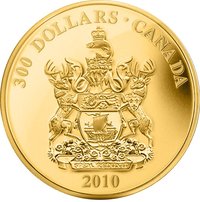
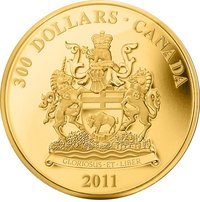
Series: Provincial Coat of Arms

✨ Legendary