

100 réis – Portugal
Add to wishlist
Portugal
Context
Material
Diameter: 23 mm
Weight: 4 g
Thickness: 1.3 mm
Shape: Round
Composition: Copper-nickel
Technique: Milled
Alignment: Coin alignment
flip
References
KM: #
Numista: #5794
Obverse
Description:
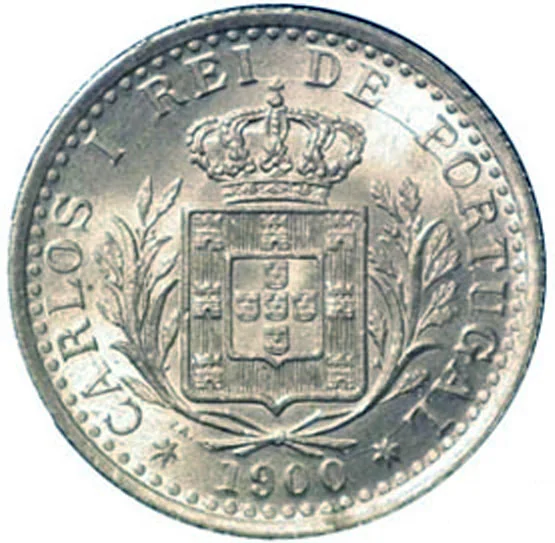
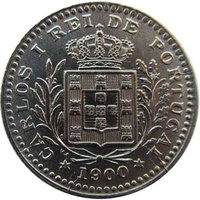
Portugal’s crowned shield within a wreath, surrounded by lettering, the date below, all inside a beaded border.
Inscription:
CARLOS I REI DE PORTUGAL
* 1900 *
* 1900 *
Translation:
CARLOS I KING OF PORTUGAL
* 1900 *
* 1900 *
Script: Latin
Language: Portuguese
Reverse
Description:
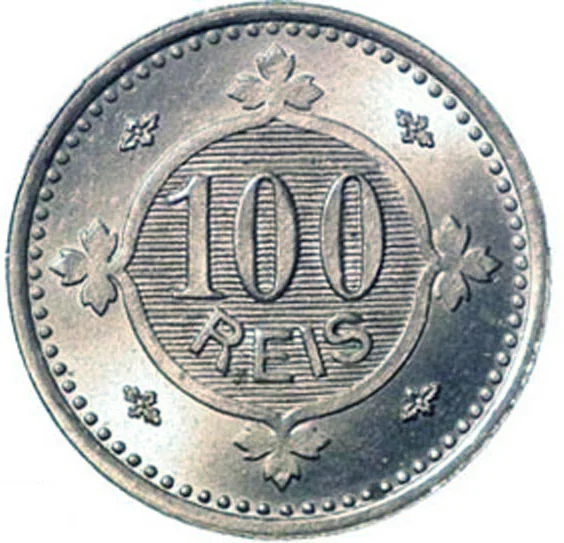
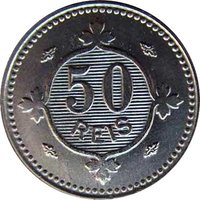
A central circle with horizontal lines holds the value, surrounded by a beaded border with a leaf at each quarter and a flower between them.
Inscription:
100
REIS
REIS
Script: Latin
Edge
Reeded
Categories
| Symbols> Coat of Arms |
Mints
| Name | Mark |
|---|---|
| Imprensa Nacional - Casa da Moeda | — |
Mintings
| Year | Mint Mark | Mintage | Quality | Collection |
|---|---|---|---|---|
| 1900 | — | 16,000,000 |
Historical background
By 1900, Portugal's currency situation was defined by the gold standard and the reis, a unit that had been in use for centuries but was increasingly unstable. The country had officially adopted the gold standard in 1854, pegging the value of the real (plural: réis) to gold. However, decades of economic stagnation, high public debt, and chronic budget deficits had severely strained this commitment. The state frequently resorted to printing paper money not fully backed by gold reserves, leading to a de facto system of paper currency with limited convertibility. This created a significant gap between the official gold parity and the market value of the reis, which traded at a steep discount internationally.
The period from the 1890s up to 1900 was one of profound monetary crisis. In 1891, a major sovereign debt default and a run on gold reserves forced the suspension of gold convertibility. Consequently, the currency entered a period of sharp depreciation and high inflation, eroding public confidence and international standing. By the turn of the century, the monetary system was fragmented, with a confusing circulation of both depreciated paper notes and older metallic coinage. Large transactions were often reckoned in mil-réis (1,000 réis) or even conto de réis (1,000,000 réis), reflecting the low unit value and the inflationary environment.
This precarious financial backdrop was a central concern for the Portuguese monarchy and, later, the young republic established in 1910. The persistent weakness of the reis symbolized broader national economic frailties and hindered trade and investment. The search for monetary stability would ultimately lead to a major reform in 1911, following the republican revolution, which introduced the escudo, valued at 1,000 réis, in an attempt to reset and strengthen the national currency system. Thus, the year 1900 found Portugal in the latter stages of a failing monetary regime, actively seeking a path toward stabilization.
The period from the 1890s up to 1900 was one of profound monetary crisis. In 1891, a major sovereign debt default and a run on gold reserves forced the suspension of gold convertibility. Consequently, the currency entered a period of sharp depreciation and high inflation, eroding public confidence and international standing. By the turn of the century, the monetary system was fragmented, with a confusing circulation of both depreciated paper notes and older metallic coinage. Large transactions were often reckoned in mil-réis (1,000 réis) or even conto de réis (1,000,000 réis), reflecting the low unit value and the inflationary environment.
This precarious financial backdrop was a central concern for the Portuguese monarchy and, later, the young republic established in 1910. The persistent weakness of the reis symbolized broader national economic frailties and hindered trade and investment. The search for monetary stability would ultimately lead to a major reform in 1911, following the republican revolution, which introduced the escudo, valued at 1,000 réis, in an attempt to reset and strengthen the national currency system. Thus, the year 1900 found Portugal in the latter stages of a failing monetary regime, actively seeking a path toward stabilization.
🌱 Very Common