

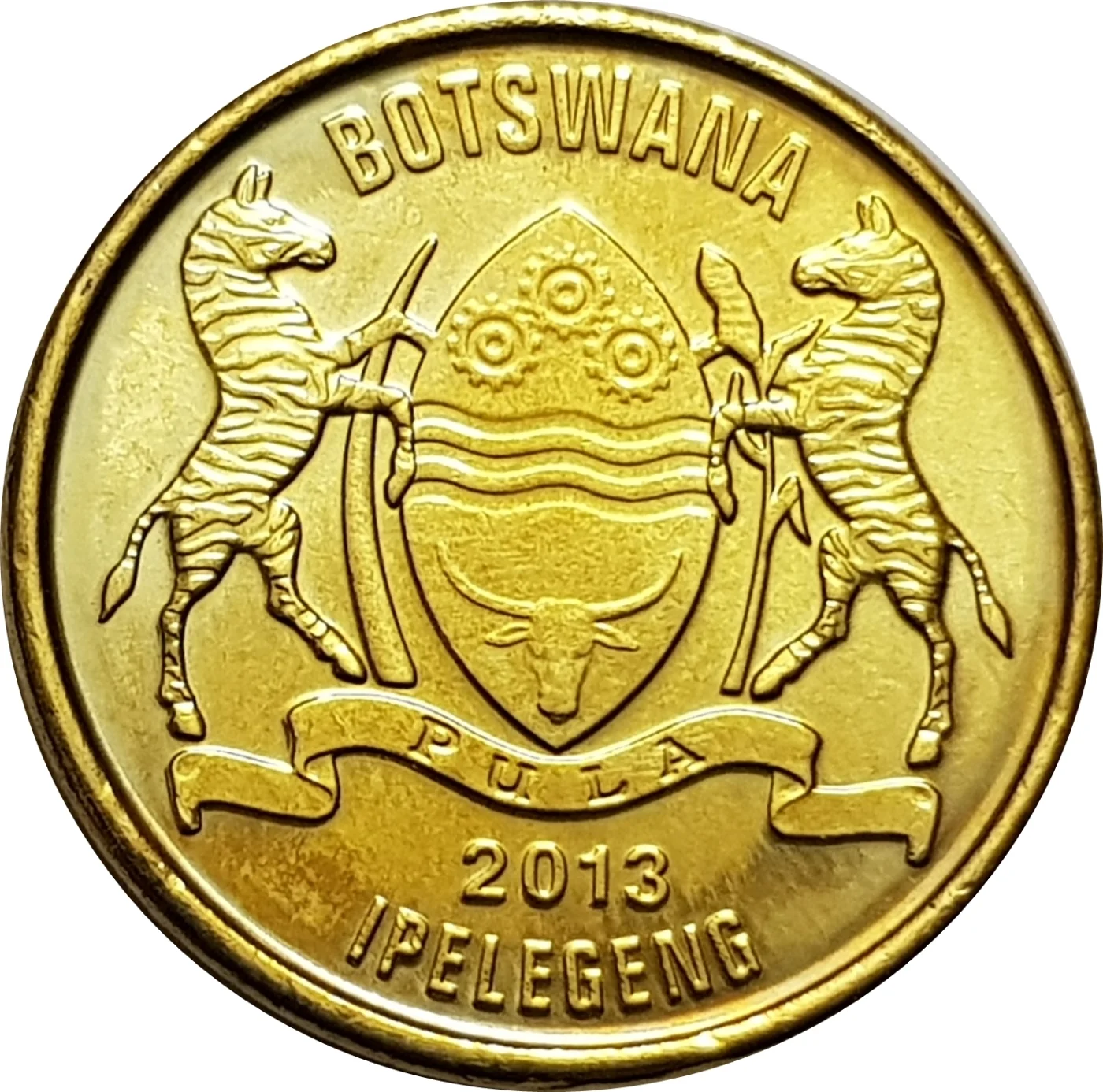
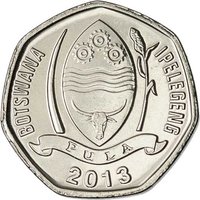
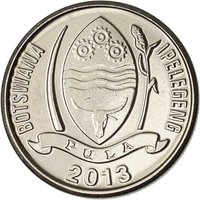
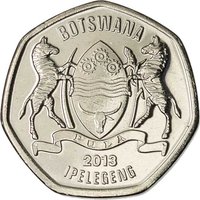
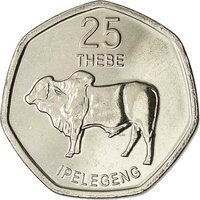
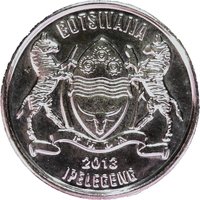
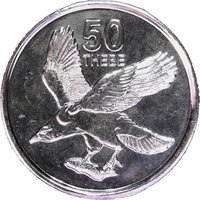
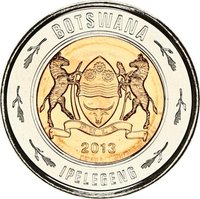
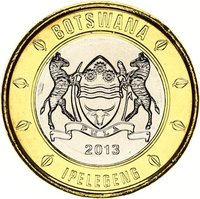
Obverse
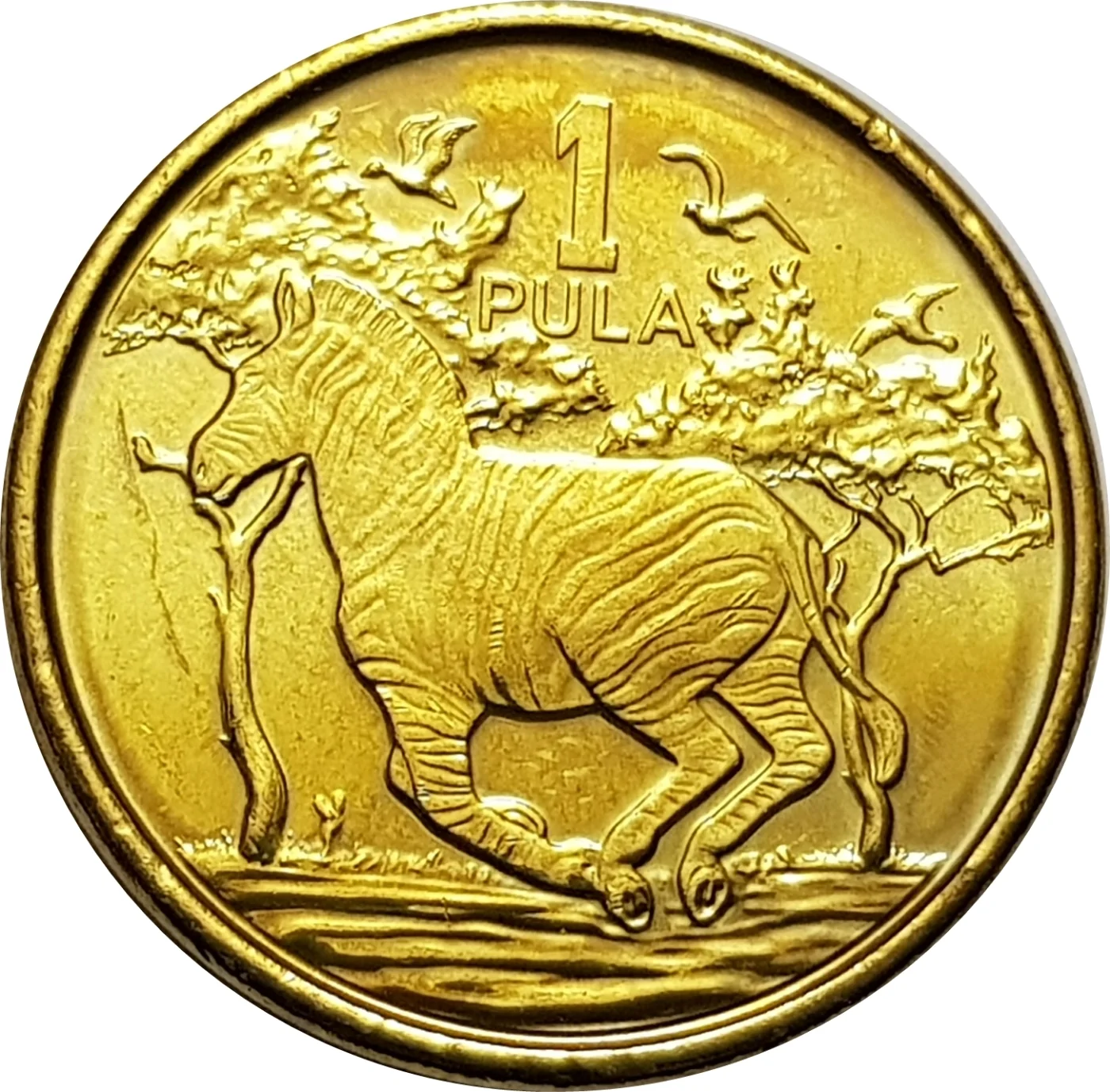
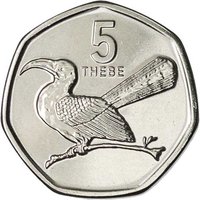
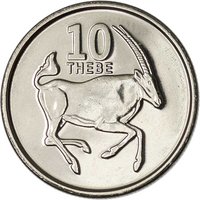
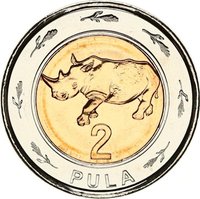
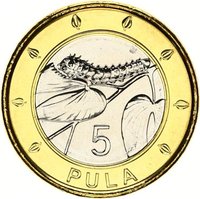
Reverse
Edge
Plain
Mints
| Name | Mark |
|---|---|
| Royal Canadian Mint of Winnipeg | — |
Mintings
| Year | Mint Mark | Mintage | Quality | Collection |
|---|---|---|---|---|
| 2013 | — | — | ||
| 2016 | — | — | ||
| 2022 | — | — |
Historical background
In 2013, Botswana's currency situation was characterized by stability and deliberate management, anchored by the Pula's long-standing peg to a basket of currencies, primarily the South African Rand and the International Monetary Fund's Special Drawing Rights (SDRs). This policy, administered by the Bank of Botswana, aimed to insulate the economy from excessive volatility, particularly given the country's close economic ties with South Africa. The basket's composition and weights were periodically adjusted, and in 2013, the central bank maintained this framework to ensure export competitiveness and domestic price stability, reflecting a prudent and conservative monetary tradition.
The year saw the Pula experience moderate depreciation pressure, largely influenced by the weakening of the Rand due to structural challenges and labour unrest in South Africa. Despite this external pressure, Botswana's strong macroeconomic fundamentals acted as a buffer. The country maintained substantial foreign exchange reserves (covering over 12 months of import cover) and ran consistent budget and current account surpluses, bolstered by a recovery in diamond demand following the 2009 global crisis. This fiscal discipline provided the central bank with significant leverage to defend the peg and manage the currency's value smoothly without resorting to drastic measures.
Overall, the 2013 currency environment underscored Botswana's economic resilience. The managed peg successfully navigated regional turbulence, while high reserves and prudent fiscal management from diamond revenues provided confidence. The primary focus for authorities remained on using monetary policy to control inflation within its target range and fostering non-mineral economic diversification, rather than on any currency crisis. The stability of the Pula was a testament to the country's sound economic governance in a year of regional uncertainty.
The year saw the Pula experience moderate depreciation pressure, largely influenced by the weakening of the Rand due to structural challenges and labour unrest in South Africa. Despite this external pressure, Botswana's strong macroeconomic fundamentals acted as a buffer. The country maintained substantial foreign exchange reserves (covering over 12 months of import cover) and ran consistent budget and current account surpluses, bolstered by a recovery in diamond demand following the 2009 global crisis. This fiscal discipline provided the central bank with significant leverage to defend the peg and manage the currency's value smoothly without resorting to drastic measures.
Overall, the 2013 currency environment underscored Botswana's economic resilience. The managed peg successfully navigated regional turbulence, while high reserves and prudent fiscal management from diamond revenues provided confidence. The primary focus for authorities remained on using monetary policy to control inflation within its target range and fostering non-mineral economic diversification, rather than on any currency crisis. The stability of the Pula was a testament to the country's sound economic governance in a year of regional uncertainty.
Series: 2013 Botswana circulation coins
🌱 Very Common