

100 Pesos – Mexico
Mexico
Context
Material
References
KM: #Click to copy to clipboard983
Numista: #57862
Value
Exchange value: 100 MXN = $5.82
Inflation-adjusted value: 164.13 MXN
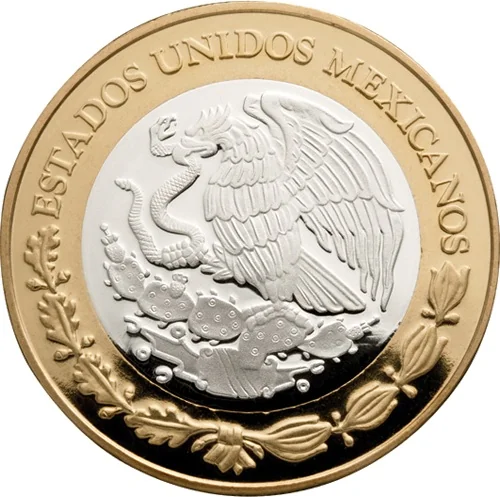
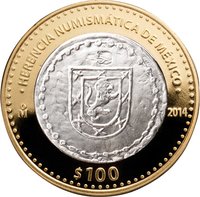
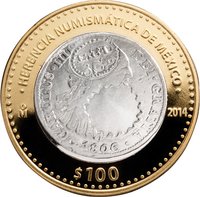
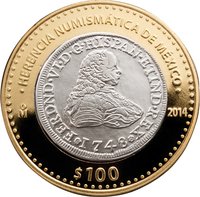
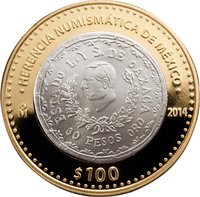
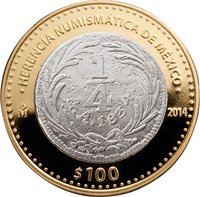
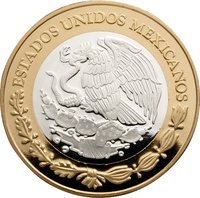
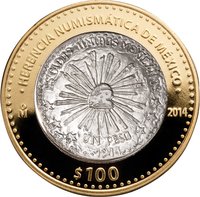
Obverse
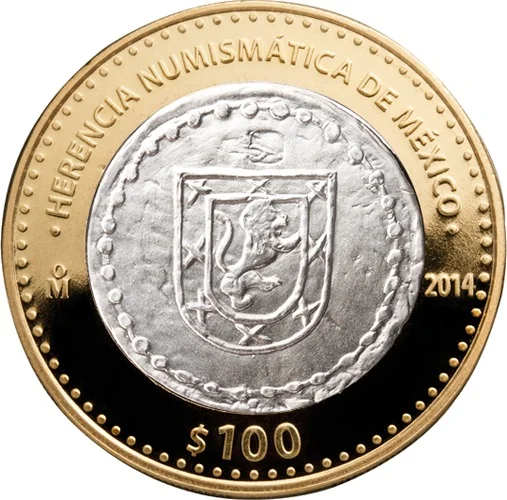
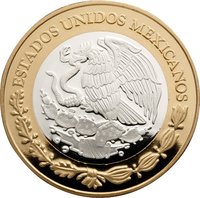
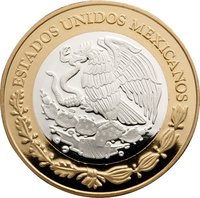
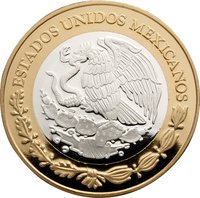
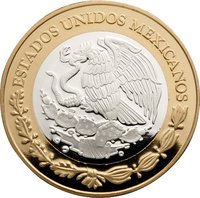
Reverse
Edge
Milled
Categories
| Animal> Bird> Eagle |
| Currency> Coin depiction |
| Symbols> Coat of Arms |
Mints
| Name | Mark |
|---|---|
| Mexican Mint | (Mo) |
Mintings
| Year | Mint Mark | Mintage | Quality | Collection |
|---|---|---|---|---|
| 2014 | Mo | 8,000 | Prooflike |
Historical background
In 2014, Mexico's currency, the peso, operated within a complex environment shaped by both domestic confidence and significant external pressures. Domestically, the year began with optimism following the landmark structural reforms—particularly in energy, telecommunications, and finance—enacted by President Enrique Peña Nieto's administration in 2013. These reforms promised to boost long-term economic growth and attract foreign investment, providing underlying support for the peso. The country maintained macroeconomic stability with controlled inflation, moderate growth, and sound fiscal management under the guidance of Banco de México, the independent central bank.
However, the peso's value was heavily influenced by external factors, primarily the monetary policy of the United States Federal Reserve. Throughout 2014, the Fed continued its "tapering" of quantitative easing, reducing the massive bond-buying program that had previously driven capital into emerging markets like Mexico. This shift led to a stronger US dollar globally and placed downward pressure on emerging market currencies. Furthermore, falling global oil prices in the latter half of the year posed a dual threat: reducing a key source of government revenue and raising concerns about Mexico's economic outlook, despite the recent energy reform aimed at boosting future production.
Consequently, the Mexican peso experienced notable depreciation against the US dollar during the year, moving from approximately 13.00 MXN/USD at the start of 2014 to nearly 14.70 by year-end. This decline was not seen as a crisis but rather as a managed adjustment to changing global financial conditions. Banco de México occasionally intervened in the foreign exchange market to smooth volatility, but generally allowed the peso to float freely, using interest rate policy to target inflation rather than a specific exchange rate. Thus, 2014 represented a period where the peso acted as a shock absorber, balancing domestic reform optimism against the headwinds of tightening US monetary policy and a shifting commodity landscape.
However, the peso's value was heavily influenced by external factors, primarily the monetary policy of the United States Federal Reserve. Throughout 2014, the Fed continued its "tapering" of quantitative easing, reducing the massive bond-buying program that had previously driven capital into emerging markets like Mexico. This shift led to a stronger US dollar globally and placed downward pressure on emerging market currencies. Furthermore, falling global oil prices in the latter half of the year posed a dual threat: reducing a key source of government revenue and raising concerns about Mexico's economic outlook, despite the recent energy reform aimed at boosting future production.
Consequently, the Mexican peso experienced notable depreciation against the US dollar during the year, moving from approximately 13.00 MXN/USD at the start of 2014 to nearly 14.70 by year-end. This decline was not seen as a crisis but rather as a managed adjustment to changing global financial conditions. Banco de México occasionally intervened in the foreign exchange market to smooth volatility, but generally allowed the peso to float freely, using interest rate policy to target inflation rather than a specific exchange rate. Thus, 2014 represented a period where the peso acted as a shock absorber, balancing domestic reform optimism against the headwinds of tightening US monetary policy and a shifting commodity landscape.
💎 Extremely Rare