

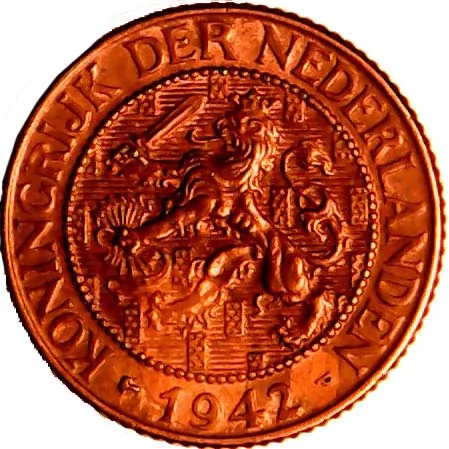
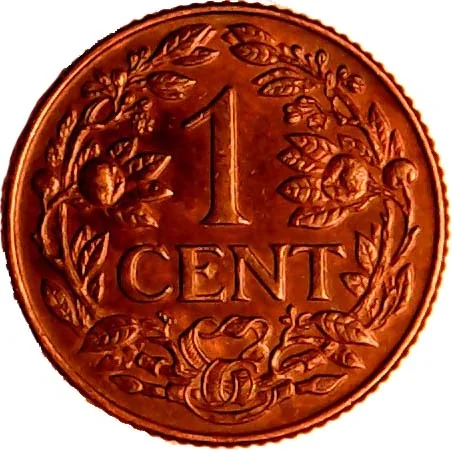
1 cent – Curaçao
Add to wishlist
Netherlands
Context
Year: 1942
Country: Netherlands
Issuer: Curaçao
Ruler: Wilhelmina
Currency:
(since 1828)
Demonetized: Yes
Total mintage: 500,000
Material
References
KM: #
Numista: #5782
Value
Exchange value: 0.01 ANG
Obverse
Reverse
Edge
Reeded
Mints
| Name | Mark |
|---|---|
| United States Mint of Philadelphia | P |
Mintings
| Year | Mint Mark | Mintage | Quality | Collection |
|---|---|---|---|---|
| 1942 | P | 500,000 |
Historical background
In 1942, Curaçao, a Dutch colony in the Caribbean, found itself in a complex and unique currency situation shaped by the Second World War. Following the German occupation of the Netherlands in May 1940, the island became a critical Allied asset due to its massive oil refinery at Willemstad, processing Venezuelan crude. This strategic importance led to the arrival of British and, later, American troops to protect the facility from Axis attacks. The political rupture with the occupied mother country and the influx of Allied forces created immediate monetary complications, as the official Dutch guilder's connection to the European banking system was severed.
To address the crisis, local authorities and the Curaçao government issued emergency paper money, known as "zilverbonnen" (silver certificates). These were not official banknotes but temporary scrip, intended to facilitate daily transactions and alleviate a coin shortage caused by hoarding. Crucially, the island also saw a significant circulation of U.S. dollars brought by American servicemen and tied to defense contracts, creating a de facto dual-currency environment. The situation was managed under the authority of the local government, as the central bank of the Netherlands (De Nederlandsche Bank) was under Nazi control and unable to function for the free Dutch territories.
This wartime monetary patchwork was formalized in 1944 with the establishment of the Bank of Curaçao (later the Bank of the Netherlands Antilles). This new institution was chartered to bring order to the currency system, taking over the issuance of guilders for Curaçao and the rest of the Dutch Antilles. Thus, the ad-hoc solutions of 1942—born from geopolitical crisis and military necessity—became the direct catalyst for the creation of a separate, autonomous central banking system for the islands, a legacy that endured long after the war's end.
To address the crisis, local authorities and the Curaçao government issued emergency paper money, known as "zilverbonnen" (silver certificates). These were not official banknotes but temporary scrip, intended to facilitate daily transactions and alleviate a coin shortage caused by hoarding. Crucially, the island also saw a significant circulation of U.S. dollars brought by American servicemen and tied to defense contracts, creating a de facto dual-currency environment. The situation was managed under the authority of the local government, as the central bank of the Netherlands (De Nederlandsche Bank) was under Nazi control and unable to function for the free Dutch territories.
This wartime monetary patchwork was formalized in 1944 with the establishment of the Bank of Curaçao (later the Bank of the Netherlands Antilles). This new institution was chartered to bring order to the currency system, taking over the issuance of guilders for Curaçao and the rest of the Dutch Antilles. Thus, the ad-hoc solutions of 1942—born from geopolitical crisis and military necessity—became the direct catalyst for the creation of a separate, autonomous central banking system for the islands, a legacy that endured long after the war's end.
🌱 Common