

5 cents – Curaçao
Add to wishlist
Netherlands
Context
Year: 1943
Country: Netherlands
Issuer: Curaçao
Ruler: Wilhelmina
Currency:
(since 1828)
Demonetized: Yes
Total mintage: 2,000,000
Material
Weight: 4.3 g
Thickness: 1.5 mm
Shape: Square with rounded corners
Magnetic: No
Technique: Milled
Alignment: Coin alignment
flip
References
KM: #
Numista: #167701
Value
Exchange value: 0.05 ANG
Obverse
Description:
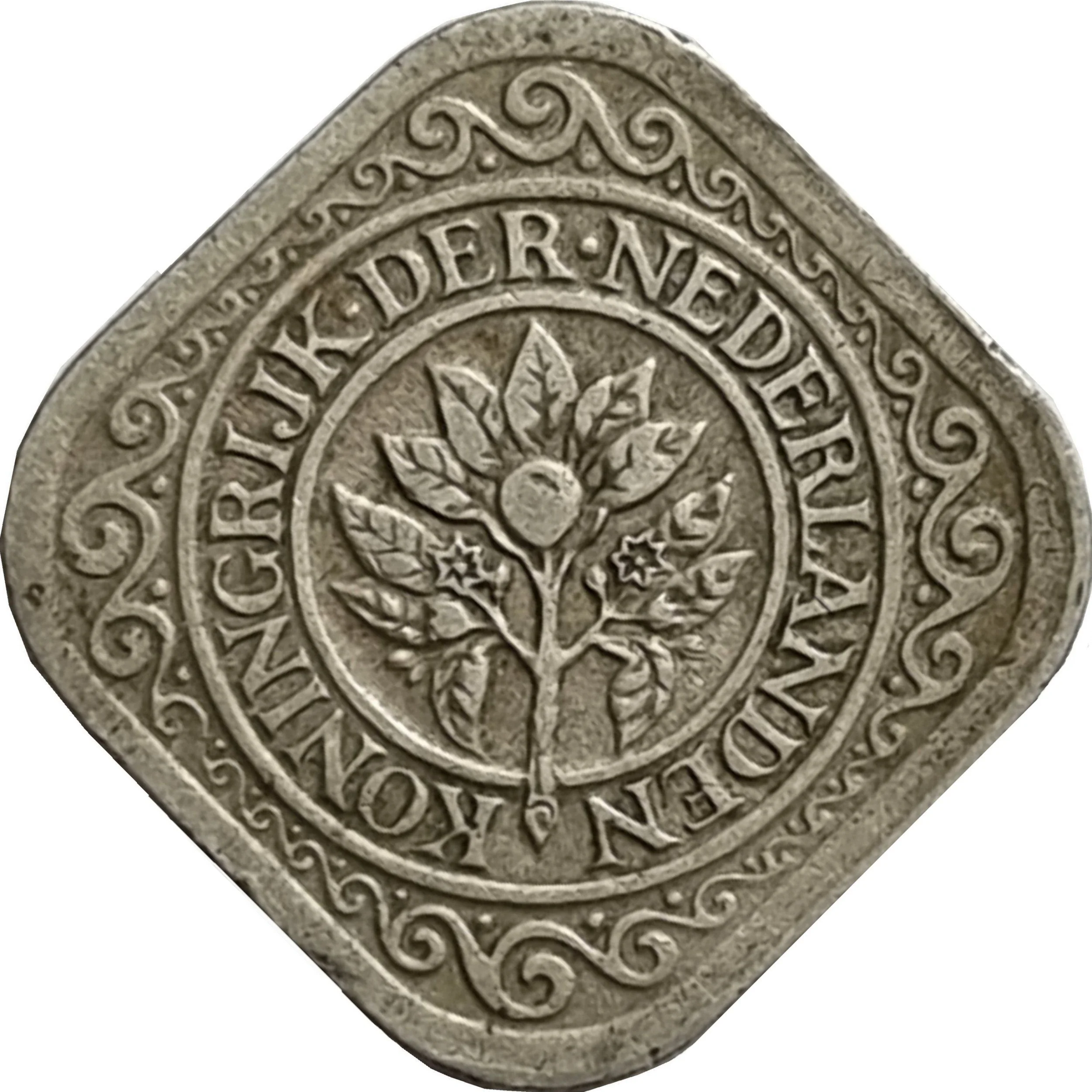
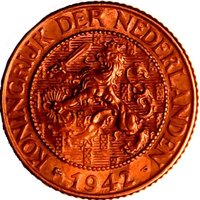
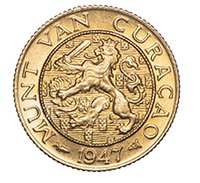
Orange branch with fruit inside a circle, Dutch text between circles, all within an outer decorative ring.
Inscription:
KONINGRIJK · DER · NEDERLANDEN
Translation:
KINGDOM OF THE NETHERLANDS
Script: Latin
Language: Dutch
Designer: Johannes Cornelis Wienecke
Reverse
Description:
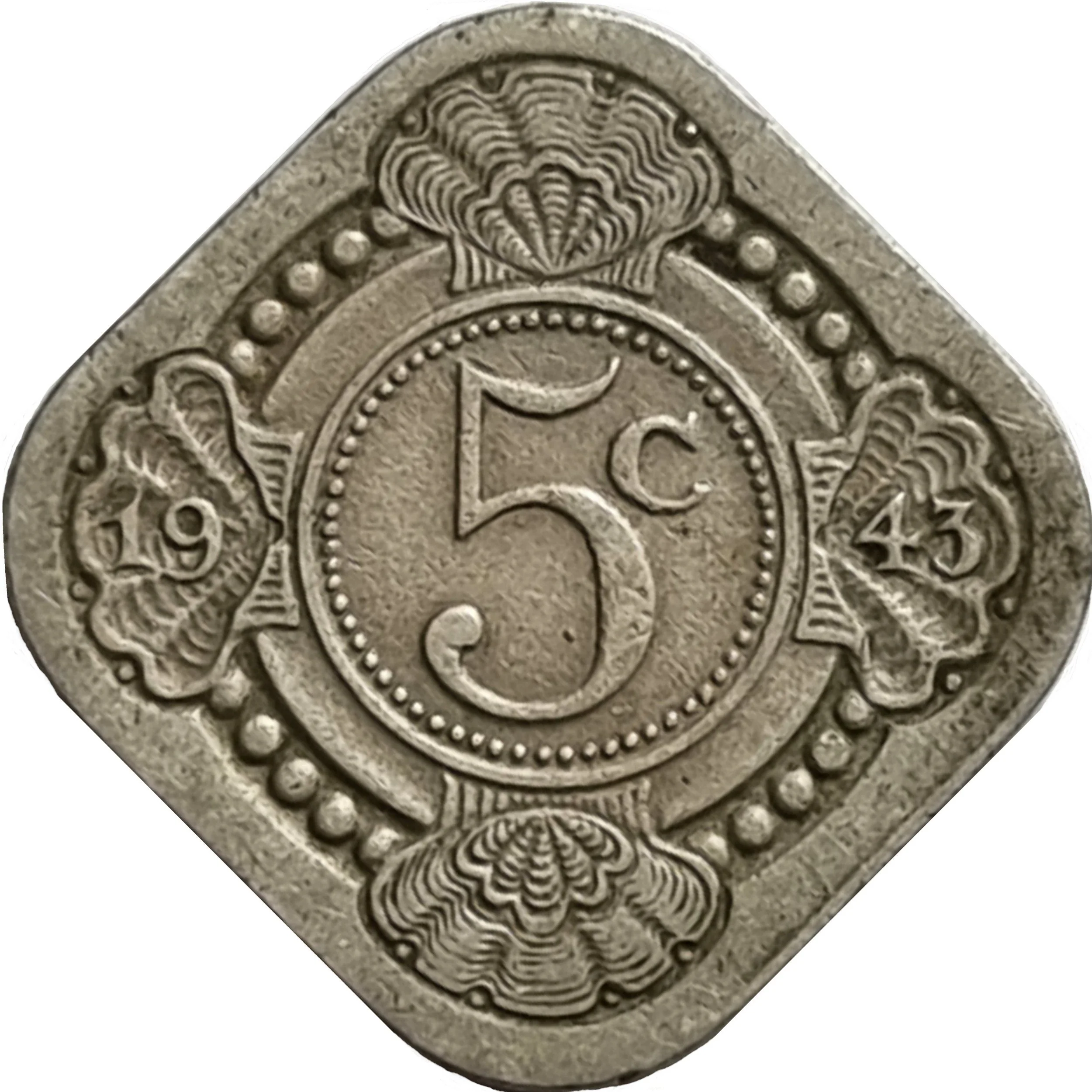
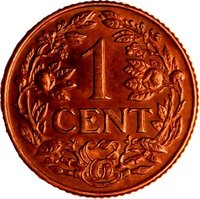
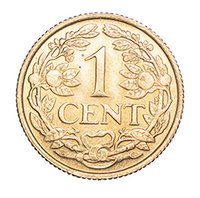
Shells with five beads, connected at corners, flank a central date.
Inscription:
5c
1943
1943
Script: Latin
Designer: Johannes Cornelis Wienecke
Edge
Plain
Mints
| Name | Mark |
|---|---|
| United States Mint of Philadelphia | — |
Mintings
| Year | Mint Mark | Mintage | Quality | Collection |
|---|---|---|---|---|
| 1943 | — | 2,000,000 |
Historical background
In 1943, Curaçao, a Dutch colony in the Caribbean, was operating under a unique and complex currency situation shaped by World War II. The island's strategic significance, due to its massive Royal Dutch Shell oil refinery processing Venezuelan crude for the Allied war effort, made it a vital but vulnerable asset. Following the German occupation of the Netherlands in 1940, the legitimate Dutch government-in-exile in London lost direct control, and the local administration on the island had to adapt. A key financial challenge was the risk of the large amounts of Dutch guilders on the island being seized or used by the enemy if the colony itself were captured.
To safeguard its monetary system, the Curaçao government, with approval from London, enacted a drastic measure: the demonetization of all pre-war Dutch banknotes. In 1942, a currency exchange was mandated, where old notes had to be swapped for new ones issued specifically for the colony, known as "Curaçao guilders." This process was strictly controlled and effectively rendered any old notes that might fall into enemy hands worthless. By 1943, this new, localized currency was firmly in circulation, physically distinct and legally separate from the metropolitan guilder, ensuring financial stability and autonomy from occupied Europe.
Thus, the currency situation in 1943 was one of a successfully implemented wartime emergency system. The Curaçao guilder, pegged to the US dollar due to the island's deep economic and military ties with the United States, provided a stable medium of exchange. This arrangement underscored the island's shifted economic alignment toward the Americas during the war and reflected a broader pattern of colonial territories developing provisional financial systems detached from their occupied European metropoles.
To safeguard its monetary system, the Curaçao government, with approval from London, enacted a drastic measure: the demonetization of all pre-war Dutch banknotes. In 1942, a currency exchange was mandated, where old notes had to be swapped for new ones issued specifically for the colony, known as "Curaçao guilders." This process was strictly controlled and effectively rendered any old notes that might fall into enemy hands worthless. By 1943, this new, localized currency was firmly in circulation, physically distinct and legally separate from the metropolitan guilder, ensuring financial stability and autonomy from occupied Europe.
Thus, the currency situation in 1943 was one of a successfully implemented wartime emergency system. The Curaçao guilder, pegged to the US dollar due to the island's deep economic and military ties with the United States, provided a stable medium of exchange. This arrangement underscored the island's shifted economic alignment toward the Americas during the war and reflected a broader pattern of colonial territories developing provisional financial systems detached from their occupied European metropoles.
🌱 Common