

1 Real – Mexico
Mexico
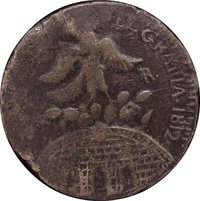
Obverse
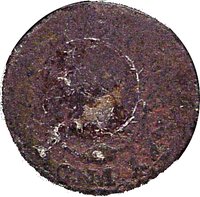
Description:
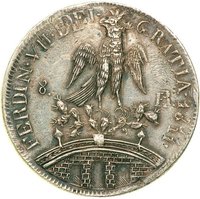
Eagle perched on bridge.
Inscription:
FERDIN. VII DEI GRATIA
Translation:
FERDINAND VII BY THE GRACE OF GOD
Language: Latin
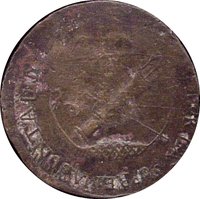
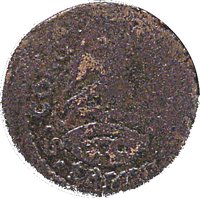
Reverse
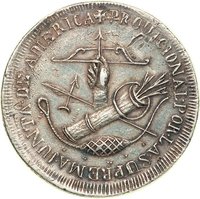
Description:
Value, bow, quiver, etc.
Inscription:
S. P. CONG. NAT. IND. GUV.T.
Translation:
The Senate and People of the Native Congregation; Government.
Language: Latin
Edge
Mintings
| Year | Mint Mark | Mintage | Quality | Collection |
|---|---|---|---|---|
| 1811 | — | — |
Historical background
In 1811, Mexico’s currency situation was one of profound chaos and fragmentation, a direct reflection of the ongoing War of Independence that had begun the previous year. The royalist government, loyal to the Spanish Crown and controlling major cities like Mexico City, struggled to maintain the official monetary system based on silver reales and gold escudos. However, the war severely disrupted silver mining—the colony's economic lifeblood—and drained the royal treasury, leading to a critical shortage of specie (coined money). In response, authorities resorted to issuing paper money, a novel and deeply distrusted concept in a society accustomed to precious metal. These bills, known as vales reales, rapidly depreciated due to lack of public confidence and insufficient backing.
Simultaneously, the insurgent forces under leaders like Miguel Hidalgo and Ignacio Allende faced an even more acute monetary challenge. Lacking access to the mint and bullion reserves, they improvised their own currency to fund the revolution. They commandeered private estates, confiscated silver, and struck crude copper or silver coins in mobile, makeshift mints. These coins, often bearing the monogram of Ferdinand VII (to legitimize their cause as loyal to the deposed king) or symbols like the Aztec eagle, were of irregular weight and quality. Their value was purely fiduciary, relying on the promise of the insurgent government, and their circulation was largely limited to territories under rebel control.
Consequently, the financial landscape was one of competing currencies and rampant uncertainty. In many regions, barter re-emerged as a practical necessity. The coexistence of depreciating royalist paper, scarce official coinage, and various insurgent monies created a complex and unstable economic environment. This monetary disarray not complicated daily commerce but also symbolized the collapse of Spanish colonial authority and the immense difficulty both sides faced in establishing a stable, functioning economy amidst the turmoil of war.
Simultaneously, the insurgent forces under leaders like Miguel Hidalgo and Ignacio Allende faced an even more acute monetary challenge. Lacking access to the mint and bullion reserves, they improvised their own currency to fund the revolution. They commandeered private estates, confiscated silver, and struck crude copper or silver coins in mobile, makeshift mints. These coins, often bearing the monogram of Ferdinand VII (to legitimize their cause as loyal to the deposed king) or symbols like the Aztec eagle, were of irregular weight and quality. Their value was purely fiduciary, relying on the promise of the insurgent government, and their circulation was largely limited to territories under rebel control.
Consequently, the financial landscape was one of competing currencies and rampant uncertainty. In many regions, barter re-emerged as a practical necessity. The coexistence of depreciating royalist paper, scarce official coinage, and various insurgent monies created a complex and unstable economic environment. This monetary disarray not complicated daily commerce but also symbolized the collapse of Spanish colonial authority and the immense difficulty both sides faced in establishing a stable, functioning economy amidst the turmoil of war.
Series: 1811 Mexico circulation coins

✨ Legendary