

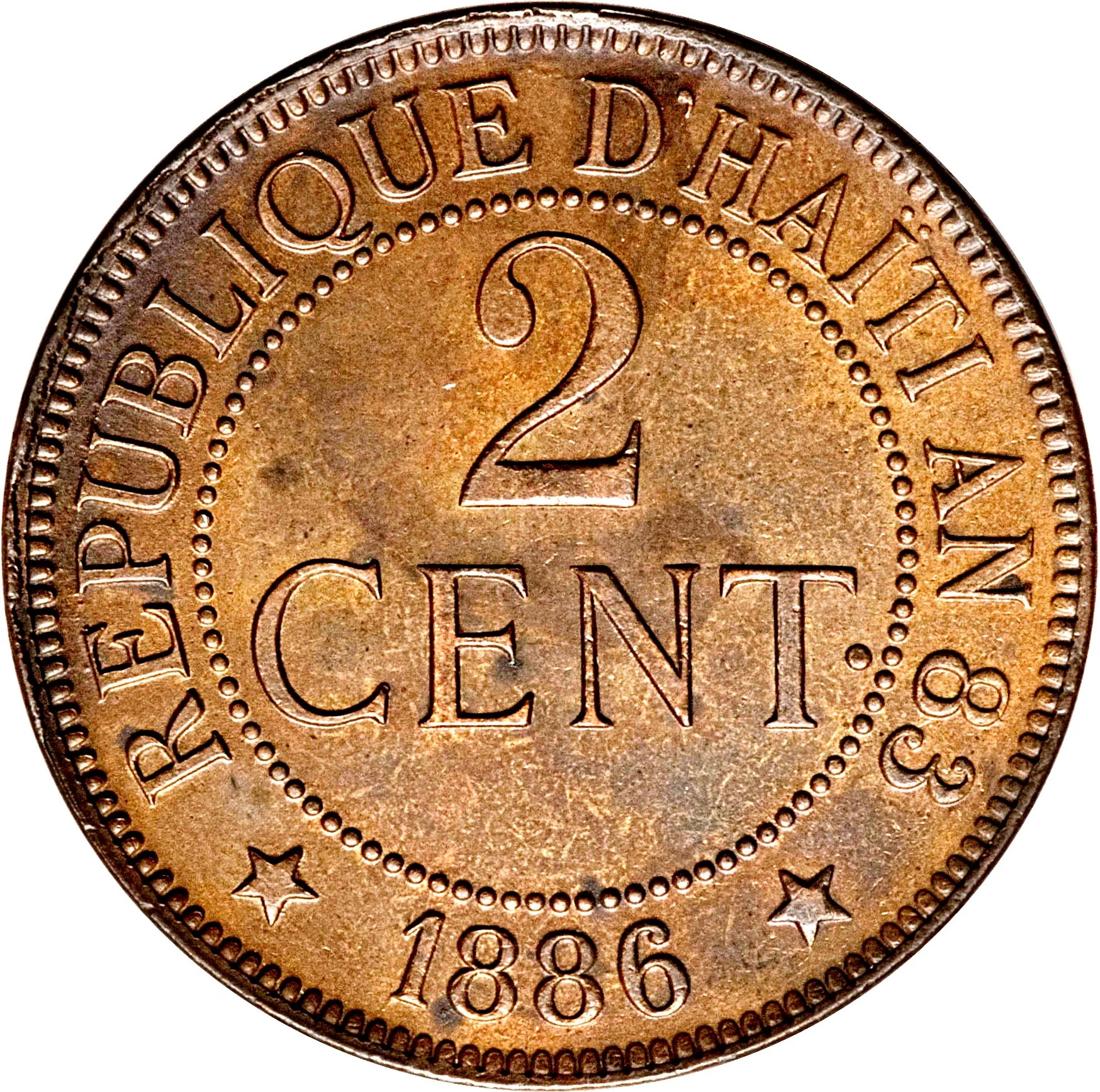
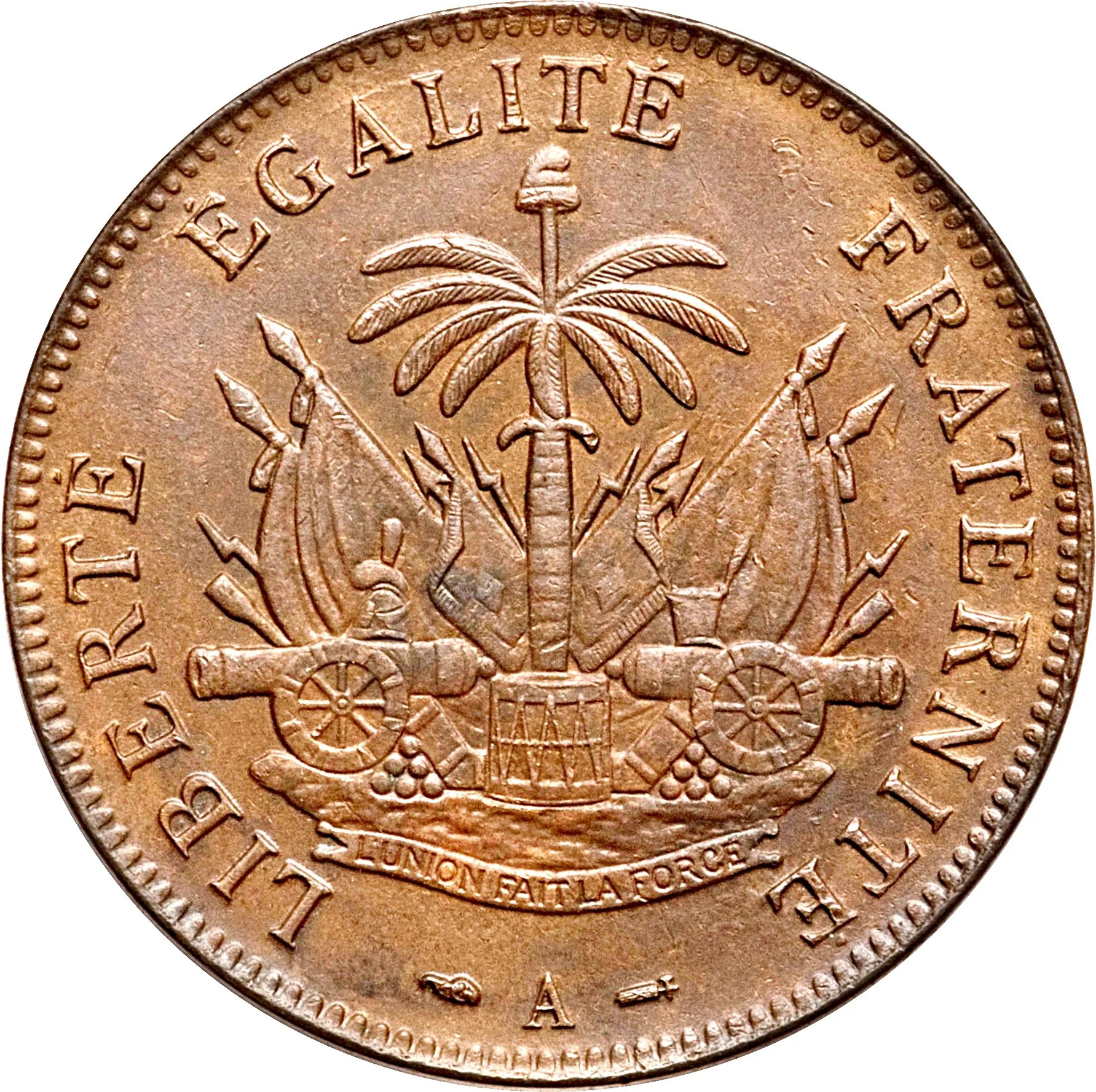
2 centimes – Haiti
Add to wishlist
Haiti
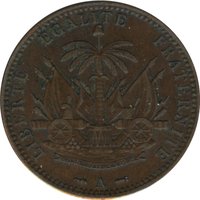
Obverse
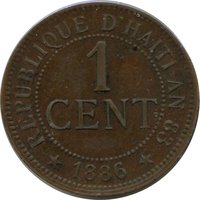
Reverse
Edge
Plain
Categories
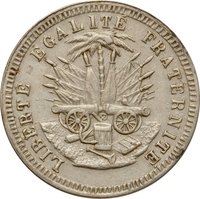
| Symbols> Coat of Arms |
Mints
| Name | Mark |
|---|---|
| Monnaie de Paris | (A) |
Mintings
| Year | Mint Mark | Mintage | Quality | Collection |
|---|---|---|---|---|
| 1886 | A | 1,250,000 | ||
| 1894 | A | 3,750,000 |
Historical background
In 1886, Haiti’s currency situation was characterized by profound instability and complexity, rooted in decades of financial isolation and heavy foreign debt. Following its independence in 1804, Haiti was forced to pay a crippling indemnity to France, finalized in 1838, which consumed a vast portion of state revenue for decades. To manage this and other debts, the Haitian government relied heavily on printing paper money (the gourde), leading to severe inflation and a dramatic divergence between the value of paper currency and the much stronger silver and gold coins in circulation. This created a dual-system economy where foreign merchants demanded payment in hard currency, while the populace struggled with depreciating paper.
The national bank, a French-owned institution established in 1880, held a monopoly on the issuance of paper money and acted as the state’s treasurer, further complicating monetary sovereignty. While intended to stabilize finances, the bank often prioritized the interests of foreign creditors over Haiti's economic health. Consequently, the paper gourde in 1886 traded at a steep discount compared to the Haitian silver gourde and other stable foreign currencies like the US dollar and British pound. This exchange chaos hampered domestic commerce, discouraged foreign investment, and made government budgeting exceptionally difficult.
Ultimately, the monetary disorder of 1886 was a symptom of Haiti’s vulnerable position in the global financial system. The nation’s wealth was siphoned to service external debts, leaving little capital for infrastructure or development. The unstable currency exacerbated social and economic inequalities, fueling political discontent that would contribute to the period's chronic instability. This financial precariousness would persist, setting the stage for the further foreign intervention and economic control that marked the early 20th century.
The national bank, a French-owned institution established in 1880, held a monopoly on the issuance of paper money and acted as the state’s treasurer, further complicating monetary sovereignty. While intended to stabilize finances, the bank often prioritized the interests of foreign creditors over Haiti's economic health. Consequently, the paper gourde in 1886 traded at a steep discount compared to the Haitian silver gourde and other stable foreign currencies like the US dollar and British pound. This exchange chaos hampered domestic commerce, discouraged foreign investment, and made government budgeting exceptionally difficult.
Ultimately, the monetary disorder of 1886 was a symptom of Haiti’s vulnerable position in the global financial system. The nation’s wealth was siphoned to service external debts, leaving little capital for infrastructure or development. The unstable currency exacerbated social and economic inequalities, fueling political discontent that would contribute to the period's chronic instability. This financial precariousness would persist, setting the stage for the further foreign intervention and economic control that marked the early 20th century.
🌱 Common