

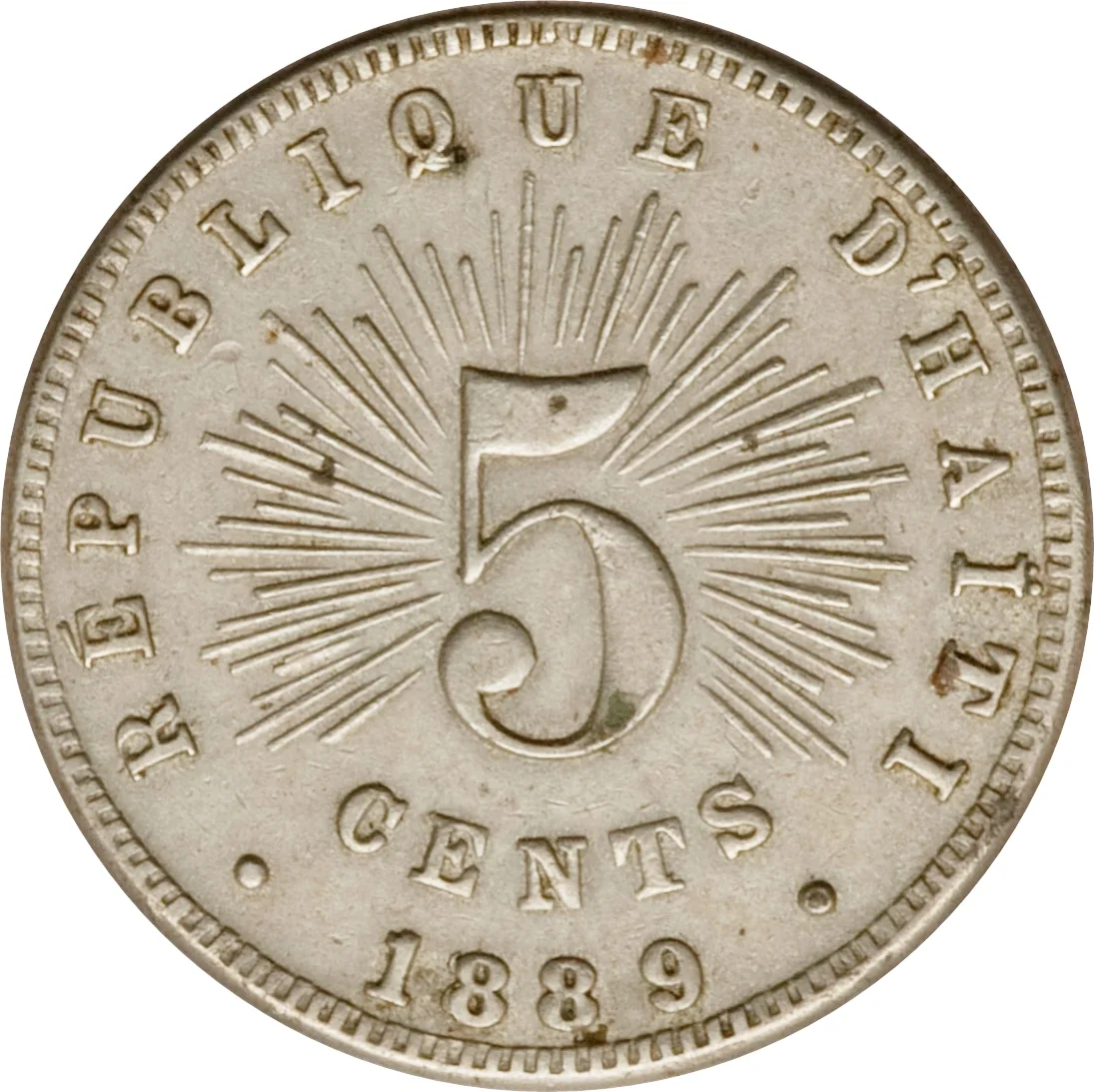
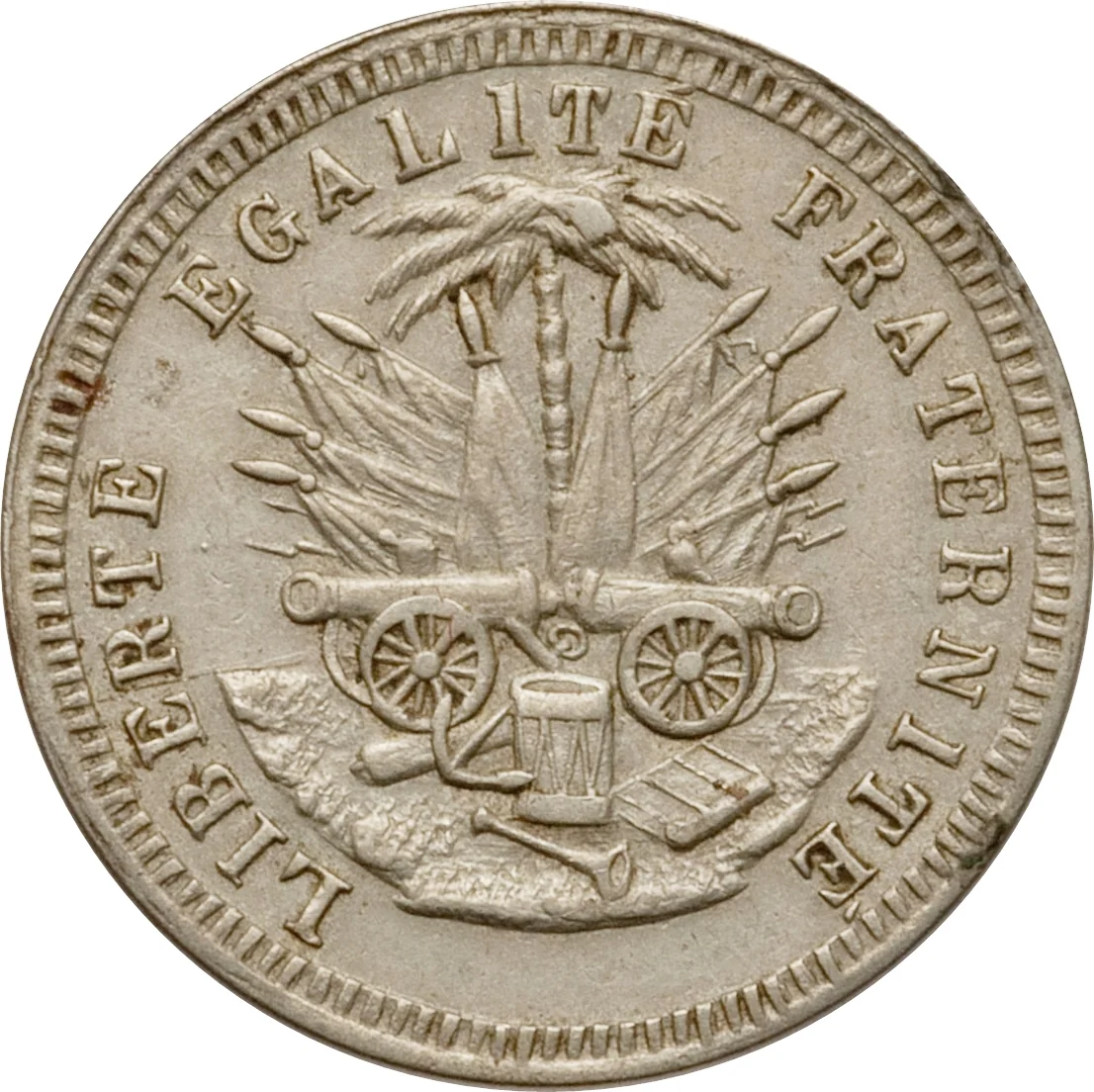
5 Centimes – Haiti
Haiti
Context
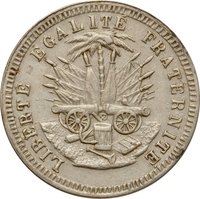
Year: 1889
Issuer: Haiti 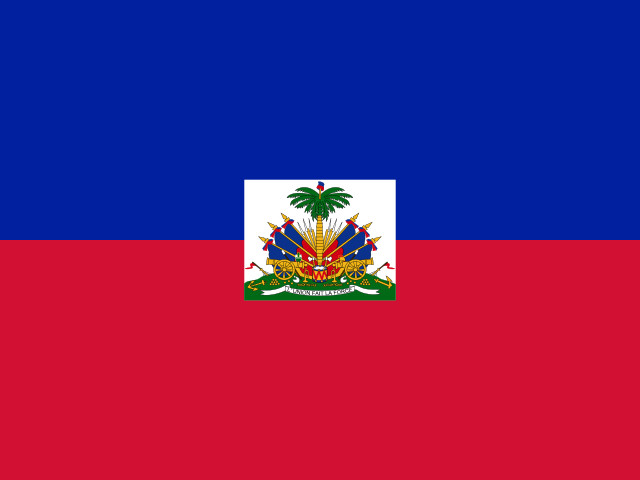
Period:
(1859—1957)
Currency:
(since 1872)
Demonetized: Yes
Total mintage: 100,000
Material
Diameter: 19 mm
Weight: 2.6 g
Thickness: 1 mm
Shape: Round
Composition: Copper-nickel
Technique: Milled
Alignment: Coin alignment
flip
References
KM: #Click to copy to clipboard50
Numista: #28712
Value
Exchange value: 0.05 HTG
Obverse
Reverse
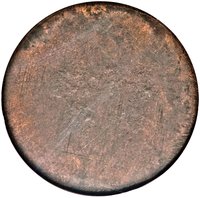
Edge
Plain
Mintings
| Year | Mint Mark | Mintage | Quality | Collection |
|---|---|---|---|---|
| 1889 | — | 100,000 |
Historical background
In 1889, Haiti’s currency situation was defined by profound instability and a complex duality. The nation operated with two distinct currencies: the Haitian gourde, the official national currency, and the French franc, which served as the de facto hard currency for international trade and elite finance. The gourde was pegged to the franc at a fixed rate of 1 gourde = 1 franc, but this parity was largely theoretical. In practice, the gourde suffered from severe depreciation due to chronic government budget deficits, which were financed by excessive printing of paper money by the National Bank of Haiti—a private institution dominated by French capital. This led to a significant divergence between the paper gourde in circulation and its nominal franc value, causing widespread confusion and economic distortion.
The root of this monetary crisis was deeply political and international. Haiti’s finances were effectively under foreign control following the disastrous "Loan of 1875" contracted with France. To repay this debt, the Haitian government had granted major concessions to the French-owned National Bank, including the exclusive right to issue currency and control state revenues. By 1889, the bank prioritized servicing the foreign debt over Haiti’s economic stability, restricting credit to the government and the public. This arrangement drained the treasury, stifled commerce, and meant that monetary policy was executed in the interest of foreign creditors rather than the Haitian economy, creating a cycle of devaluation and inflation that crippled domestic purchasing power.
Consequently, the monetary chaos of 1889 had severe social and economic impacts. The depreciating paper gourde hurt wage earners, soldiers, and civil servants, whose incomes failed to keep pace with rising prices for imported goods. Internal commerce was hampered as people hoarded metallic coins (francs and centimes) and distrusted paper notes. This financial fragility underscored Haiti’s vulnerable position in the global system, highlighting how post-independence sovereignty was compromised by economic dependency. The situation would culminate in the "Haitian Gold Affair" scandal shortly thereafter, further exposing the corrupt ties between the Haitian government and foreign financial interests, and prolonging the currency instability well into the 20th century.
The root of this monetary crisis was deeply political and international. Haiti’s finances were effectively under foreign control following the disastrous "Loan of 1875" contracted with France. To repay this debt, the Haitian government had granted major concessions to the French-owned National Bank, including the exclusive right to issue currency and control state revenues. By 1889, the bank prioritized servicing the foreign debt over Haiti’s economic stability, restricting credit to the government and the public. This arrangement drained the treasury, stifled commerce, and meant that monetary policy was executed in the interest of foreign creditors rather than the Haitian economy, creating a cycle of devaluation and inflation that crippled domestic purchasing power.
Consequently, the monetary chaos of 1889 had severe social and economic impacts. The depreciating paper gourde hurt wage earners, soldiers, and civil servants, whose incomes failed to keep pace with rising prices for imported goods. Internal commerce was hampered as people hoarded metallic coins (francs and centimes) and distrusted paper notes. This financial fragility underscored Haiti’s vulnerable position in the global system, highlighting how post-independence sovereignty was compromised by economic dependency. The situation would culminate in the "Haitian Gold Affair" scandal shortly thereafter, further exposing the corrupt ties between the Haitian government and foreign financial interests, and prolonging the currency instability well into the 20th century.
💎 Extremely Rare