

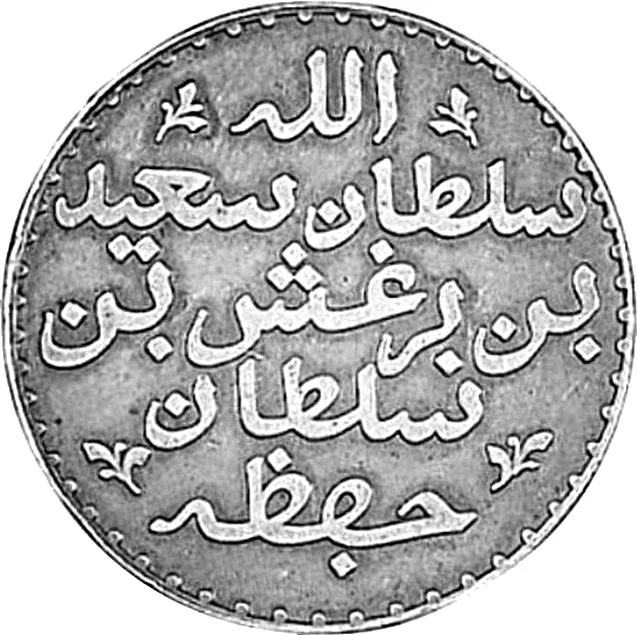
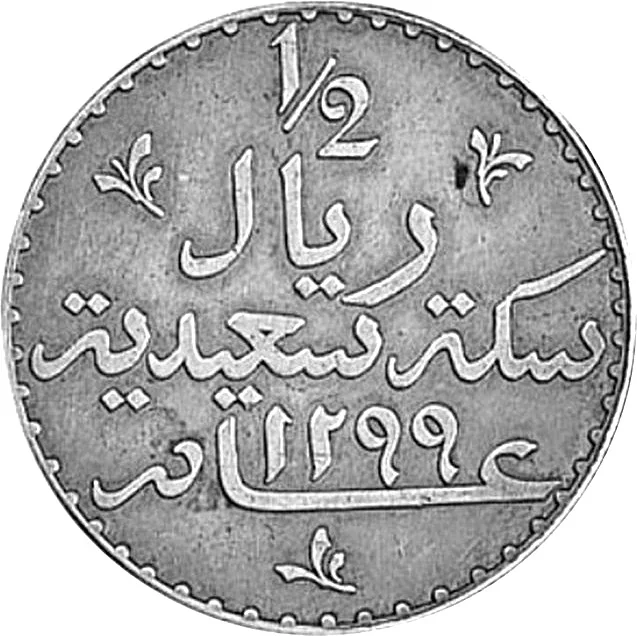
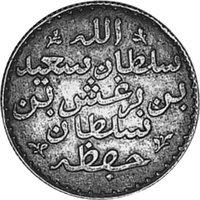
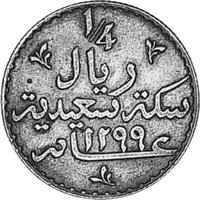
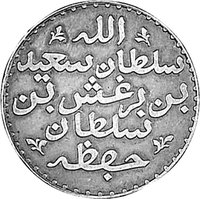
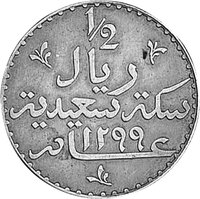
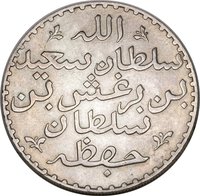
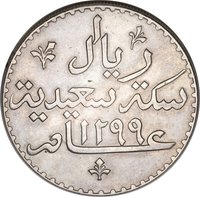
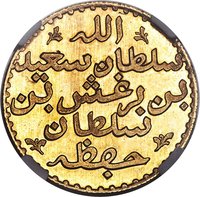
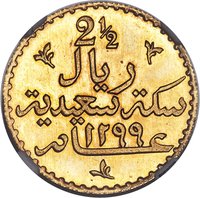
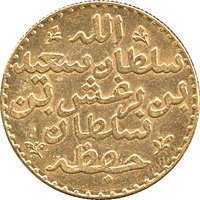
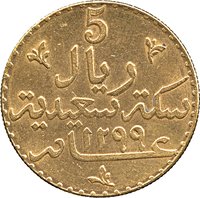
½ riyal – Zanzibar
Add to wishlist
Tanzania
Context
Year: 1882
Islamic (Hijri) Year:: 1299
Country: Tanzania
Issuer: Zanzibar
Ruler: Barghash bin Said
Currency:
(1882—1908)
Demonetized: Yes
References
KM: #
Numista: #103471
Value
Exchange value: ½ ZZY
Mintings
| Year | Mint Mark | Mintage | Quality | Collection |
|---|---|---|---|---|
| 1882 | — | — |
Historical background
In 1882, Zanzibar's currency situation was a complex reflection of its position as a major commercial hub in the western Indian Ocean, under the suzerainty of the Omani Sultanate. The primary currency in circulation was the Maria Theresa thaler (MT$). This large silver coin, minted in Austria but valued for its consistent weight and purity, was the dominant medium for international trade, used to purchase cloves, ivory, and slaves. Alongside the thaler, a variety of other silver coins circulated, including Indian rupees, British crowns, and French 5-franc pieces, their values fluctuating against the thaler based on silver content and market demand.
For everyday local transactions, the currency system was highly fractionalized. The main small-denomination coins were pice, copper coins from British India, and hellers from Austria. The official exchange, though subject to change, was roughly 64 pice to one thaler. There was also a persistent shortage of small change, leading to the continued use of traditional shell money—cowrie shells—in more remote areas and for very small purchases. This created a multi-tiered monetary system where high-value trade was conducted in silver, while local economies often relied on copper and shells.
This period was one of mounting financial pressure for the Sultanate. The Zanzibar government, under Sultan Barghash bin Said, faced significant debt to British Indian financiers and was under growing European colonial influence. The lack of a unified, state-issued currency weakened fiscal control and complicated revenue collection. In response, Sultan Barghash had already taken a pivotal step by ordering the minting of Zanzibar's first coinage—the Zanzibari pysa and rial—from the Birmingham Mint in 1882. These coins, which would enter circulation shortly after, marked the beginning of an attempt to assert monetary sovereignty, though the entrenched thaler would remain dominant for years to come.
For everyday local transactions, the currency system was highly fractionalized. The main small-denomination coins were pice, copper coins from British India, and hellers from Austria. The official exchange, though subject to change, was roughly 64 pice to one thaler. There was also a persistent shortage of small change, leading to the continued use of traditional shell money—cowrie shells—in more remote areas and for very small purchases. This created a multi-tiered monetary system where high-value trade was conducted in silver, while local economies often relied on copper and shells.
This period was one of mounting financial pressure for the Sultanate. The Zanzibar government, under Sultan Barghash bin Said, faced significant debt to British Indian financiers and was under growing European colonial influence. The lack of a unified, state-issued currency weakened fiscal control and complicated revenue collection. In response, Sultan Barghash had already taken a pivotal step by ordering the minting of Zanzibar's first coinage—the Zanzibari pysa and rial—from the Birmingham Mint in 1882. These coins, which would enter circulation shortly after, marked the beginning of an attempt to assert monetary sovereignty, though the entrenched thaler would remain dominant for years to come.
Series: 1882 Zanzibar circulation coins
✨ Legendary