

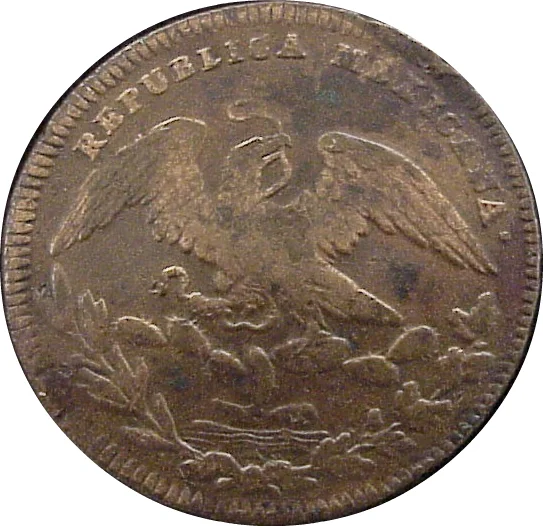
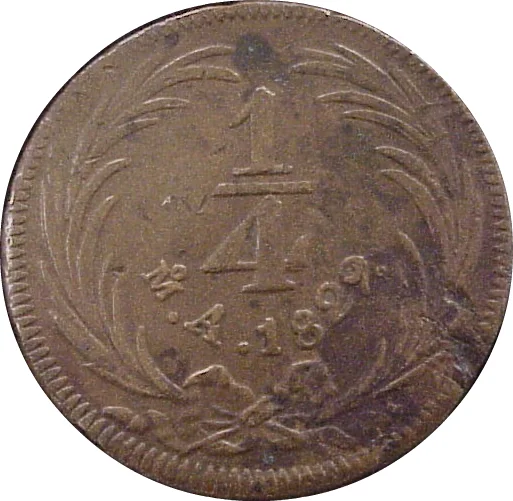
¼ real – Mexico
Add to wishlist
Mexico
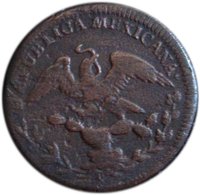
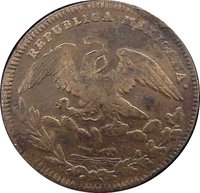
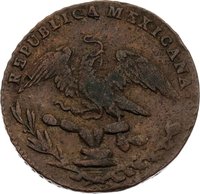
Obverse
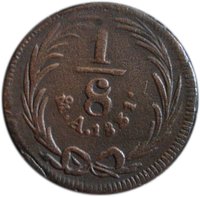
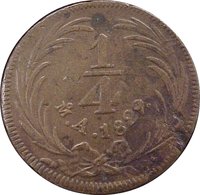
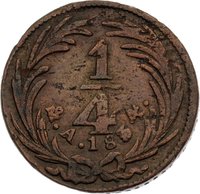
Reverse
Edge
Incuse rectangles
Mintings
| Year | Mint Mark | Mintage | Quality | Collection |
|---|---|---|---|---|
| 1829 | Mo | — |
Historical background
In 1829, Mexico's currency situation was a turbulent reflection of the young nation's profound political and economic instability following its independence from Spain in 1821. The country inherited a chaotic monetary system comprising a wide array of coins: Spanish colonial reales and pesos, coins from other nations, and a limited number of coins minted by the new Mexican government itself. This lack of a unified, trusted national currency severely hampered commerce and state finances. Furthermore, the government, facing empty coffers and the costs of sustaining an army (including the recent 1829 Spanish attempt to reconquer Mexico), resorted to debasing coinage and printing paper money without sufficient backing, leading to rampant inflation and a severe loss of public confidence in the monetary system.
The core of the crisis was a catastrophic shortage of hard currency, particularly silver. While Mexico possessed the world's richest silver mines, production had been disrupted by the decade-long War of Independence, and much of the bullion that was mined was quickly exported to pay for foreign imports or to service onerous international loans. This drain of specie (metal money) created a vicious cycle: the government could not collect sufficient taxes in reliable coin, forcing it to print more paper money or mint low-value copper coins, which merchants and the public increasingly refused to accept at face value. Different regions and even individual merchants began to assign their own, often discounted, values to the various coins in circulation, making trade unpredictable and frustrating.
This monetary chaos was both a cause and a symptom of the deep political divisions of the era, particularly between Federalists and Centralists. The instability undermined the authority of President Vicente Guerrero's government, which in December 1829 would be overthrown by his Vice President, Anastasio Bustamante. The currency crisis of 1829 was therefore not an isolated financial event but a fundamental challenge to national cohesion and economic sovereignty, demonstrating that establishing a stable and unified monetary system was a prerequisite for Mexico's survival and modernization as an independent state.
The core of the crisis was a catastrophic shortage of hard currency, particularly silver. While Mexico possessed the world's richest silver mines, production had been disrupted by the decade-long War of Independence, and much of the bullion that was mined was quickly exported to pay for foreign imports or to service onerous international loans. This drain of specie (metal money) created a vicious cycle: the government could not collect sufficient taxes in reliable coin, forcing it to print more paper money or mint low-value copper coins, which merchants and the public increasingly refused to accept at face value. Different regions and even individual merchants began to assign their own, often discounted, values to the various coins in circulation, making trade unpredictable and frustrating.
This monetary chaos was both a cause and a symptom of the deep political divisions of the era, particularly between Federalists and Centralists. The instability undermined the authority of President Vicente Guerrero's government, which in December 1829 would be overthrown by his Vice President, Anastasio Bustamante. The currency crisis of 1829 was therefore not an isolated financial event but a fundamental challenge to national cohesion and economic sovereignty, demonstrating that establishing a stable and unified monetary system was a prerequisite for Mexico's survival and modernization as an independent state.
💎 Extremely Rare