

20 cents – Cook Islands
Add to wishlist
Context
Years: 1987–1994
Issuer: Cook Islands
Ruler: Elizabeth II
Currency:
(since 1972)
Demonetization: 1 May 2016
Total mintage: 20,200
Material
Diameter: 28.52 mm
Weight: 11.31 g
Shape: Round
Composition: Copper-nickel
Technique: Milled
Alignment: Medal alignment
flip
References
KM: #
Numista: #5751
Value
Exchange value: 0.20 NZD
Obverse
Description:
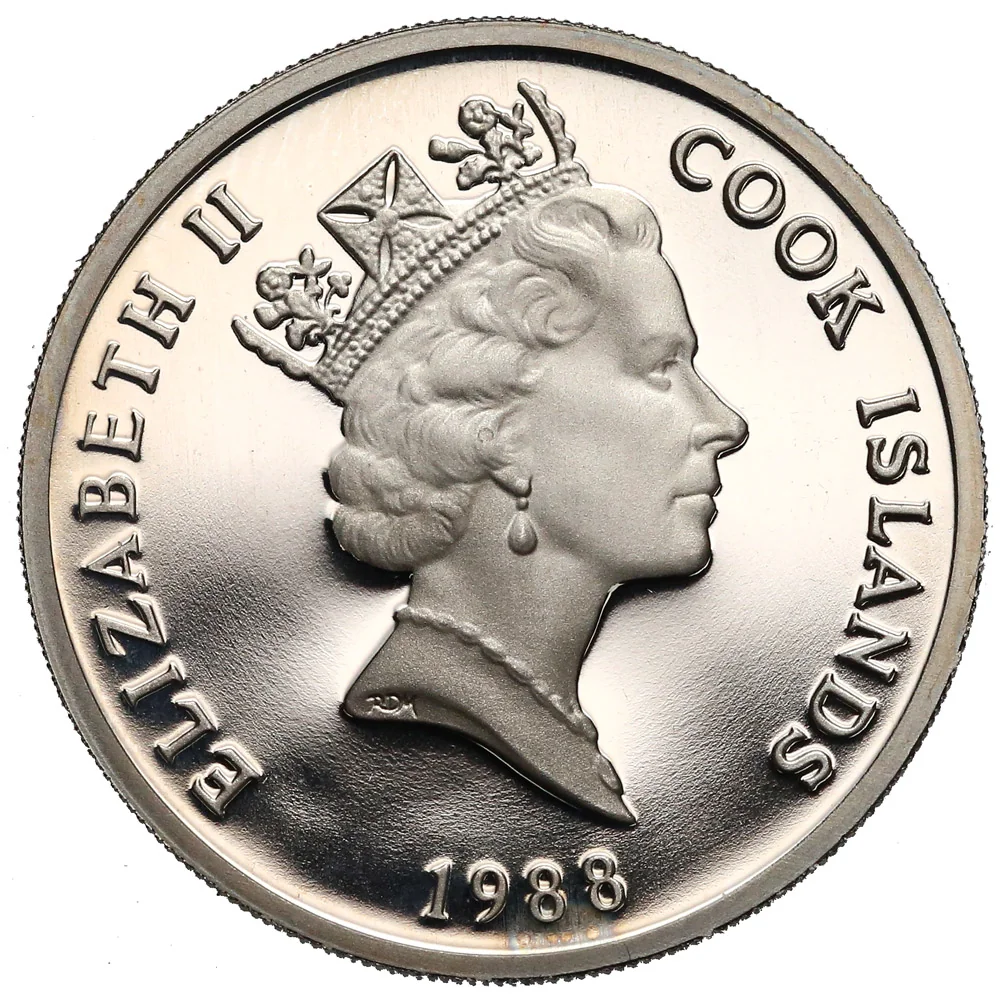
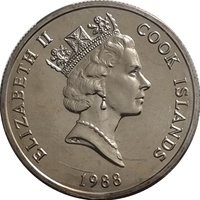
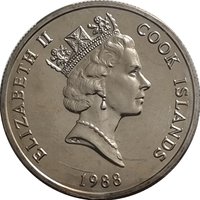
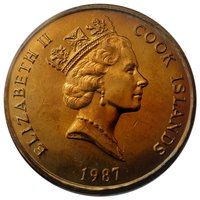
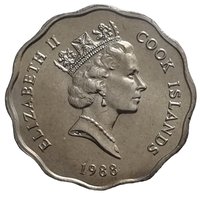
Queen Elizabeth II facing right, date below.
Inscription:
ELIZABETH II COOK ISLANDS
1988
1988
Translation:
ELIZABETH II COOK ISLANDS
1988
1988
Script: Latin
Language: English
Engraver: Raphael David Maklouf
Reverse
Description:
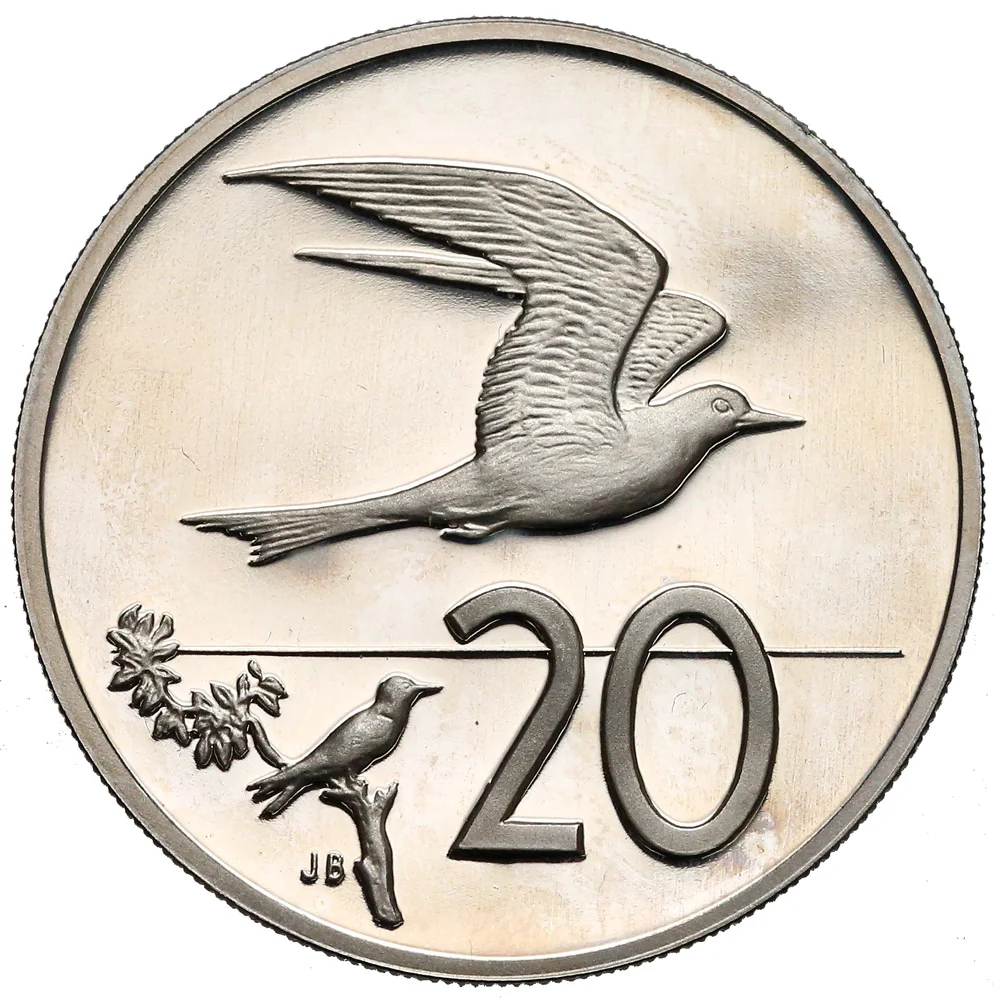
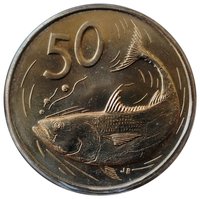
Fairy Tern flying right, value beneath.
Inscription:
20
JB
JB
Script: Latin
Engraver: George James Berry
Edge
Reeded
Mints
| Name | Mark |
|---|---|
| Royal Australian Mint | — |
Mintings
| Year | Mint Mark | Mintage | Quality | Collection |
|---|---|---|---|---|
| 1987 | — | — | ||
| 1987 | — | — | Proof | |
| 1988 | — | — | ||
| 1988 | — | — | Proof | |
| 1992 | — | — | ||
| 1992 | — | — | Proof | |
| 1994 | — | 200 | Proof | |
| 1994 | — | 20,000 |
Historical background
In 1987, the Cook Islands faced a severe economic and currency crisis, the culmination of years of fiscal mismanagement under the government of Prime Minister Sir Thomas Davis. The country had accumulated a massive public debt, estimated to be over NZ$1,200 per capita, largely due to excessive borrowing for grandiose infrastructure projects and a bloated public service. By mid-1987, the government was effectively bankrupt, unable to pay public sector wages or service its foreign debt, leading to a collapse in international confidence.
The currency situation was particularly acute because the Cook Islands used the New Zealand dollar as its official currency. This meant it could not simply print money to solve its problems. Instead, in an unprecedented and desperate move, the government issued "Cook Islands Government Promissory Notes" in denominations of $1, $3, $10, and $20. These were not legal tender but were intended to circulate alongside NZ dollars to alleviate a critical cash shortage. However, they were widely rejected by the public and businesses, seen as virtually worthless IOUs from a bankrupt state, and they quickly traded at a steep discount, further destabilizing the local economy.
The crisis forced a major intervention from New Zealand, the country's former colonial administrator and main aid donor. In late 1987, New Zealand imposed a stringent financial rescue package, which included the appointment of a New Zealand Financial Secretary to take direct control of the Cook Islands' treasury. This intervention led to the withdrawal of the promissory notes, deep cuts to the public service, and the sale of state assets. The 1987 currency episode thus marked the lowest point of the nation's financial history and triggered a painful but necessary era of economic reform and austerity.
The currency situation was particularly acute because the Cook Islands used the New Zealand dollar as its official currency. This meant it could not simply print money to solve its problems. Instead, in an unprecedented and desperate move, the government issued "Cook Islands Government Promissory Notes" in denominations of $1, $3, $10, and $20. These were not legal tender but were intended to circulate alongside NZ dollars to alleviate a critical cash shortage. However, they were widely rejected by the public and businesses, seen as virtually worthless IOUs from a bankrupt state, and they quickly traded at a steep discount, further destabilizing the local economy.
The crisis forced a major intervention from New Zealand, the country's former colonial administrator and main aid donor. In late 1987, New Zealand imposed a stringent financial rescue package, which included the appointment of a New Zealand Financial Secretary to take direct control of the Cook Islands' treasury. This intervention led to the withdrawal of the promissory notes, deep cuts to the public service, and the sale of state assets. The 1987 currency episode thus marked the lowest point of the nation's financial history and triggered a painful but necessary era of economic reform and austerity.
🌱 Common