

Iran
Context
Material
References
KM: #Click to copy to clipboard799
Numista: #57440
Value
Bullion value: $15.53
Obverse
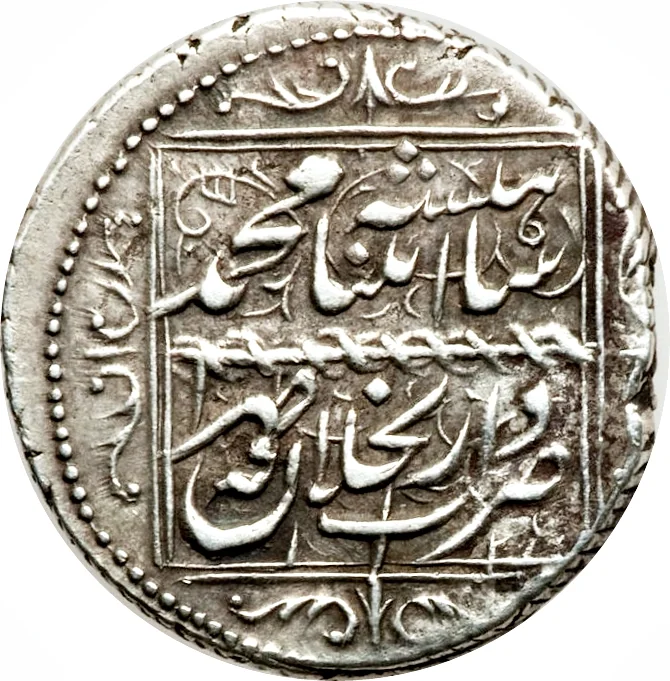
Inscription:
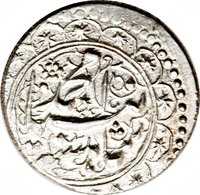
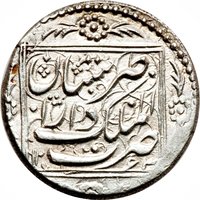
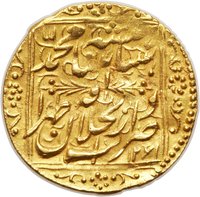
شاهنشه انبیا محمّد
ضرب دارالخلافه طهران
ضرب دارالخلافه طهران
Translation:
Struck in the Abode of the Caliphate, Tehran
Language: Persian
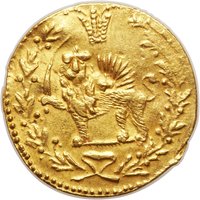
Reverse
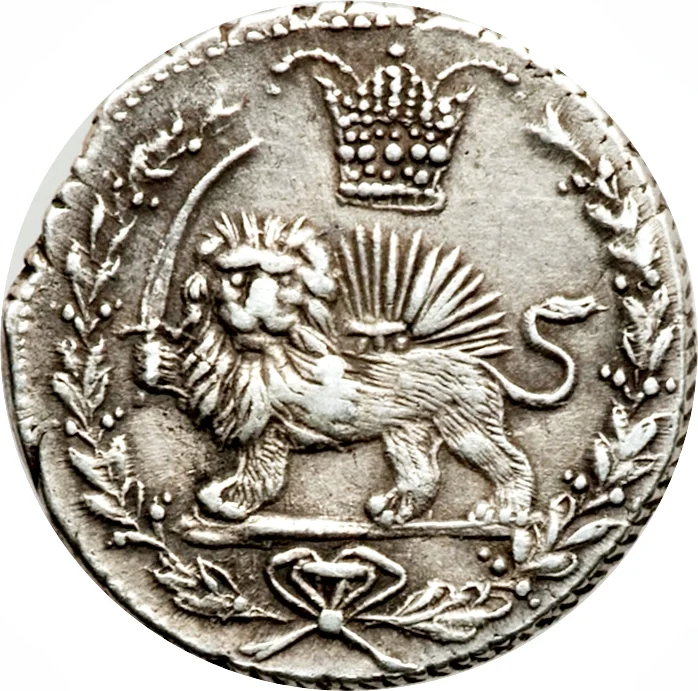
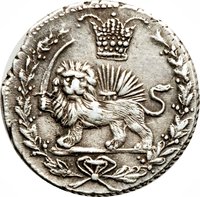
Description:
Qajar Crown: Lion, Sun, Olive Leaves
Edge
Plain
Mintings
| Year | Mint Mark | Mintage | Quality | Collection |
|---|---|---|---|---|
| 1842 | — | — | ||
| 1843 | — | — | ||
| 1844 | — | — | ||
| 1845 | — | — | ||
| 1846 | — | — | ||
| 1847 | — | — |
Historical background
In 1842, Iran’s currency system was in a state of profound disarray, a legacy of earlier 19th-century crises and weak central authority. The country operated on a bimetallic system of silver qirans and gold tomans, but the coinage was heavily debased. Successive Qajar shahs, facing massive state debts and military expenses, had resorted to striking coins with progressively lower silver content, leading to a proliferation of underweight and counterfeit coins in circulation. This created a chaotic monetary environment where the nominal value of coins bore little relation to their intrinsic metal worth, severely disrupting trade and eroding public trust.
The situation was exacerbated by intense foreign economic pressure, particularly from the Russian Empire and Great Britain, following Iran's losses in the Russo-Persian Wars. Large war indemnities, such as the 1828 Treaty of Turkmenchay, which imposed a massive 20 million silver roubles on Iran, drained the country of specie (hard currency). This bullion drain, combined with the debasement, caused significant inflation and a sharp decline in the external value of Iranian currency. Regional governors and private mints further complicated matters by issuing their own non-standard coins, making a unified national currency impossible.
Consequently, by 1842, the monetary chaos was a major obstacle to economic stability and modernization. Domestic commerce relied on complex and unreliable exchange rates between various coin types, while international trade was hindered by the lack of a credible currency. This instability reflected the broader weakness of the Qajar state, which lacked the administrative cohesion and fiscal discipline to implement meaningful reform. The currency crisis of this period would persist until the more concerted, though still only partially successful, reforms initiated later under Naser al-Din Shah (r. 1848–1896).
The situation was exacerbated by intense foreign economic pressure, particularly from the Russian Empire and Great Britain, following Iran's losses in the Russo-Persian Wars. Large war indemnities, such as the 1828 Treaty of Turkmenchay, which imposed a massive 20 million silver roubles on Iran, drained the country of specie (hard currency). This bullion drain, combined with the debasement, caused significant inflation and a sharp decline in the external value of Iranian currency. Regional governors and private mints further complicated matters by issuing their own non-standard coins, making a unified national currency impossible.
Consequently, by 1842, the monetary chaos was a major obstacle to economic stability and modernization. Domestic commerce relied on complex and unreliable exchange rates between various coin types, while international trade was hindered by the lack of a credible currency. This instability reflected the broader weakness of the Qajar state, which lacked the administrative cohesion and fiscal discipline to implement meaningful reform. The currency crisis of this period would persist until the more concerted, though still only partially successful, reforms initiated later under Naser al-Din Shah (r. 1848–1896).
✨ Legendary