

200 francs cfa – Western African States
Add to wishlist
Context
Years: 2003–2018
Issuer: Western African States
Issuing organization: Central Bank of Western African States
Currency:
(since 1958)
Total mintage: 32,500,000
Material
References
KM: #
Numista: #57399
Value
Exchange value: 200 XOF
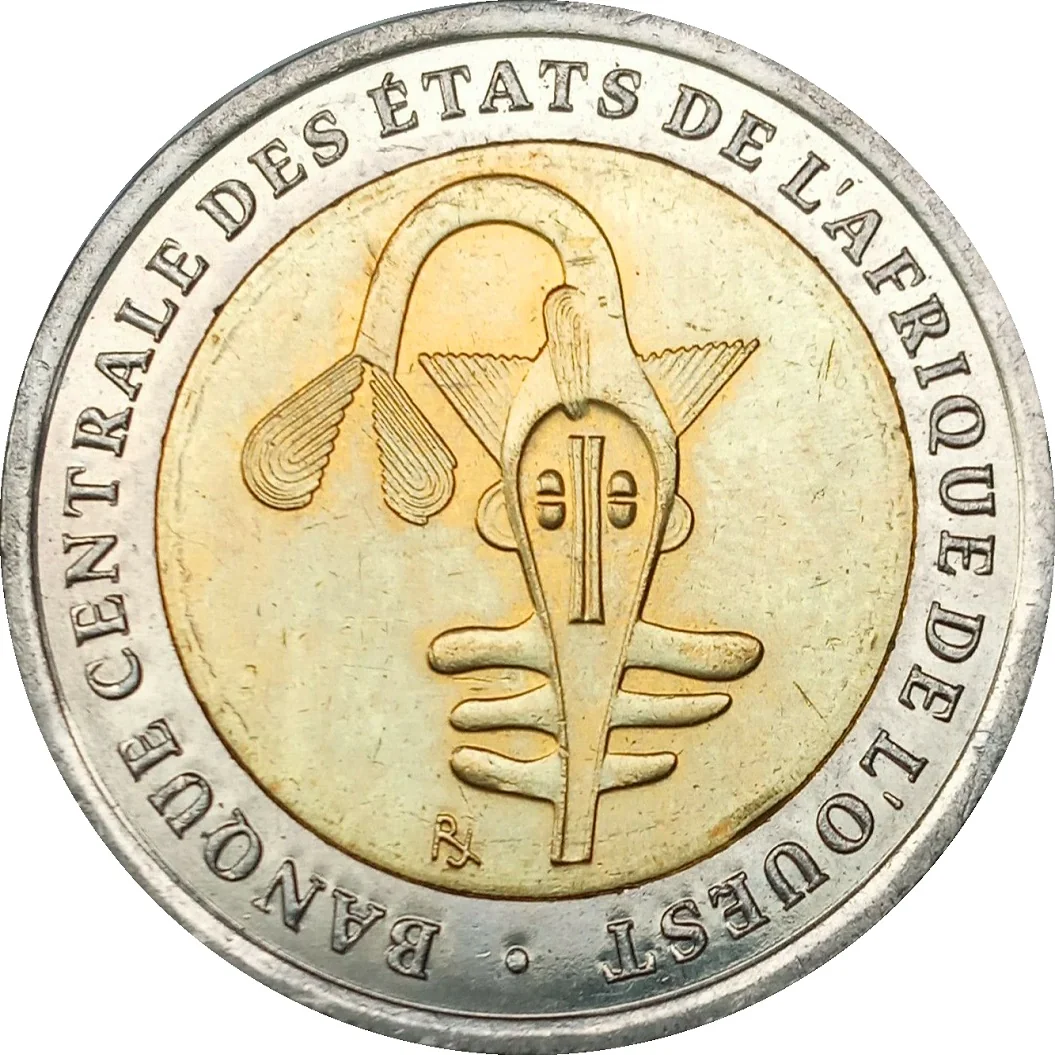
Obverse
Description:
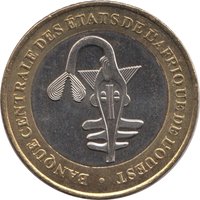
Central Bank of West African States emblem
Inscription:
BANQUE CENTRALE DES ETATS DE L'AFRIQUE DE L'OUEST
Translation:
CENTRAL BANK OF THE WEST AFRICAN STATES
Script: Latin
Language: French
Engraver: Raymond Joly
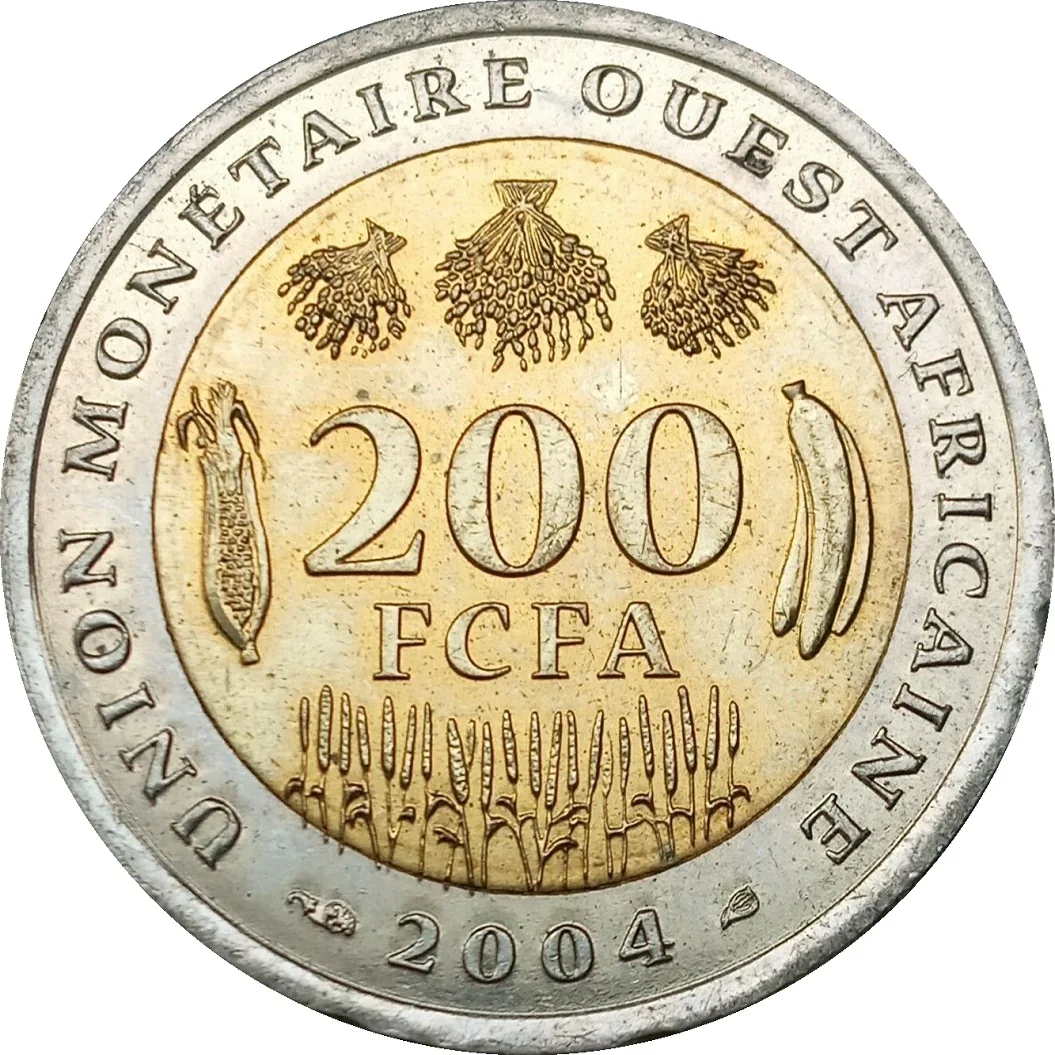
Reverse
Description:
Denomination
Inscription:
200 FCFA
UNION MONÉTAIRE OUEST AFRICAINE
2004
UNION MONÉTAIRE OUEST AFRICAINE
2004
Translation:
MONETARY UNION OF WEST AFRICA
200 FCFA
2004
200 FCFA
2004
Script: Latin
Language: French
Engraver: Matthew Bonaccorsi
Edge
Reeded and smooth sections
Mints
| Name | Mark |
|---|---|
| Monnaie de Paris | — |
| Royal Mint | — |
Mintings
| Year | Mint Mark | Mintage | Quality | Collection |
|---|---|---|---|---|
| 2003 | — | — | ||
| 2004 | — | 32,500,000 | ||
| 2005 | — | — | ||
| 2010 | — | — | ||
| 2017 | — | — | ||
| 2018 | — | — |
Historical background
In 2003, the currency situation in West Africa was defined by the dominance of two distinct CFA franc zones, both operating under fixed exchange rate regimes guaranteed by France. The West African CFA franc (XOF), used by the eight members of the West African Economic and Monetary Union (WAEMU), and the Central African CFA franc (XAF), used by six other countries, were each pegged to the French franc and, following France's adoption of the euro, to the euro at a fixed rate of 655.957 CFA francs per euro. This arrangement provided notable monetary stability and low inflation for member states but was frequently criticized for ceding monetary sovereignty to France and imposing external constraints on fiscal policy.
The year was one of quiet stability for the XOF, but it occurred within a broader regional context of monetary fragmentation and debate. Notably, the Economic Community of West African States (ECOWAS) had been actively discussing plans for a second, larger common currency for its non-CFA members, notably led by Nigeria. This proposed "Eco" currency aimed to foster greater economic integration among Anglophone and other non-CFA states, though it faced significant hurdles related to convergence criteria and political will. Thus, 2003 saw a continent with a dual reality: entrenched stability within the CFA framework and ambitious, yet uncertain, plans for an alternative monetary union.
Furthermore, the legacy of earlier currency instability lingered. Several West African countries outside the CFA, such as Ghana, Sierra Leone, and Liberia, had experienced severe currency depreciation and high inflation during the 1990s and early 2000s due to conflict, economic mismanagement, and structural adjustment. For these nations, 2003 was a period of ongoing struggle to achieve macroeconomic stabilization, making the perceived stability of the CFA zone a point of both admiration and contentious comparison. The region's currency landscape was therefore split between the rigid order of the CFA franc, the aspirational plans for a new Eco, and the challenging realities of independent national currencies.
The year was one of quiet stability for the XOF, but it occurred within a broader regional context of monetary fragmentation and debate. Notably, the Economic Community of West African States (ECOWAS) had been actively discussing plans for a second, larger common currency for its non-CFA members, notably led by Nigeria. This proposed "Eco" currency aimed to foster greater economic integration among Anglophone and other non-CFA states, though it faced significant hurdles related to convergence criteria and political will. Thus, 2003 saw a continent with a dual reality: entrenched stability within the CFA framework and ambitious, yet uncertain, plans for an alternative monetary union.
Furthermore, the legacy of earlier currency instability lingered. Several West African countries outside the CFA, such as Ghana, Sierra Leone, and Liberia, had experienced severe currency depreciation and high inflation during the 1990s and early 2000s due to conflict, economic mismanagement, and structural adjustment. For these nations, 2003 was a period of ongoing struggle to achieve macroeconomic stabilization, making the perceived stability of the CFA zone a point of both admiration and contentious comparison. The region's currency landscape was therefore split between the rigid order of the CFA franc, the aspirational plans for a new Eco, and the challenging realities of independent national currencies.
🌱 Very Common