

Obverse
Description:
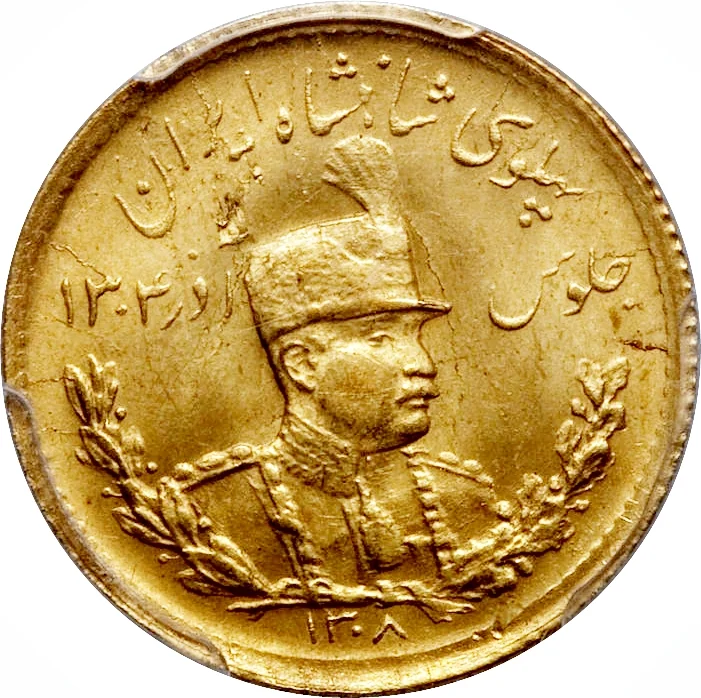
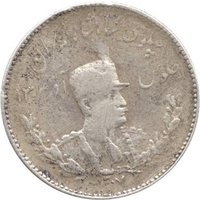
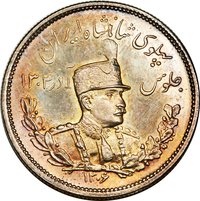
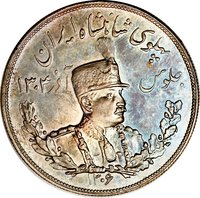
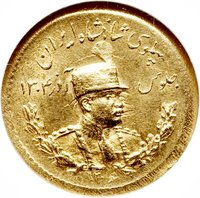
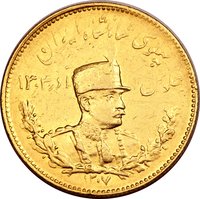
Iran's King Pahlavi I, crowned December 1925. Coin features his three-face portrait with oak and olive leaves.
Inscription:
پهلوى شاهنشاه ايران
جلوس آذر ۱۳۰۴
۱۳۰۸
جلوس آذر ۱۳۰۴
۱۳۰۸
Translation:
Pahlavi, Shahanshah of Iran
Accession Azar 1304
1308
Accession Azar 1304
1308
Language: Persian
Reverse
Description:
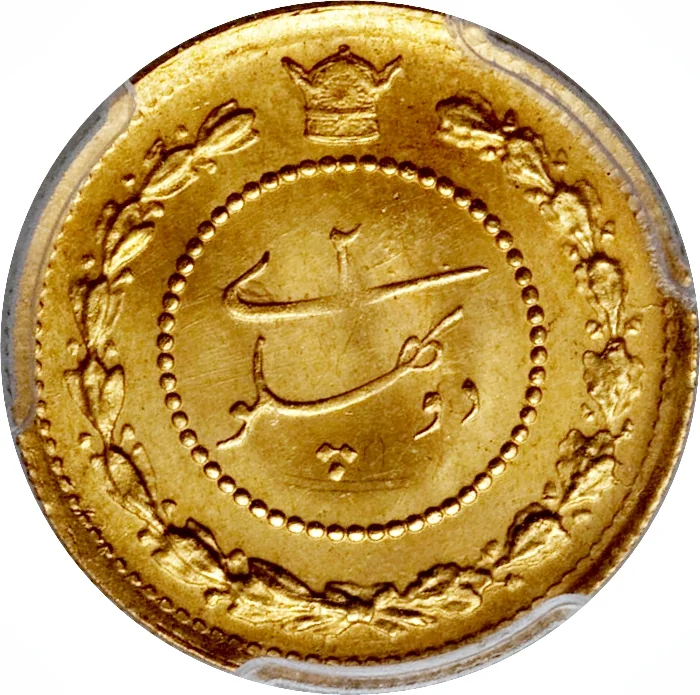
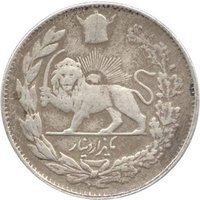
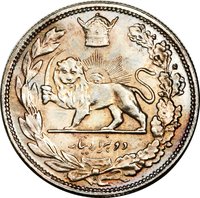
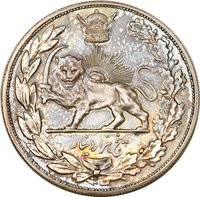
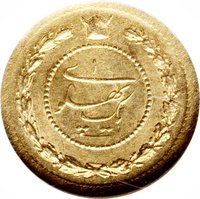
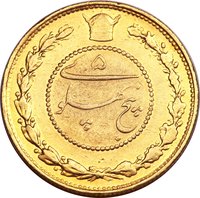
Pahlavi Crown: Two oak and olive leaves.
Inscription:
دو ۲ پهلوى
Translation:
Two 2 Pahlavi
Language: Persian
Edge
Reeded
Mints
| Name | Mark |
|---|---|
| Tehran | — |
Mintings
| Year | Mint Mark | Mintage | Quality | Collection |
|---|---|---|---|---|
| 1927 | — | 2,494 | ||
| 1928 | — | 7,000 | ||
| 1929 | — | 789 |
Historical background
In 1927, Iran's currency situation was characterized by profound instability and fragmentation, a legacy of centuries of weak central control. The monetary system was a chaotic mix of domestic and foreign coins, paper notes, and various credit instruments. The most prominent domestic currency was the silver qiran, but its value and silver content were inconsistent. Crucially, foreign currencies, particularly the Russian ruble and British pound sterling, circulated widely and were often preferred for large transactions, undermining national economic sovereignty. This lack of a unified, trusted currency stifled trade, complicated taxation, and reflected the broader administrative weaknesses the state sought to overcome.
This monetary disarray occurred against the backdrop of the ambitious modernization drive of Reza Shah Pahlavi, who had recently founded the new Pahlavi dynasty in 1925. Recognizing that a strong, centralized state required a uniform and reliable monetary system, his government undertook a fundamental reform. The pivotal legislative act was the Currency Act of 1927, which legally replaced the qiran with the rial as the primary unit of account, at a rate of 1 rial = 10 qirans. More importantly, the act led to the establishment of the Bank Melli Iran (National Bank of Iran) in 1928, which was granted the exclusive right to issue banknotes, aiming to end the circulation of foreign currencies and private notes.
The reforms of 1927-28 were therefore a critical first step toward monetary centralization and modern state-building. However, the situation in 1927 itself was one of transition—the old, chaotic system was still in effect while the legal and institutional frameworks for its replacement were being hastily constructed. The immediate challenge was building public trust in a new paper currency and accumulating sufficient foreign exchange reserves to back it, tasks that would define Iran's financial trajectory for the subsequent decade.
This monetary disarray occurred against the backdrop of the ambitious modernization drive of Reza Shah Pahlavi, who had recently founded the new Pahlavi dynasty in 1925. Recognizing that a strong, centralized state required a uniform and reliable monetary system, his government undertook a fundamental reform. The pivotal legislative act was the Currency Act of 1927, which legally replaced the qiran with the rial as the primary unit of account, at a rate of 1 rial = 10 qirans. More importantly, the act led to the establishment of the Bank Melli Iran (National Bank of Iran) in 1928, which was granted the exclusive right to issue banknotes, aiming to end the circulation of foreign currencies and private notes.
The reforms of 1927-28 were therefore a critical first step toward monetary centralization and modern state-building. However, the situation in 1927 itself was one of transition—the old, chaotic system was still in effect while the legal and institutional frameworks for its replacement were being hastily constructed. The immediate challenge was building public trust in a new paper currency and accumulating sufficient foreign exchange reserves to back it, tasks that would define Iran's financial trajectory for the subsequent decade.
Series: 1927 Iran circulation coins
✨ Legendary