

1 white shahi – Iran
Add to wishlist
Circulating commemorative coins
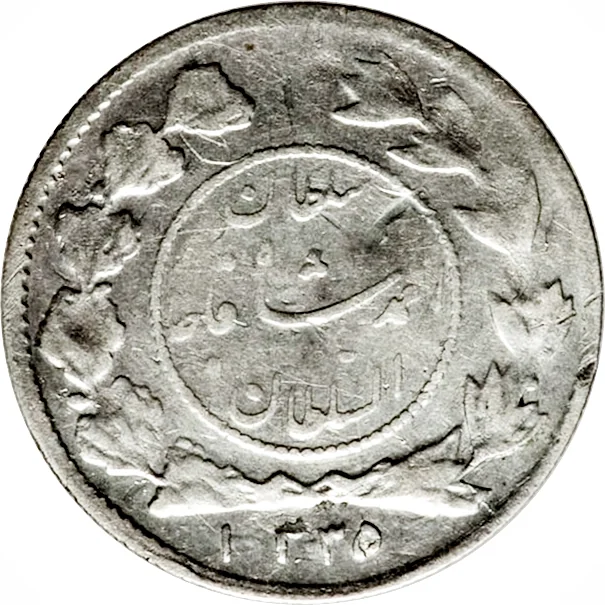
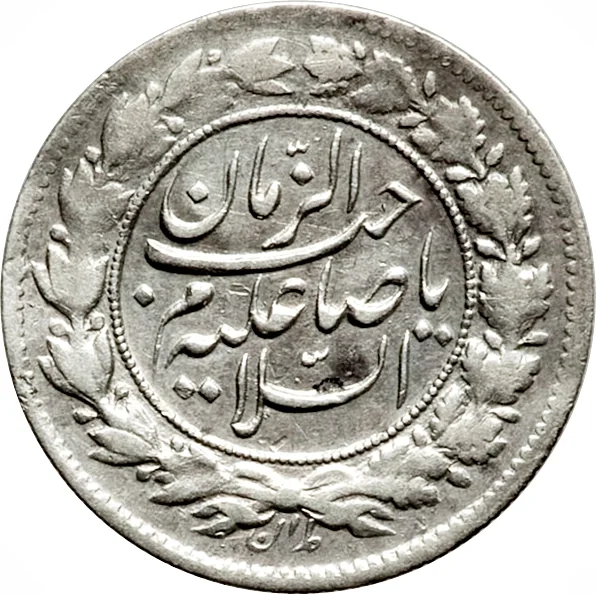
Commemoration: Sahib Al-Zaman birth year
Iran
Context
Year: 1917
Islamic (Hijri) Year:: 1335
Issuer: Iran
Ruler: Ahmad Shah
Currency:
(1825—1932)
Demonetized: Yes
Material
References
KM: #
Numista: #57384
Value
Bullion value: $1.52
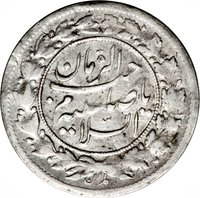
Obverse
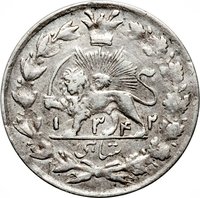
Reverse
Edge
Reeded
Mintings
| Year | Mint Mark | Mintage | Quality | Collection |
|---|---|---|---|---|
| 1917 | — | — |
Historical background
In 1917, Iran’s currency situation was one of profound crisis and fragmentation, a direct consequence of the country’s neutral but occupied status during World War I. Despite official neutrality, Iranian territory was a battleground for Russian, Ottoman, and British forces, each issuing their own occupation currency to fund their campaigns. This flooded the market with unbacked paper notes, while the central government in Tehran, weak and financially insolvent, had lost control over the monetary system. The result was a chaotic multi-currency environment where the value of money could change with the movement of armies.
The traditional Iranian currency, the silver qiran, remained in circulation but its stability was shattered. Severe inflation raged as the occupying powers printed money to requisition supplies, effectively imposing a war tax on the population. This was compounded by a catastrophic famine (1917-1919), exacerbated by wartime requisitions and poor harvests, which further distorted the economy. The value of paper money plummeted against silver coinage, leading to a widespread loss of public confidence in any form of scriptural currency. Barter became increasingly common as people hoarded precious metals and agricultural goods.
Ultimately, the monetary chaos of 1917 was a stark symbol of Iran’s loss of sovereignty and the collapse of its state institutions. The simultaneous circulation of Russian rubles, British rupees and treasury notes, Ottoman lire, and various depreciated Iranian banknotes created a paralyzing uncertainty for trade and daily life. This period laid bare the utter dependence of a stable national currency on a strong, independent state—a condition Iran would not achieve until after the war, when the crisis spurred eventual moves toward monetary reform and centralization under Reza Shah in the 1920s.
The traditional Iranian currency, the silver qiran, remained in circulation but its stability was shattered. Severe inflation raged as the occupying powers printed money to requisition supplies, effectively imposing a war tax on the population. This was compounded by a catastrophic famine (1917-1919), exacerbated by wartime requisitions and poor harvests, which further distorted the economy. The value of paper money plummeted against silver coinage, leading to a widespread loss of public confidence in any form of scriptural currency. Barter became increasingly common as people hoarded precious metals and agricultural goods.
Ultimately, the monetary chaos of 1917 was a stark symbol of Iran’s loss of sovereignty and the collapse of its state institutions. The simultaneous circulation of Russian rubles, British rupees and treasury notes, Ottoman lire, and various depreciated Iranian banknotes created a paralyzing uncertainty for trade and daily life. This period laid bare the utter dependence of a stable national currency on a strong, independent state—a condition Iran would not achieve until after the war, when the crisis spurred eventual moves toward monetary reform and centralization under Reza Shah in the 1920s.
✨ Legendary