

1 white shahi – Iran
Add to wishlist
Iran
Context
Years: 1915–1924
Issuer: Iran
Ruler: Ahmad Shah
Currency:
(1825—1932)
Demonetized: Yes
Total mintage: 263,000
Material
References
KM: #
Numista: #57382
Value
Bullion value: $1.57
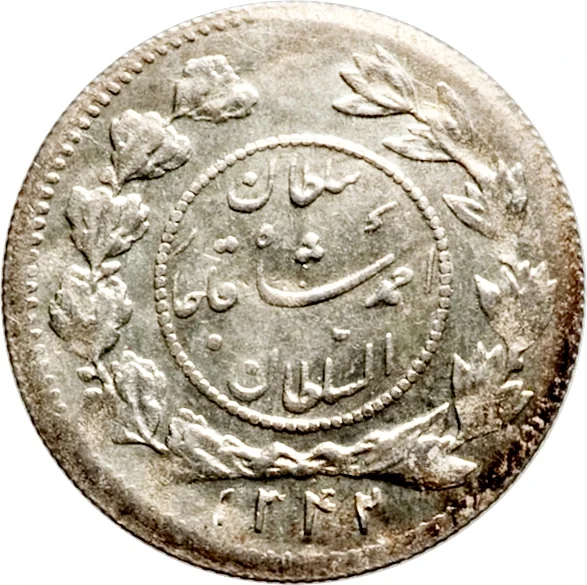
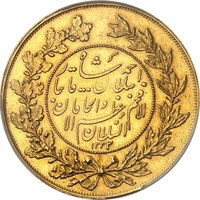
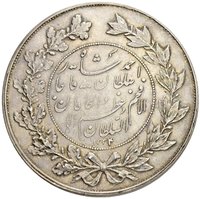
Obverse
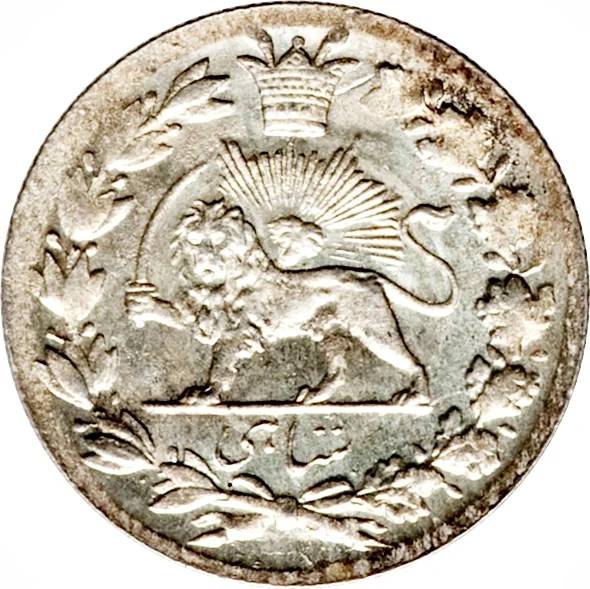
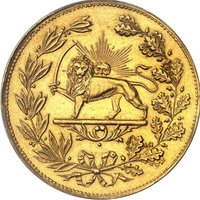
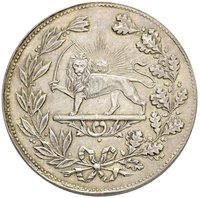
Reverse
Edge
Mintings
| Year | Mint Mark | Mintage | Quality | Collection |
|---|---|---|---|---|
| 1915 | — | 78,000 | ||
| 1916 | — | 6,000 | ||
| 1917 | — | 73,000 | ||
| 1919 | — | 76,000 | ||
| 1921 | — | 10,000 | ||
| 1924 | — | 20,000 |
Historical background
In 1915, Iran’s currency system was in a state of severe crisis and fragmentation, a direct consequence of the country's neutrality being violated during World War I. Although officially neutral, Iran became a battleground for competing Russian, British, and Ottoman forces, which occupied large portions of its territory. These foreign armies financed their operations by forcibly extracting resources from the local population and, crucially, by introducing their own currencies into the Iranian economy. This led to a chaotic monetary environment where Russian rubles, British pounds and Indian rupees, and Ottoman liras circulated alongside Iran's own official currency.
The national currency, the qiran, was itself unstable. The Iranian government, under the weakened Qajar dynasty, had limited central authority and was deeply in debt to foreign powers, notably Russia and Britain. To meet its obligations, the government had historically resorted to printing large amounts of paper money (banknotes) without sufficient silver backing, leading to significant depreciation and loss of public trust. By 1915, confidence in these state-issued notes was so low that they traded at a steep discount to their face value, especially outside the capital. The real value of money was often determined by its metal content, leading to widespread hoarding of silver coins and the use of foreign specie for significant transactions.
This monetary anarchy exacerbated the broader humanitarian catastrophe unfolding in Iran. The war disrupted agriculture and trade routes, leading to severe famine and inflation. The coexistence of multiple, unstable currencies made commerce unpredictable and facilitated exploitation by occupying forces and opportunistic profiteers. Thus, in 1915, Iran lacked a unified, sovereign monetary system; its currency situation was a symbol of its political dismemberment and economic collapse under the pressures of foreign invasion and internal weakness.
The national currency, the qiran, was itself unstable. The Iranian government, under the weakened Qajar dynasty, had limited central authority and was deeply in debt to foreign powers, notably Russia and Britain. To meet its obligations, the government had historically resorted to printing large amounts of paper money (banknotes) without sufficient silver backing, leading to significant depreciation and loss of public trust. By 1915, confidence in these state-issued notes was so low that they traded at a steep discount to their face value, especially outside the capital. The real value of money was often determined by its metal content, leading to widespread hoarding of silver coins and the use of foreign specie for significant transactions.
This monetary anarchy exacerbated the broader humanitarian catastrophe unfolding in Iran. The war disrupted agriculture and trade routes, leading to severe famine and inflation. The coexistence of multiple, unstable currencies made commerce unpredictable and facilitated exploitation by occupying forces and opportunistic profiteers. Thus, in 1915, Iran lacked a unified, sovereign monetary system; its currency situation was a symbol of its political dismemberment and economic collapse under the pressures of foreign invasion and internal weakness.
✨ Legendary