

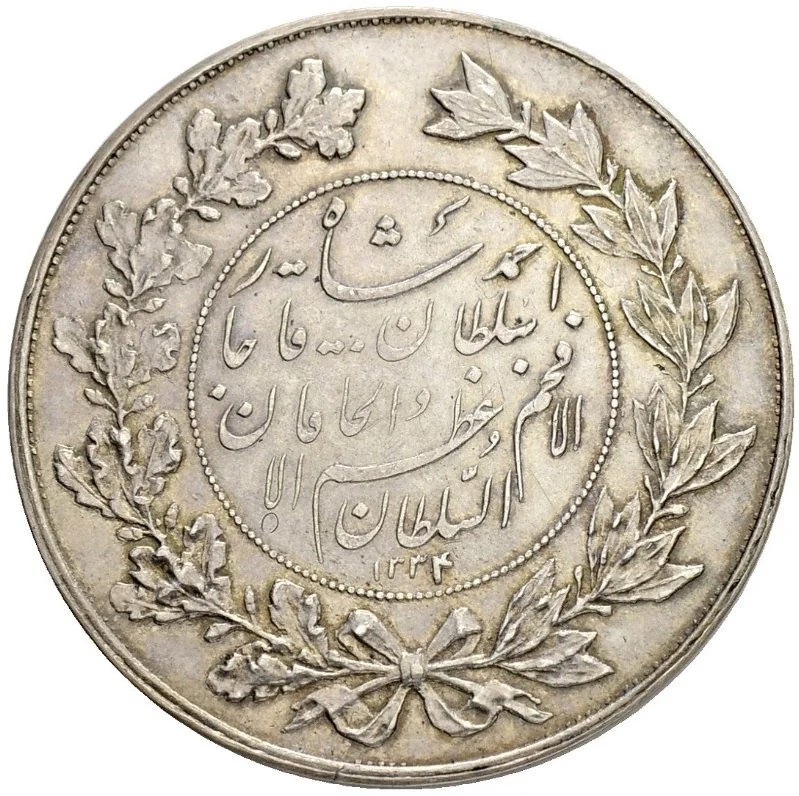
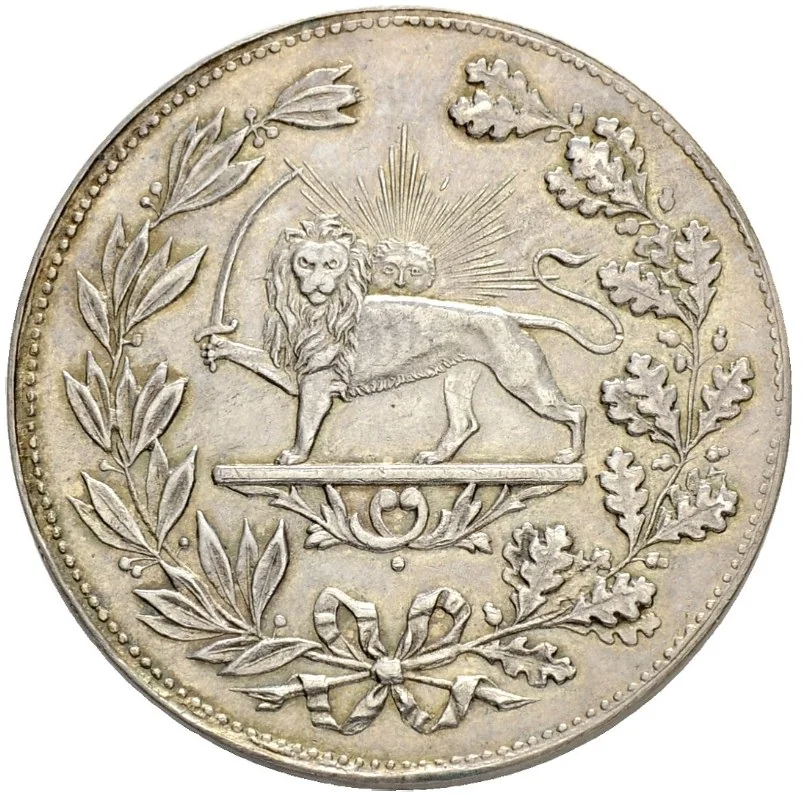
5000 dinars – Iran
Add to wishlist
Iran
Context
Year: 1916
Islamic (Hijri) Year:: 1334
Issuer: Iran
Ruler: Ahmad Shah
Currency:
(1825—1932)
Demonetized: Yes
Material
References
KM: #
Numista: #144237
Value
Bullion value: $50.66
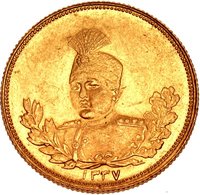
Obverse
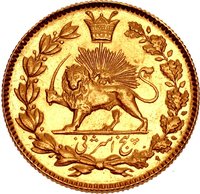
Reverse
Edge
Reeded
Mintings
| Year | Mint Mark | Mintage | Quality | Collection |
|---|---|---|---|---|
| 1916 | — | — |
Historical background
In 1916, Iran’s currency situation was one of profound crisis and fragmentation, a direct consequence of the country’s neutral but occupied status during World War I. Despite official neutrality, Iranian territory had become a battleground for Russian, Ottoman, and British forces, each issuing their own military currency to fund their campaigns. This led to a chaotic monetary environment where Iranian qirans and tomans circulated alongside Russian rubles, British Indian rupees, and Ottoman liras, causing severe exchange rate fluctuations and rampant inflation, particularly in occupied zones.
The core of the problem lay with the Imperial Bank of Persia (British-chartered) and the Banque d'Escompte de Perse (Russian-backed), which held the right to issue banknotes but were compelled to suspend silver convertibility due to the war. This resulted in a dramatic fall in the value of paper money against silver coinage, creating a two-tier system. The public, losing faith, hoarded silver coins, which disappeared from circulation, while depreciating paper notes became the primary medium for everyday transactions, eroding purchasing power and causing widespread hardship.
Furthermore, the central Qajar government in Tehran, weakened and bankrupt, had little control over the monetary chaos. Its authority did not extend to the regions under foreign military control, where occupying powers dictated financial terms. The situation was exacerbated by war-induced disruptions to agriculture and trade, leading to food shortages and famine in some areas, which further distorted prices and made currency stability impossible. Thus, in 1916, Iran lacked a unified national currency, functioning instead under a patchwork of depreciating paper and foreign military scrip, reflecting the nation's political dismemberment and economic vulnerability.
The core of the problem lay with the Imperial Bank of Persia (British-chartered) and the Banque d'Escompte de Perse (Russian-backed), which held the right to issue banknotes but were compelled to suspend silver convertibility due to the war. This resulted in a dramatic fall in the value of paper money against silver coinage, creating a two-tier system. The public, losing faith, hoarded silver coins, which disappeared from circulation, while depreciating paper notes became the primary medium for everyday transactions, eroding purchasing power and causing widespread hardship.
Furthermore, the central Qajar government in Tehran, weakened and bankrupt, had little control over the monetary chaos. Its authority did not extend to the regions under foreign military control, where occupying powers dictated financial terms. The situation was exacerbated by war-induced disruptions to agriculture and trade, leading to food shortages and famine in some areas, which further distorted prices and made currency stability impossible. Thus, in 1916, Iran lacked a unified national currency, functioning instead under a patchwork of depreciating paper and foreign military scrip, reflecting the nation's political dismemberment and economic vulnerability.
✨ Legendary