

1 cent – Straits Settlements
Add to wishlist
Malaysia
Context
Years: 1919–1926
Country: Malaysia
Issuer: Straits Settlements
Ruler: George V
Currency:
(1845—1939)
Demonetized: Yes
Total mintage: 80,165,000
Material
Weight: 5.85 g
Thickness: 1.9 mm
Shape: Square with rounded corners
Composition: Bronze
Magnetic: No
Technique: Milled
Alignment: Medal alignment
flip
References
KM: #
Numista: #5688
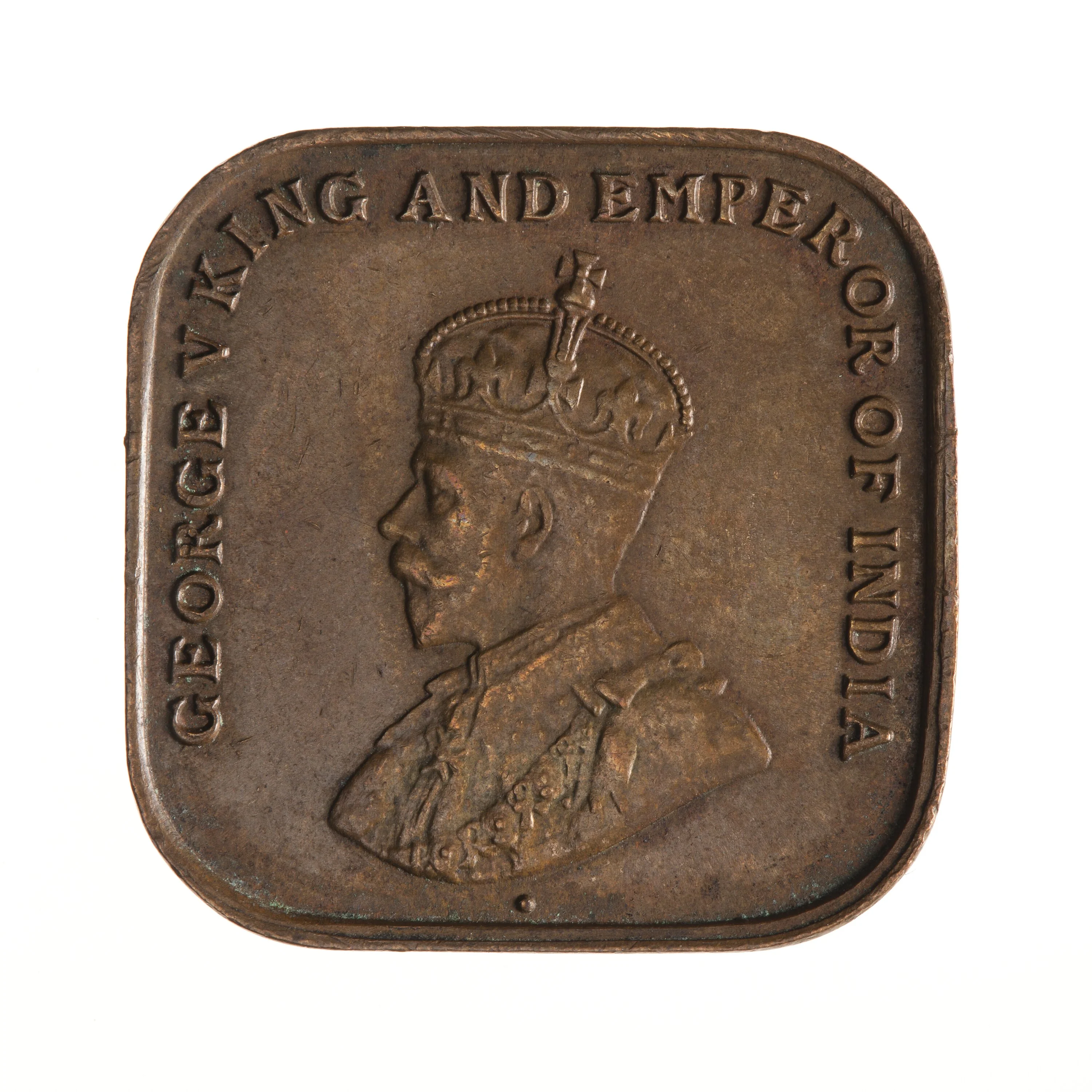
Obverse
Description:
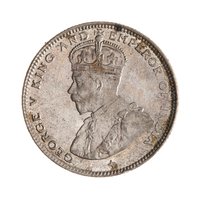
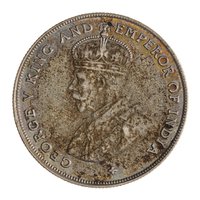
King George V left-facing crowned bust.
Inscription:
GEORGE V KING AND EMPEROR OF INDIA
Translation:
GEORGE V KING AND EMPEROR OF INDIA
Script: Latin
Language: English
Engraver: Edgar Bertram MacKennal
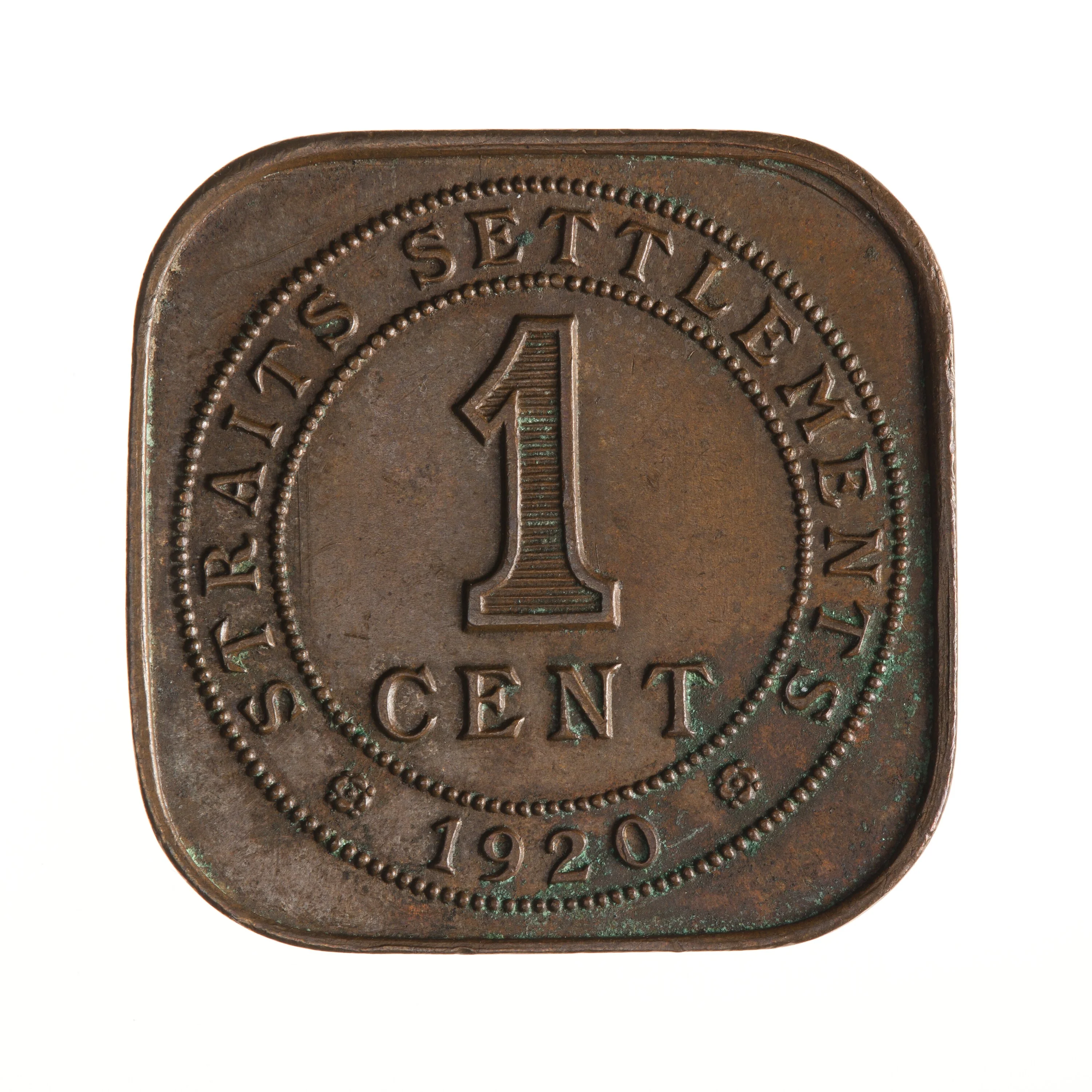
Reverse
Description:
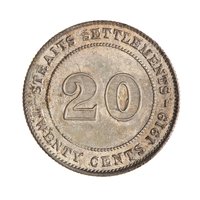
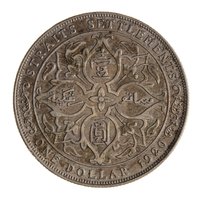
Denomination inside beaded circle, date below, country name in semicircle above.
Inscription:
STRAITS SETTLEMENTS
1
CENT
1920
1
CENT
1920
Script: Latin
Edge
Plain
Mints
| Name | Mark |
|---|---|
| Kolkata / Calcutta / Murshidabad | — |
Mintings
| Year | Mint Mark | Mintage | Quality | Collection |
|---|---|---|---|---|
| 1919 | — | 20,165,000 | ||
| 1919 | — | — | Proof | |
| 1920 | — | — | Proof | |
| 1920 | — | 55,000,000 | ||
| 1926 | — | 5,000,000 |
Historical background
By 1919, the Straits Settlements (comprising Singapore, Penang, and Malacca) operated under a unique and robust currency board system, the Straits Dollar. This system, established in 1906 and managed by a London-based Board of Commissioners of Currency, was designed for stability, with the local currency fully backed by sterling reserves held in London. The Straits Dollar was effectively a sterling exchange standard, pegged at a fixed rate of 2 shillings 4 pence.
The First World War (1914-1918) had placed significant strain on this system. While the peg was officially maintained, the war disrupted shipping and trade, causing a physical shortage of the silver coinage used in everyday transactions. This led to the increased use of banknotes and the emergence of a premium on silver coins. Furthermore, the war inflated the price of silver globally and saw Britain borrowing heavily, raising concerns about the absolute security of the sterling reserves backing the currency.
Consequently, in 1919, the currency situation was one of underlying tension within a formally stable framework. The authorities were grappling with the practical problems of coin scarcity and the broader economic uncertainties of the post-war world. This environment set the stage for a major review, culminating in the pivotal Currency Ordinance of 1920, which formally severed the link to silver and placed the Straits Dollar on a pure gold-exchange standard, though still anchored to sterling, to better navigate the volatile post-war financial landscape.
The First World War (1914-1918) had placed significant strain on this system. While the peg was officially maintained, the war disrupted shipping and trade, causing a physical shortage of the silver coinage used in everyday transactions. This led to the increased use of banknotes and the emergence of a premium on silver coins. Furthermore, the war inflated the price of silver globally and saw Britain borrowing heavily, raising concerns about the absolute security of the sterling reserves backing the currency.
Consequently, in 1919, the currency situation was one of underlying tension within a formally stable framework. The authorities were grappling with the practical problems of coin scarcity and the broader economic uncertainties of the post-war world. This environment set the stage for a major review, culminating in the pivotal Currency Ordinance of 1920, which formally severed the link to silver and placed the Straits Dollar on a pure gold-exchange standard, though still anchored to sterling, to better navigate the volatile post-war financial landscape.
🌱 Very Common