

50 Drachmai – Greece
Greece
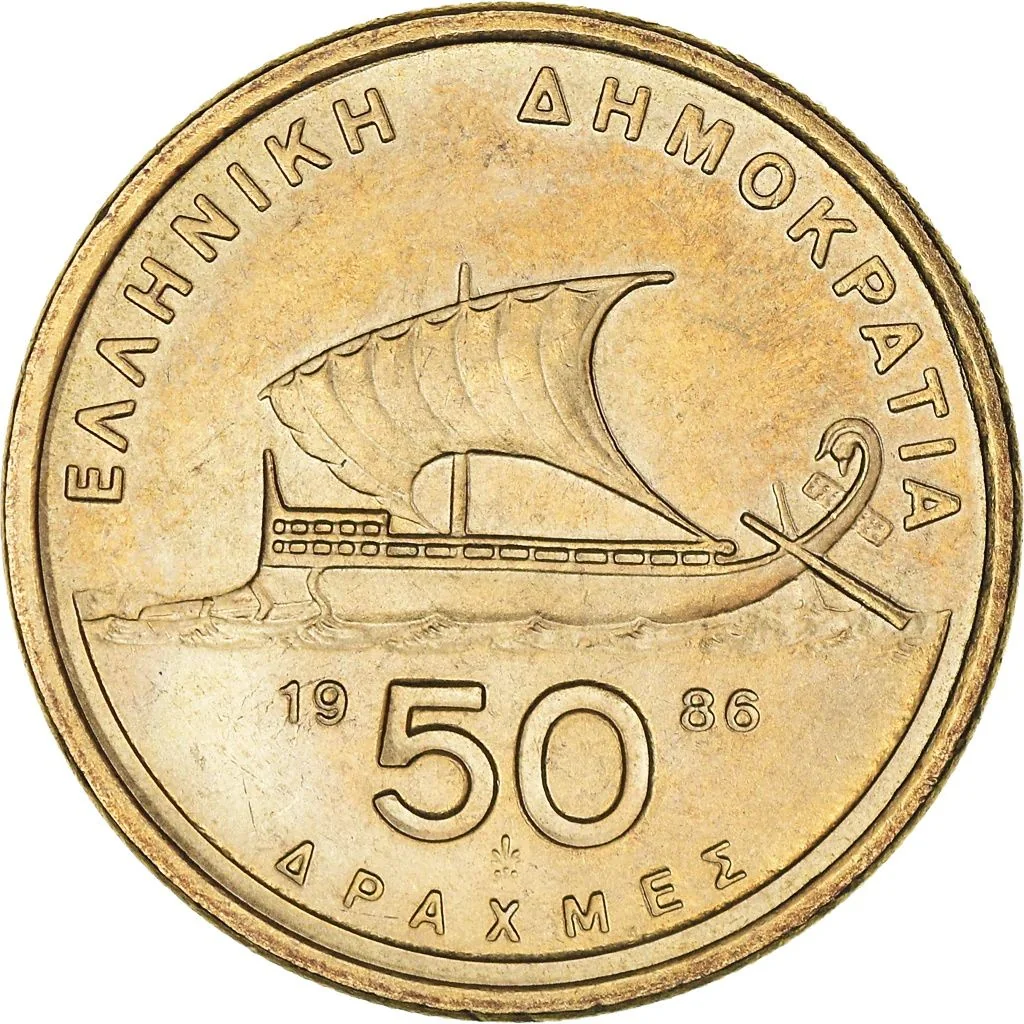
Obverse
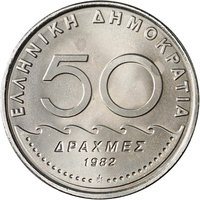
Description:
Trireme with face value and date.
Inscription:
ΕΛΛΗΝΙΚΗ ΔΗΜΟΚΡΑΤΙΑ
19 90
50
ΔΡΑΧΜΕΣ
19 90
50
ΔΡΑΧΜΕΣ
Translation:
HELLENIC REPUBLIC
19 90
50
DRACHMAS
19 90
50
DRACHMAS
Script: Greek
Language: Greek
Designer: Konstantinos Kazakos
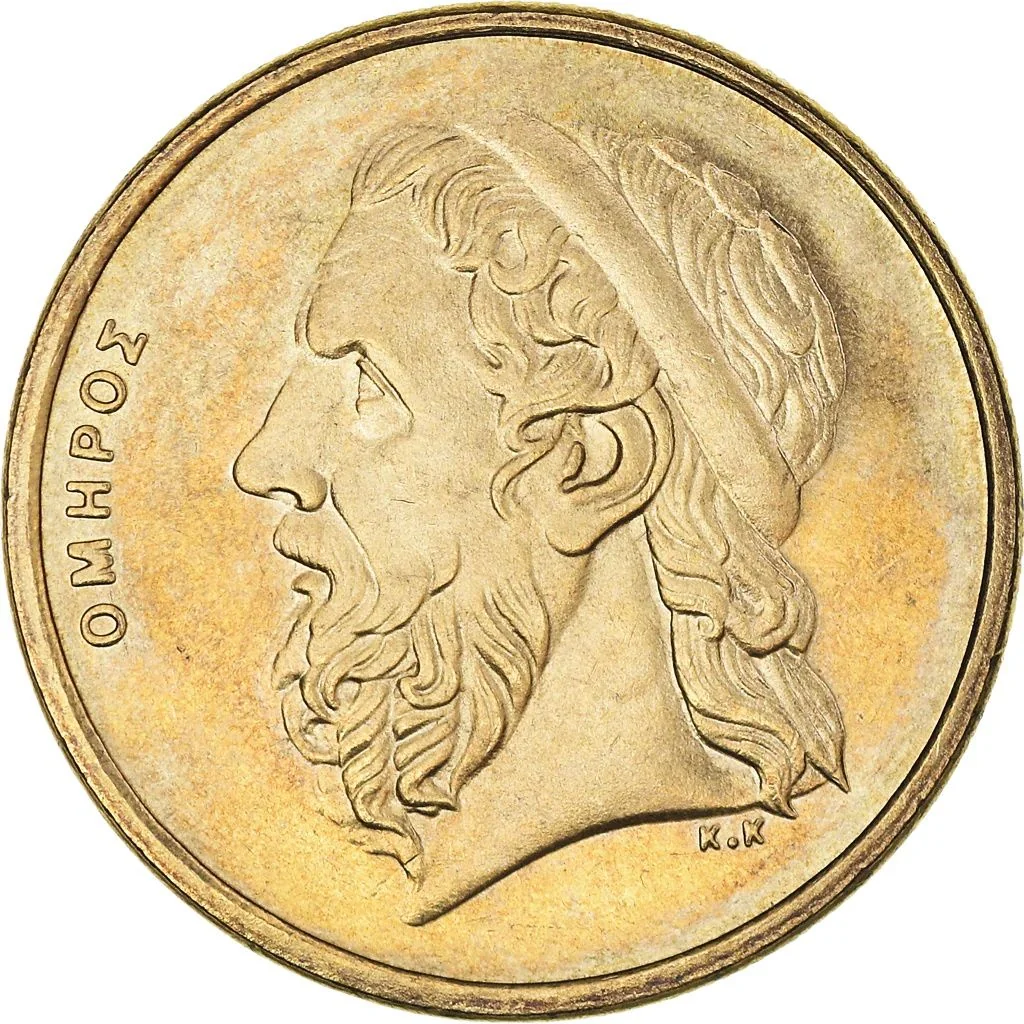
Reverse
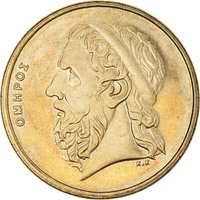
Description:
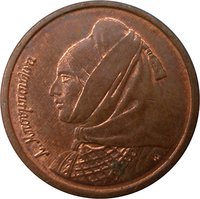
Homer's left profile bust, engraver's initials at lower right.
Inscription:
ΟΜΗΡΟΣ
Κ.Κ
Κ.Κ
Translation:
HOMER
K.K
K.K
Script: Greek
Language: Greek
Designer: Konstantinos Kazakos
Edge
Reeded
Categories
| Art> Literature |
| Person> Artist |
| Transportation> Watercraft |
| Mythology |
Mints
| Name | Mark |
|---|---|
| National Mint of the Bank of Greece | — |
Mintings
| Year | Mint Mark | Mintage | Quality | Collection |
|---|---|---|---|---|
| 1986 | — | 12,078,000 | ||
| 1988 | — | 23,589,000 | ||
| 1990 | — | 60,299,161 | ||
| 1992 | — | 18,645,102 | ||
| 1993 | — | — | Proof | |
| 1993 | — | — | In sets | |
| 1994 | — | 12,643,794 | ||
| 1998 | — | 21,419,516 | ||
| 2000 | — | 17,048,430 |
Historical background
In 1986, Greece was navigating a challenging economic landscape marked by persistent inflation, a widening public deficit, and a weakening currency, all within the framework of the European Monetary System (EMS). The country had joined the EMS in 1984, pegging the drachma to the European Currency Unit (ECU) in an effort to import monetary stability and curb its high inflation, which remained in the double digits. However, this commitment required tight monetary policies that often conflicted with the expansionary fiscal policies of the socialist PASOK government under Prime Minister Andreas Papandreou, which prioritized social spending and economic growth.
The drachma faced significant downward pressure throughout the year, leading to two official devaluations within the EMS—a 15% devaluation in January 1986 and a further 6% adjustment in August. These devaluations were necessary to restore competitiveness lost to high domestic inflation and to correct a growing trade deficit. Despite these measures, confidence in the currency remained fragile, and the government had to implement high interest rates and capital controls to prevent drachma outflows and support the peg, creating a constrained environment for business and investment.
Overall, the currency situation of 1986 reflected Greece's deeper struggle to reconcile domestic political and economic priorities with the discipline required for European integration. The repeated devaluations underscored the structural weaknesses of the Greek economy, including weak productivity and chronic fiscal imbalances, setting a precedent for the monetary challenges that would persist for decades. This period highlighted the difficulty of maintaining a fixed exchange rate without concurrent fiscal consolidation, a tension that would later be central to the Greek debt crisis of the 2010s.
The drachma faced significant downward pressure throughout the year, leading to two official devaluations within the EMS—a 15% devaluation in January 1986 and a further 6% adjustment in August. These devaluations were necessary to restore competitiveness lost to high domestic inflation and to correct a growing trade deficit. Despite these measures, confidence in the currency remained fragile, and the government had to implement high interest rates and capital controls to prevent drachma outflows and support the peg, creating a constrained environment for business and investment.
Overall, the currency situation of 1986 reflected Greece's deeper struggle to reconcile domestic political and economic priorities with the discipline required for European integration. The repeated devaluations underscored the structural weaknesses of the Greek economy, including weak productivity and chronic fiscal imbalances, setting a precedent for the monetary challenges that would persist for decades. This period highlighted the difficulty of maintaining a fixed exchange rate without concurrent fiscal consolidation, a tension that would later be central to the Greek debt crisis of the 2010s.
🌱 Very Common