

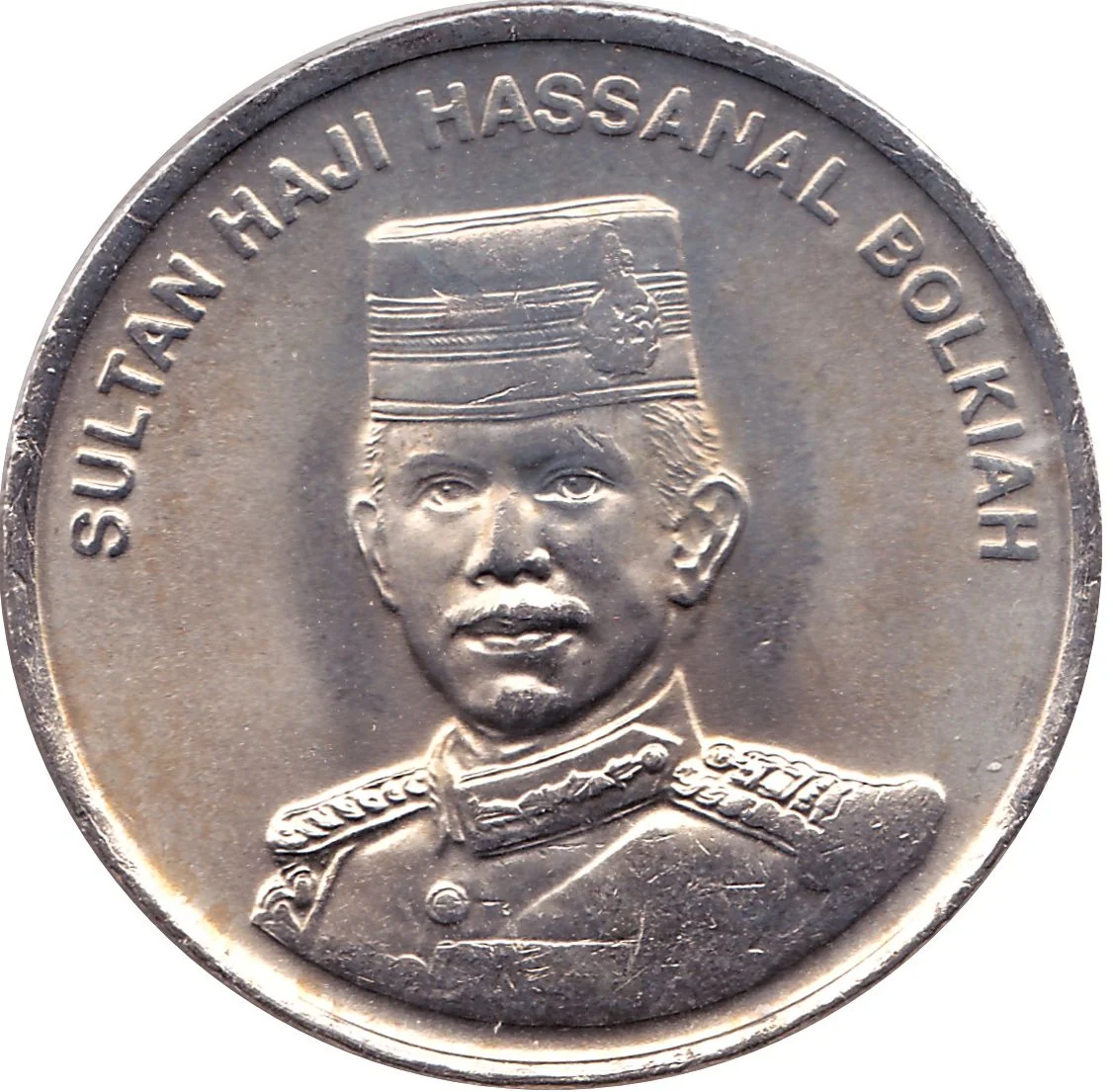
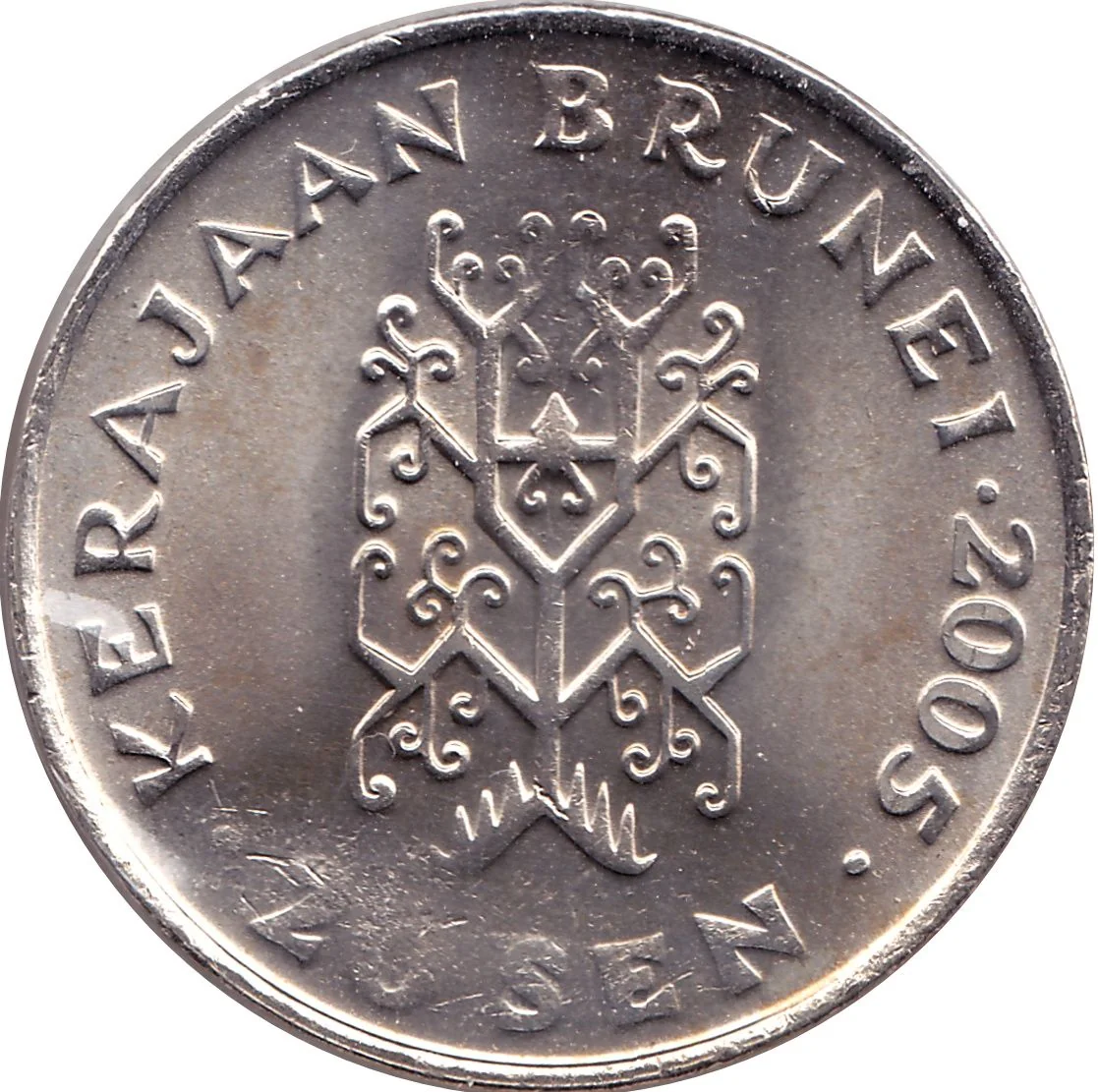
20 Sen – Brunei
Brunei
Context
Years: 1993–2016
Issuer: Brunei 
Ruler: Hassanal Bolkiah
Currency:
(since 1967)
Total mintage: 6,354,919
Material
Diameter: 23.62 mm
Weight: 5.67 g
Thickness: 1.8 mm
Shape: Round
Composition: Copper-nickel
Technique: Milled
Alignment: Medal alignment
flip
References
KM: #Click to copy to clipboard37
Numista: #5655
Value
Exchange value: 0.20 BND
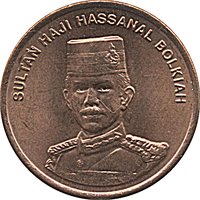
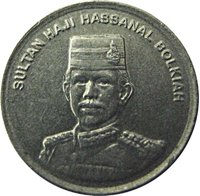
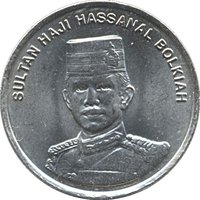
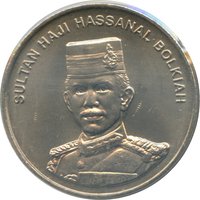
Obverse
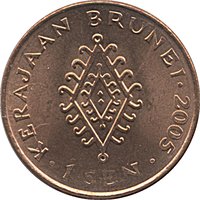
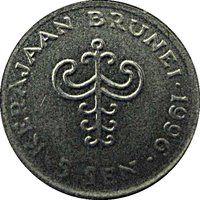
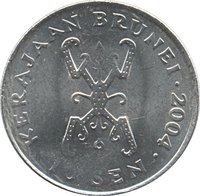
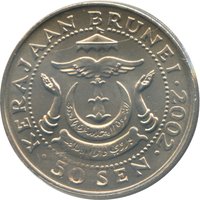
Reverse
Inscription:
· KERAJAAN BRUNEI · 1994 ·
20 SEN
20 SEN
Translation:
State of Brunei 1994
20 Sen
20 Sen
Script: Latin
Engraver: Christopher Ironside
Edge
Reeded
Mints
| Name | Mark |
|---|---|
| Singapore Mint | — |
Mintings
| Year | Mint Mark | Mintage | Quality | Collection |
|---|---|---|---|---|
| 1993 | — | 720,000 | ||
| 1994 | — | 2,000,000 | ||
| 1996 | — | 2,767,000 | ||
| 2000 | — | — | ||
| 2001 | — | 270,647 | ||
| 2002 | — | 597,272 | ||
| 2004 | — | — | ||
| 2005 | — | — | ||
| 2006 | — | — | ||
| 2008 | — | — | ||
| 2009 | — | — | ||
| 2010 | — | — | ||
| 2011 | — | — | ||
| 2013 | — | — | ||
| 2014 | — | — | ||
| 2015 | — | — | ||
| 2016 | — | — |
Historical background
In 1993, Brunei Darussalam's currency situation was defined by its long-standing and stable peg to the Singapore Dollar (SGD), a arrangement formalized in 1967. This Currency Interchangeability Agreement meant that the Brunei Dollar (BND) and the SGD were accepted at par as customary tender in both countries, creating a de facto monetary union. This policy provided immense stability for Brunei's small, open economy, which was heavily reliant on oil and gas exports. By anchoring its currency to Singapore's, Brunei effectively imported the monetary credibility and low inflation of its larger, more diversified neighbour, shielding itself from volatile commodity price swings.
The system functioned seamlessly in practice. Banknotes from either nation circulated freely, though coins were not interchangeable. Brunei's substantial foreign exchange reserves, accumulated from decades of hydrocarbon revenue, fully backed the currency peg and instilled absolute confidence. There was no speculative pressure on the Brunei Dollar in 1993; the arrangement was a cornerstone of economic policy, ensuring predictable exchange rates for trade and investment. This stability was particularly crucial for a nation importing the vast majority of its consumer goods and relying on Singapore as its primary financial and trading hub.
Consequently, 1993 was not a year of currency crisis or significant change for Brunei, but rather one of continued quiet confidence in this symbiotic financial link. The primary focus for authorities remained managing the state's hydrocarbon wealth rather than monetary policy, which was effectively outsourced to the Monetary Authority of Singapore. The stability afforded by the peg allowed Brunei to navigate the early 1990s without the turbulence experienced by some Southeast Asian currencies later in the decade, underscoring the strategic value of this unique bilateral agreement.
The system functioned seamlessly in practice. Banknotes from either nation circulated freely, though coins were not interchangeable. Brunei's substantial foreign exchange reserves, accumulated from decades of hydrocarbon revenue, fully backed the currency peg and instilled absolute confidence. There was no speculative pressure on the Brunei Dollar in 1993; the arrangement was a cornerstone of economic policy, ensuring predictable exchange rates for trade and investment. This stability was particularly crucial for a nation importing the vast majority of its consumer goods and relying on Singapore as its primary financial and trading hub.
Consequently, 1993 was not a year of currency crisis or significant change for Brunei, but rather one of continued quiet confidence in this symbiotic financial link. The primary focus for authorities remained managing the state's hydrocarbon wealth rather than monetary policy, which was effectively outsourced to the Monetary Authority of Singapore. The stability afforded by the peg allowed Brunei to navigate the early 1990s without the turbulence experienced by some Southeast Asian currencies later in the decade, underscoring the strategic value of this unique bilateral agreement.
Series: 1993 Brunei circulation coins
🌱 Very Common