

Obverse
Description:
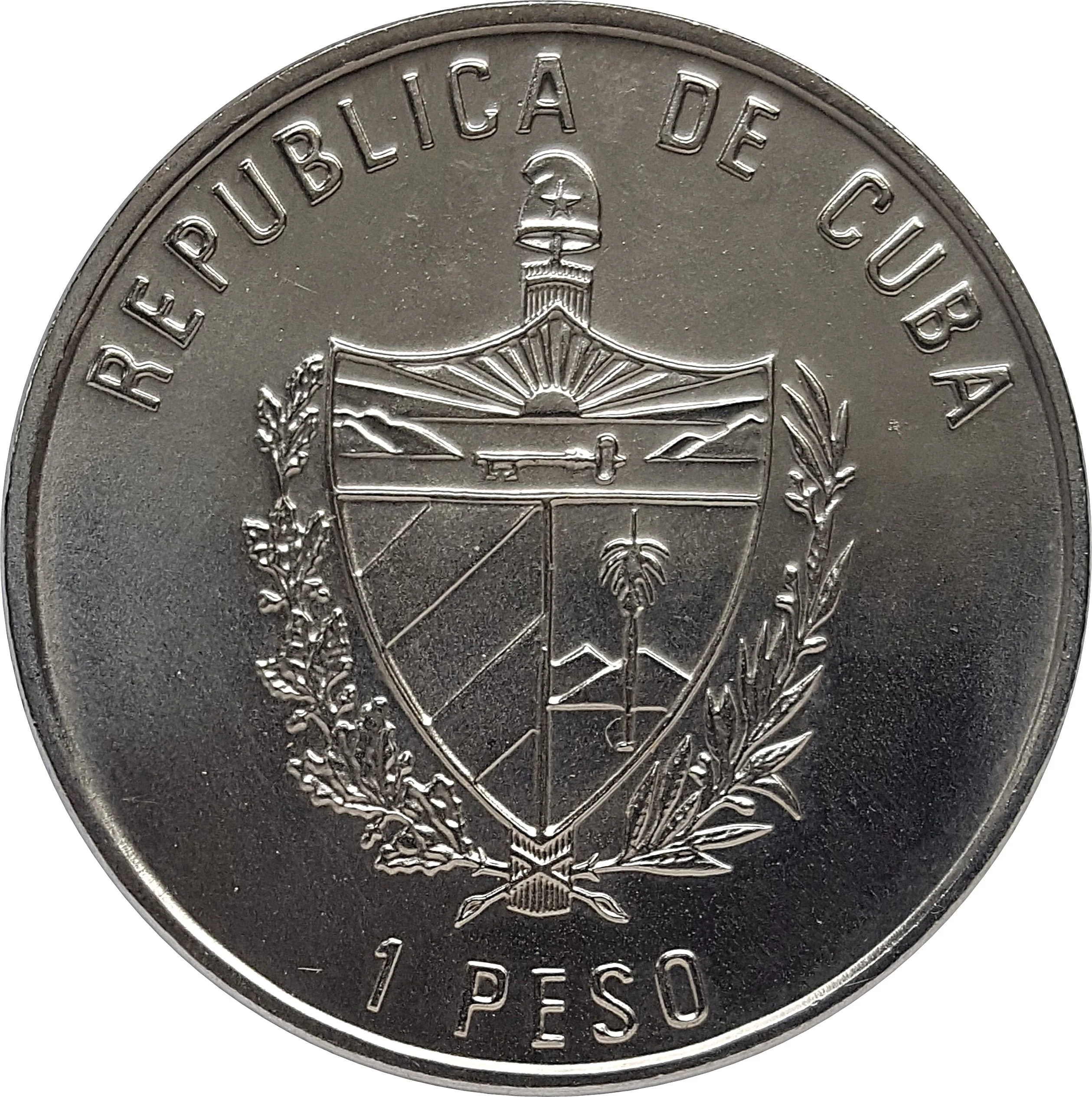
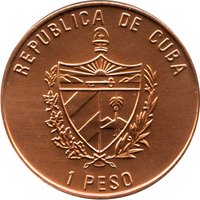
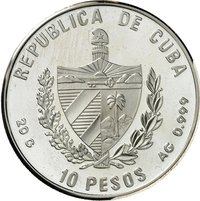
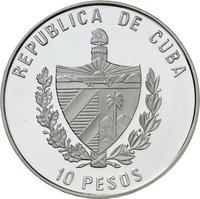
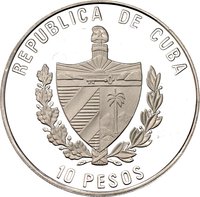
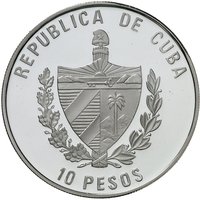
Cuban coat of arms, curved country name above, face value below, flanked by two 5-pointed stars.
Inscription:
REPUBLICA DE CUBA
★ 1 PESO ★
★ 1 PESO ★
Translation:
REPUBLIC OF CUBA
★ 1 PESO ★
★ 1 PESO ★
Script: Latin
Language: Spanish
Engraver: Charles Edward Barber
Reverse
Description:
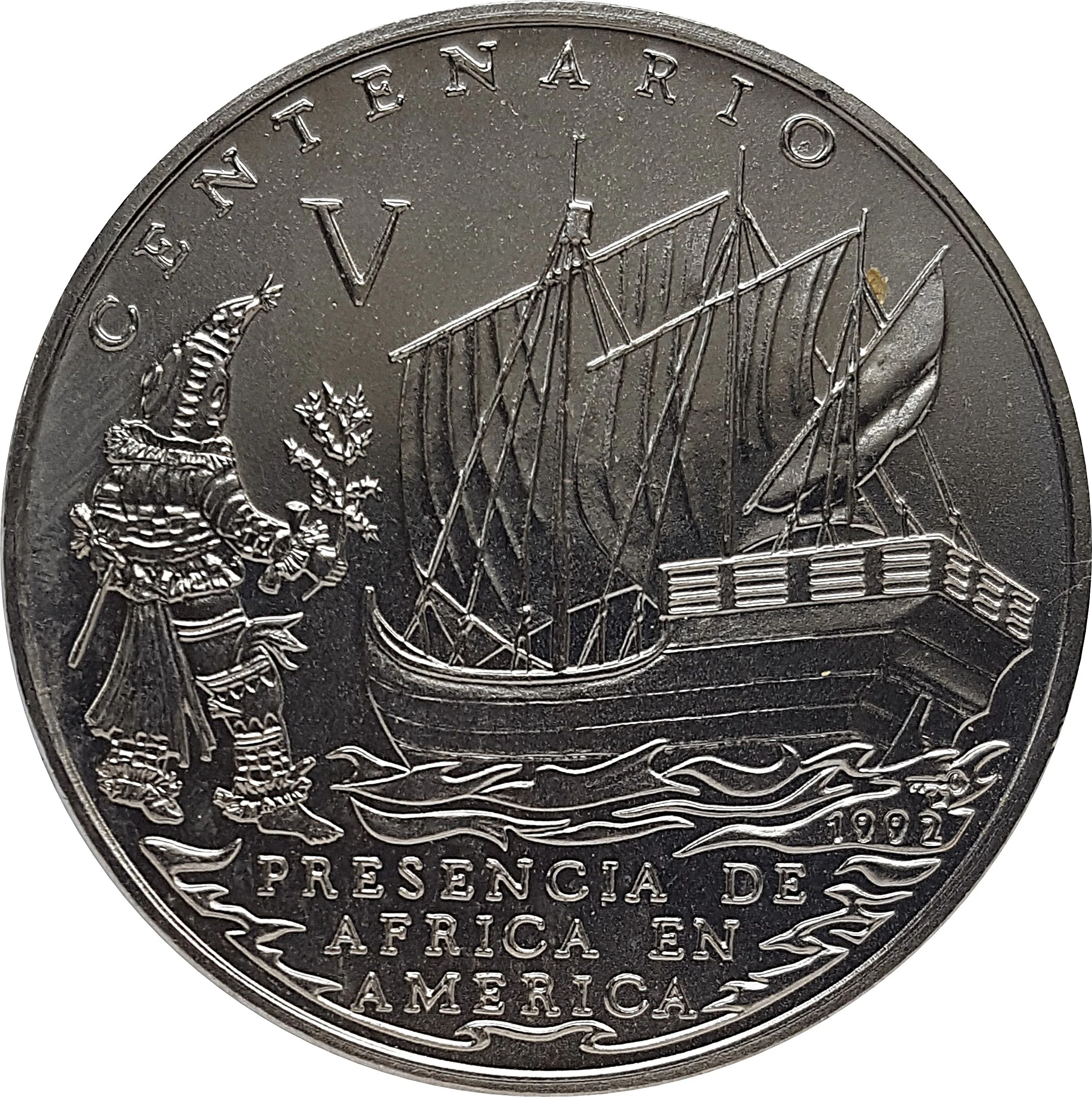
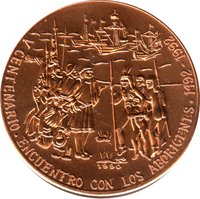
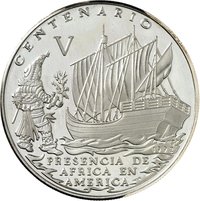
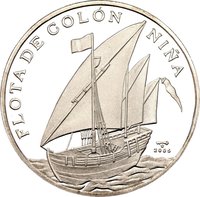
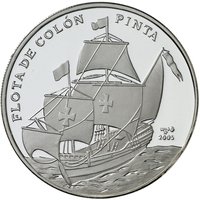
Left: African costume. Right: ship at sea. Top/bottom: legends. Lower right: mintmark and date.
Inscription:
CENTENARIO
V
1992
PRESENCIA DE
AFRICA EN
AMERICA
V
1992
PRESENCIA DE
AFRICA EN
AMERICA
Translation:
Fifth Centenary
1992
Presence of
Africa in
America
1992
Presence of
Africa in
America
Script: Latin
Language: Spanish
Engraver: Rigoberto Peláez Alcázar
Designer: Irene Sierra Carreño
Edge
Plain
Categories
| Symbols> Coat of Arms |
| Transportation> Watercraft |
Mints
| Name | Mark |
|---|---|
| Empresa Cubana de Acuñaciones | — |
Mintings
| Year | Mint Mark | Mintage | Quality | Collection |
|---|---|---|---|---|
| 1992 | — | 2,000 | BU |
Historical background
In 1992, Cuba's currency situation was defined by extreme duality and severe economic crisis, a direct consequence of the collapse of the Soviet Union and the Eastern Bloc. The loss of this economic patronage, which had provided subsidized trade, guaranteed markets, and billions in aid, plunged the nation into the "Special Period in Time of Peace." This was a state of national emergency characterized by acute shortages of fuel, food, and consumer goods, triggering a deep recession and forcing the government to implement drastic austerity measures. The official economy, operating on the Cuban peso (CUP), became increasingly dysfunctional, with state salaries rendered almost meaningless due to the evaporation of goods in the rationing system.
Amid this collapse, a two-tier currency system became entrenched as a critical, albeit unequal, lifeline. Since the 1970s, Cuba had operated a separate, convertible currency for foreign transactions and diplomatic shops, but the crisis of the 1990s dramatically expanded its domestic role. The U.S. dollar, though not officially legal tender until 1993, circulated widely in a burgeoning black market and was essential for accessing goods in newly authorized "dollar stores." These stores sold imported and high-quality items unavailable for pesos, creating a stark divide between those with access to hard currency (via tourism, remittances, or the black market) and those reliant solely on devalued peso wages.
The government's response in 1992 was one of reluctant and incremental adaptation to this monetary reality. While not yet implementing full legalization of the dollar, state policies increasingly accommodated its use to attract vital foreign exchange. The rapid expansion of tourism and the encouragement of remittances from Cubans abroad were key strategies, both of which funneled dollars into the economy. Thus, 1992 stands as a pivotal year where the foundational inequalities of Cuba's dual-currency system were cemented, setting the stage for the official dollarization that would follow and creating a profound socio-economic schism that would define Cuban life for decades.
Amid this collapse, a two-tier currency system became entrenched as a critical, albeit unequal, lifeline. Since the 1970s, Cuba had operated a separate, convertible currency for foreign transactions and diplomatic shops, but the crisis of the 1990s dramatically expanded its domestic role. The U.S. dollar, though not officially legal tender until 1993, circulated widely in a burgeoning black market and was essential for accessing goods in newly authorized "dollar stores." These stores sold imported and high-quality items unavailable for pesos, creating a stark divide between those with access to hard currency (via tourism, remittances, or the black market) and those reliant solely on devalued peso wages.
The government's response in 1992 was one of reluctant and incremental adaptation to this monetary reality. While not yet implementing full legalization of the dollar, state policies increasingly accommodated its use to attract vital foreign exchange. The rapid expansion of tourism and the encouragement of remittances from Cubans abroad were key strategies, both of which funneled dollars into the economy. Thus, 1992 stands as a pivotal year where the foundational inequalities of Cuba's dual-currency system were cemented, setting the stage for the official dollarization that would follow and creating a profound socio-economic schism that would define Cuban life for decades.
Series: Encounter of Two Cultures
💎 Very Rare