

50 pence – Guernsey
Add to wishlist
Context
Years: 1985–1997
Country: British Crown dependencies
Issuer: Guernsey
Ruler: Elizabeth II
Currency:
(since 1971)
Demonetization: 28 February 1998
Total mintage: 319,200
Material
Diameter: 30 mm
Weight: 13.5 g
Shape: Equilateral curve heptagon
Composition: Copper-nickel
Technique: Milled
Alignment: Medal alignment
flip
References
KM: #
Numista: #5639
Value
Exchange value: 0.50 GGP
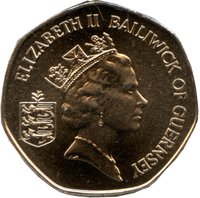
Obverse
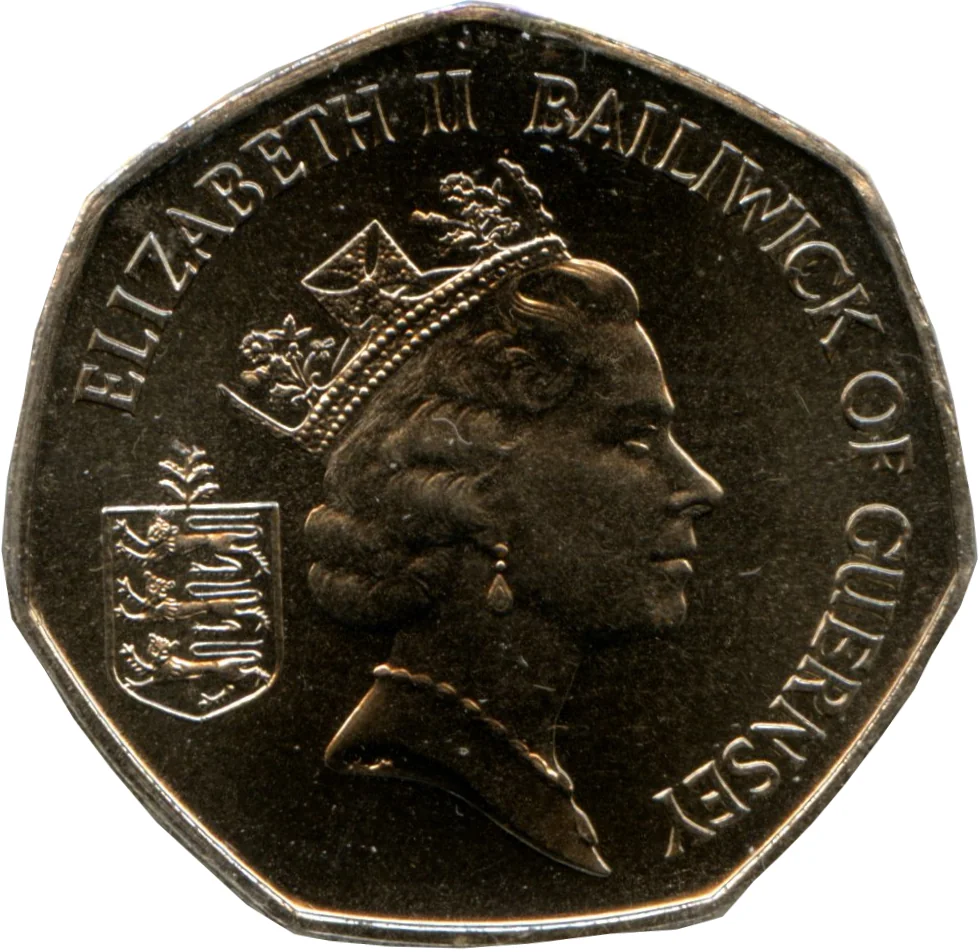
Description:
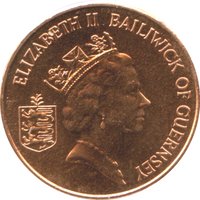
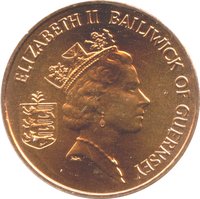
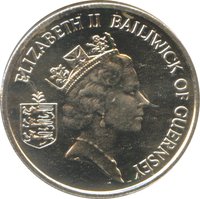
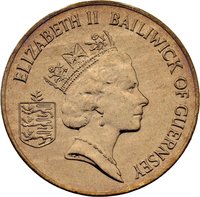
Crowned head right, small shield left.
Inscription:
ELIZABETH II BAILIWICK OF GUERNSEY
Script: Latin
Engraver: Raphael David Maklouf
Reverse
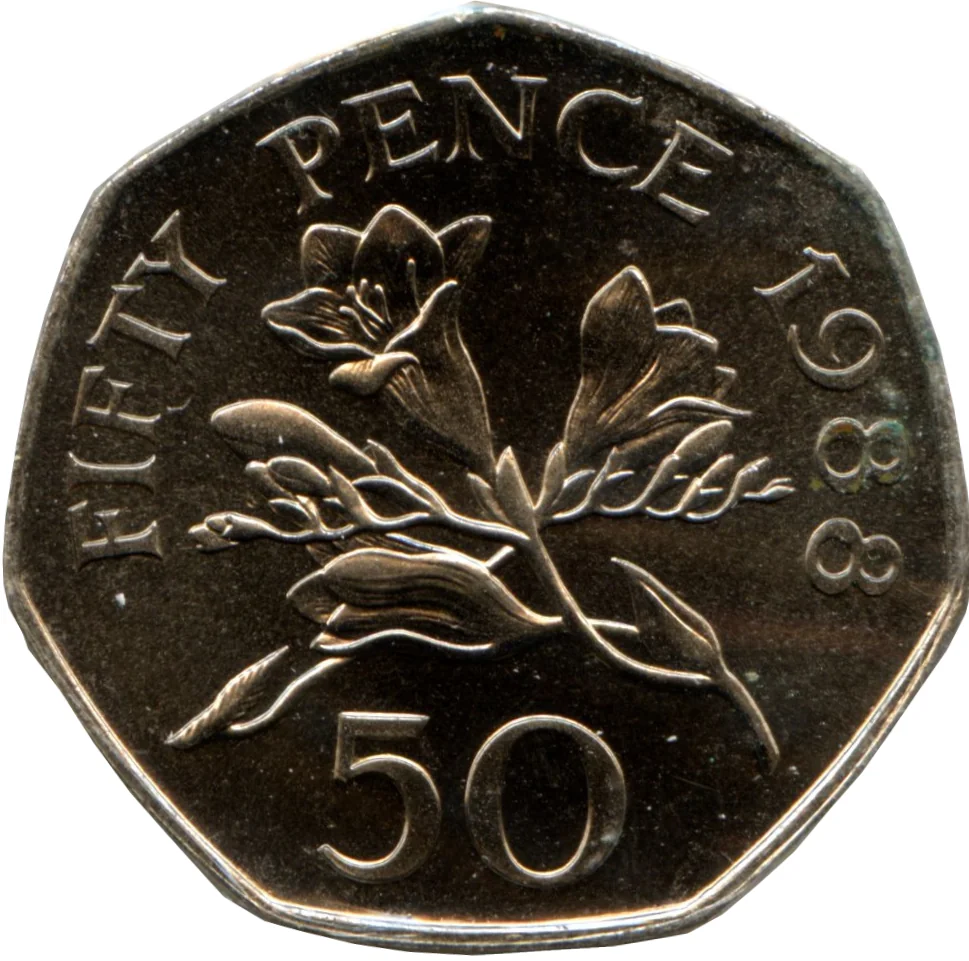
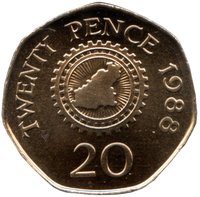
Description:
Freesia: fragrant, colorful blooms.
Inscription:
FIFTY PENCE 1989
50
50
Script: Latin
Engraver: Robert Elderton
Edge
Plain
Mintings
| Year | Mint Mark | Mintage | Quality | Collection |
|---|---|---|---|---|
| 1985 | — | 25,000 | ||
| 1985 | — | 2,500 | Proof | |
| 1986 | — | 10,000 | ||
| 1986 | — | 2,500 | Proof | |
| 1987 | — | 2,500 | Proof | |
| 1987 | — | 5,000 | ||
| 1988 | — | 6,000 | ||
| 1988 | — | 2,500 | Proof | |
| 1989 | — | 55,000 | ||
| 1989 | — | 2,500 | Proof | |
| 1990 | — | 140,000 | ||
| 1990 | — | 700 | Proof | |
| 1992 | — | 65,000 | In sets | |
| 1992 | — | — | Proof | |
| 1997 | — | — | Proof |
Historical background
In 1985, Guernsey's currency situation was defined by its long-standing and pragmatic dual-currency system. The States of Guernsey issued its own local banknotes and coins, denominated in "Guernsey pounds," which were not legal tender in the United Kingdom. However, these operated in parallel with, and were backed pound-for-pound by, sterling reserves held at the Bank of England. This meant UK banknotes circulated freely on the island and were accepted interchangeably with local issues, providing economic stability and seamless trade with its largest partner.
This system functioned without a central bank, managed instead by the States' Treasury and Finance Board. The primary purpose of issuing local currency was not monetary policy—as that was effectively set by the Bank of England—but to generate seigniorage income for the island's government. The profit earned from issuing its own notes and coins provided a valuable revenue stream, funding public services without increasing taxation, a key consideration for a low-tax jurisdiction.
The year 1985 fell within a period of monetary stability for Guernsey, following the turbulence of the early 1980s when high UK interest rates and inflation had impacted the island. There were no significant changes to the currency laws or crises that year; the arrangement was a settled and successful feature of Guernsey's autonomous governance. The system underscored Guernsey's unique constitutional position as a Crown Dependency: politically loyal to the British Crown but fiscally independent, using a locally managed currency firmly pegged to sterling.
This system functioned without a central bank, managed instead by the States' Treasury and Finance Board. The primary purpose of issuing local currency was not monetary policy—as that was effectively set by the Bank of England—but to generate seigniorage income for the island's government. The profit earned from issuing its own notes and coins provided a valuable revenue stream, funding public services without increasing taxation, a key consideration for a low-tax jurisdiction.
The year 1985 fell within a period of monetary stability for Guernsey, following the turbulence of the early 1980s when high UK interest rates and inflation had impacted the island. There were no significant changes to the currency laws or crises that year; the arrangement was a settled and successful feature of Guernsey's autonomous governance. The system underscored Guernsey's unique constitutional position as a Crown Dependency: politically loyal to the British Crown but fiscally independent, using a locally managed currency firmly pegged to sterling.
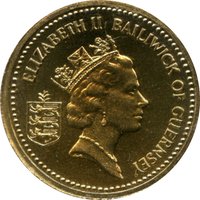
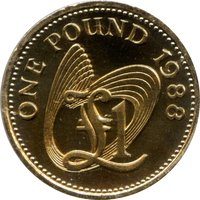
Series: 1985 Guernsey circulation coins
🌱 Common