

1 Pound – United Kingdom
United Kingdom
Context
Year: 1984
Issuer: United Kingdom 
Ruler: Elizabeth II
Currency:
(since 1971)
Demonetization: 15 October 2017
Total mintage: 44,855
Material

References
KM: #Click to copy to clipboard934a
Numista: #56382
Value
Exchange value: 1 GBP = $1.35
Bullion value: $25.53
Inflation-adjusted value: 4.31 GBP
Obverse
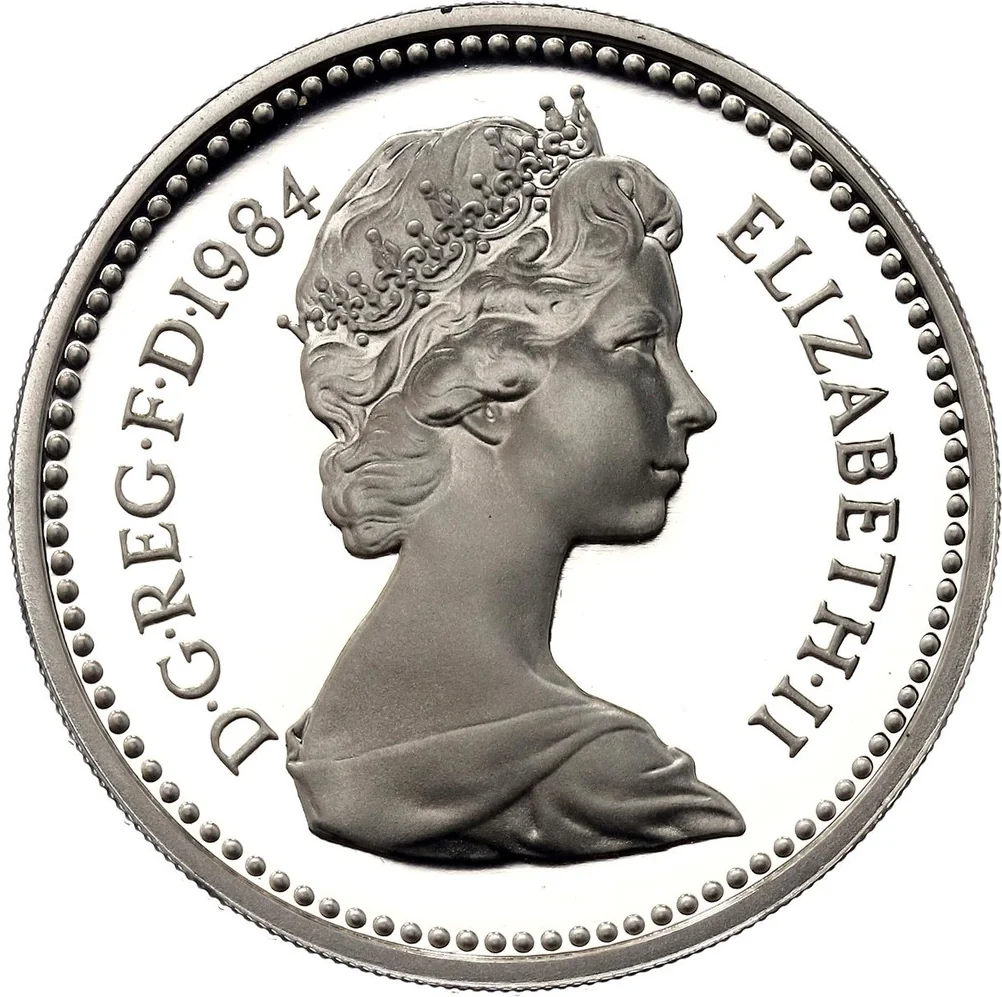
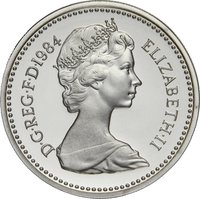
Description:
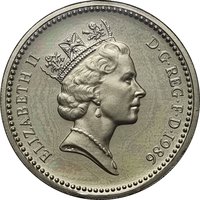
Queen Elizabeth II crowned portrait, wearing Girls of Great Britain and Ireland tiara.
Inscription:
ELIZABETH·II D·G·REG·F·D·1984
Translation:
Elizabeth the Second, by the Grace of God, Queen, Defender of the Faith, 1984
Script: Latin
Language: Latin
Engraver: Arnold Machin
Reverse
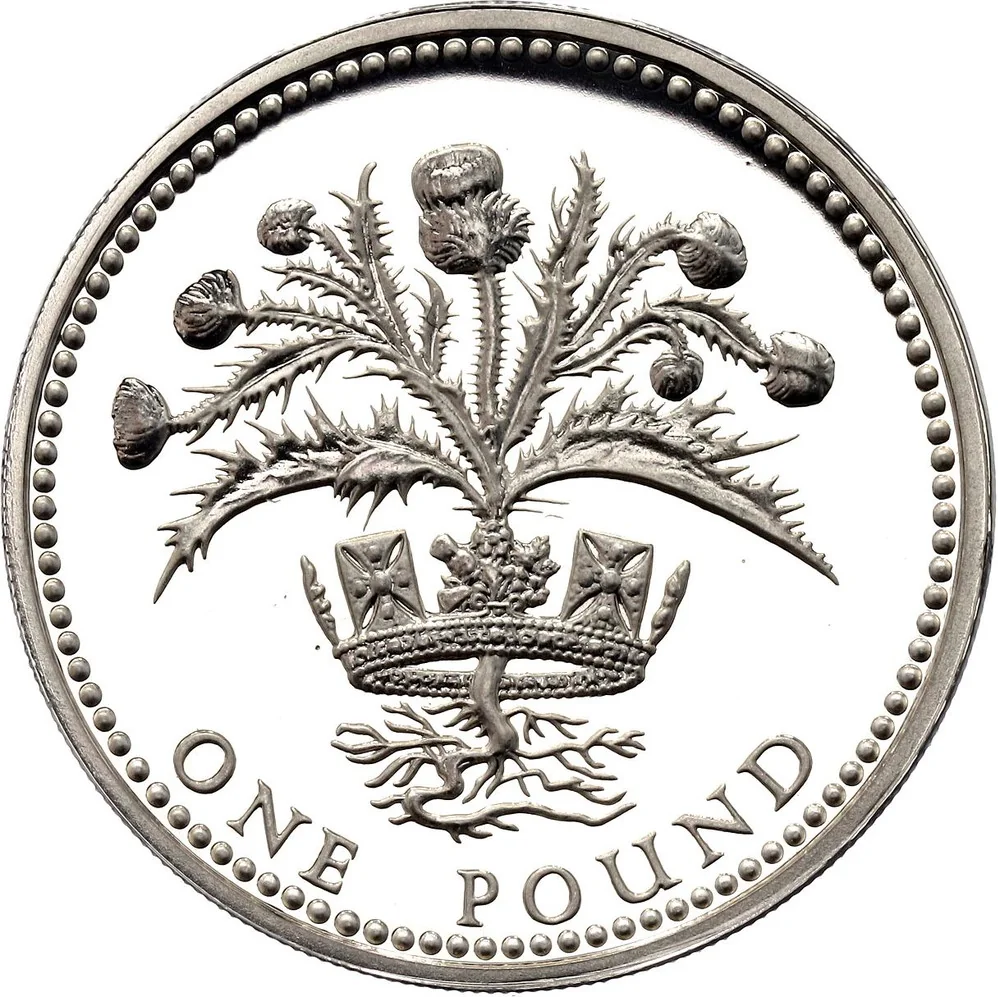
Description:
Scottish thistle within a Royal Diadem, value below.
Inscription:
ONE POUND
Script: Latin
Engraver: Leslie Durbin
Edge
Milled with incuse lettering
Legend:
NEMO ME IMPUNE LACESSIT
Translation:
No one attacks me with impunity.
Language: Latin
Mints
| Name | Mark |
|---|---|
| Royal Mint | — |
Mintings
| Year | Mint Mark | Mintage | Quality | Collection |
|---|---|---|---|---|
| 1984 | — | 44,855 | Proof |
Historical background
In 1984, the United Kingdom's currency situation was dominated by the ongoing struggle to control inflation and maintain the value of the pound sterling within the European Exchange Rate Mechanism (ERM), which it had joined in 1979. The Conservative government under Prime Minister Margaret Thatcher was deeply committed to a monetarist policy framework, prioritising the reduction of money supply growth to curb inflation, which had fallen from the highs of the late 1970s but remained a persistent concern. This period saw a strong pound, partly engineered by high interest rates, which helped control inflation but severely damaged the competitiveness of British manufacturing and exports, contributing to high unemployment in industrial regions.
The pound's strength was not solely a product of domestic policy; it was also bolstered by the inflow of foreign capital, particularly due to North Sea oil revenues, which created a "petrocurrency" effect. This financial inflow masked underlying economic weaknesses and created a policy dilemma: a high pound pleased the City of London and helped keep import prices low, but it exacerbated the deindustrialisation of the economy. Chancellor of the Exchequer Nigel Lawson was a key advocate for "shadowing" the Deutsche Mark, an unofficial policy of managing sterling's exchange rate to align more closely with Germany's strong currency as a discipline against inflation, a precursor to a more formal fixed exchange rate policy.
Ultimately, the currency background of 1984 was one of transition and tension. The government's battle against inflation was largely succeeding, but at a significant social and industrial cost. The focus on exchange rate stability as a nominal anchor for monetary policy was gaining ascendancy over strict monetarism, setting the stage for the UK's full commitment to the ERM's fixed exchange rate bands in 1990. This path, however, sowed the seeds for future turmoil, as the high pound and rigid parity would later culminate in the sterling crisis of 1992 (Black Wednesday).
The pound's strength was not solely a product of domestic policy; it was also bolstered by the inflow of foreign capital, particularly due to North Sea oil revenues, which created a "petrocurrency" effect. This financial inflow masked underlying economic weaknesses and created a policy dilemma: a high pound pleased the City of London and helped keep import prices low, but it exacerbated the deindustrialisation of the economy. Chancellor of the Exchequer Nigel Lawson was a key advocate for "shadowing" the Deutsche Mark, an unofficial policy of managing sterling's exchange rate to align more closely with Germany's strong currency as a discipline against inflation, a precursor to a more formal fixed exchange rate policy.
Ultimately, the currency background of 1984 was one of transition and tension. The government's battle against inflation was largely succeeding, but at a significant social and industrial cost. The focus on exchange rate stability as a nominal anchor for monetary policy was gaining ascendancy over strict monetarism, setting the stage for the UK's full commitment to the ERM's fixed exchange rate bands in 1990. This path, however, sowed the seeds for future turmoil, as the high pound and rigid parity would later culminate in the sterling crisis of 1992 (Black Wednesday).
Series: Royal Diadem series






🌟 Limited