

1 Shilling – United Kingdom
United Kingdom
Context
Years: 1887–1889
Issuer: United Kingdom 
Ruler: Victoria
Currency:
(1158—1970)
Demonetized: Yes
Total mintage: 15,601,800
Material
References
KM: #Click to copy to clipboard761
Numista: #5615
Value
Bullion value: $14.98
Obverse
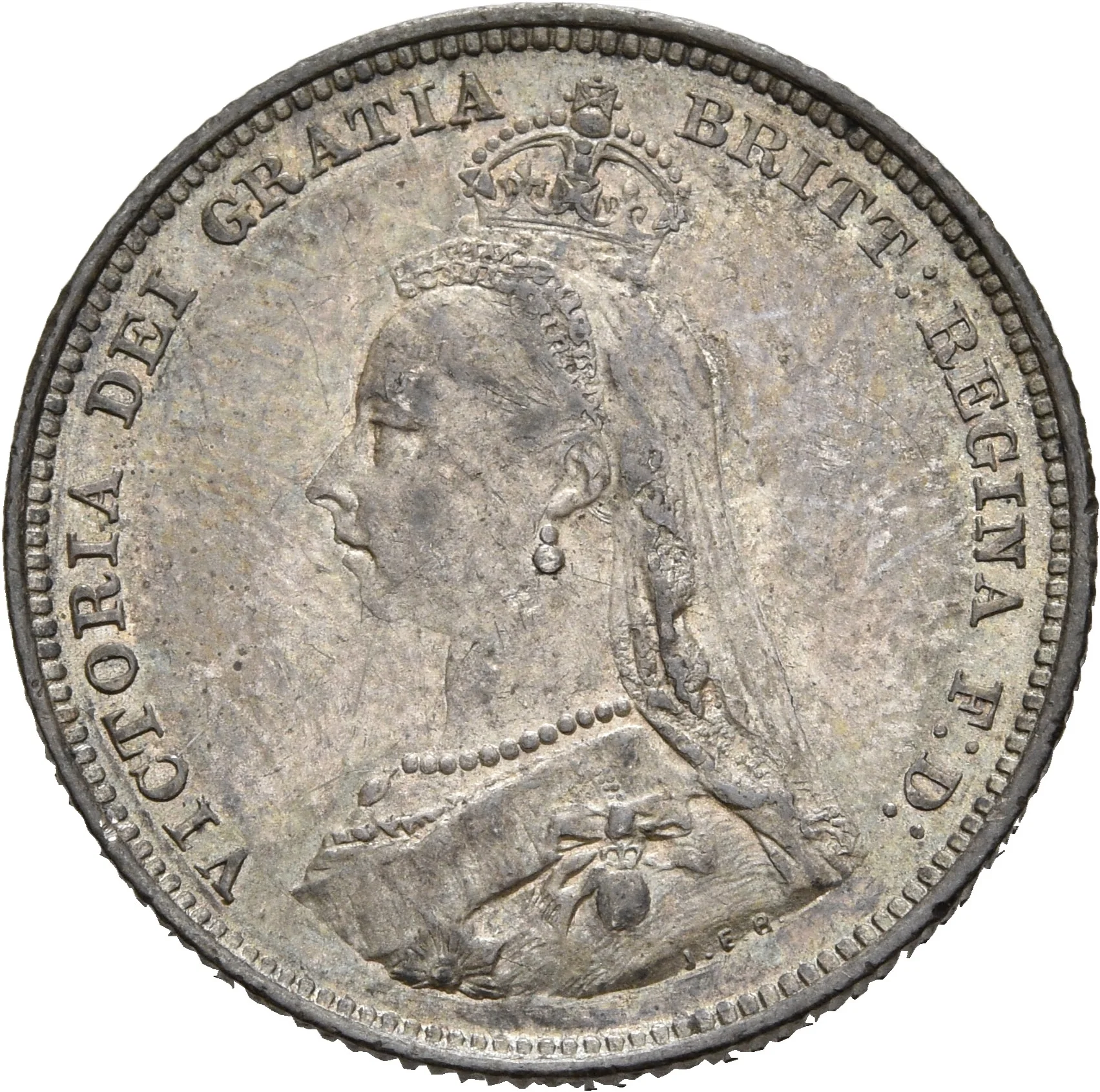
Description:
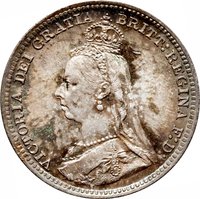
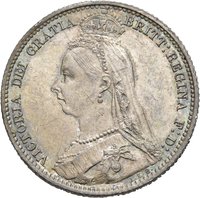
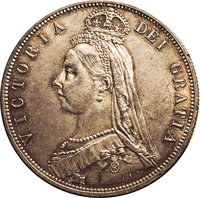
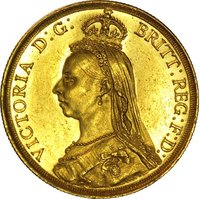
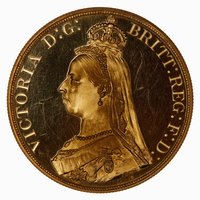
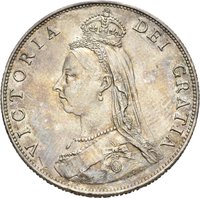
Queen Victoria's smaller "Jubilee Head" bust left, with legend around. Engraver's initials on truncation.
Inscription:
VICTORIA DEI GRATIA BRITT: REGINA F: D:
J. F. B.
J. F. B.
Translation:
Victoria by the Grace of God Queen of Britain Defender of the Faith
Script: Latin
Language: Latin
Engraver: Joseph Edgar Boehm
Reverse
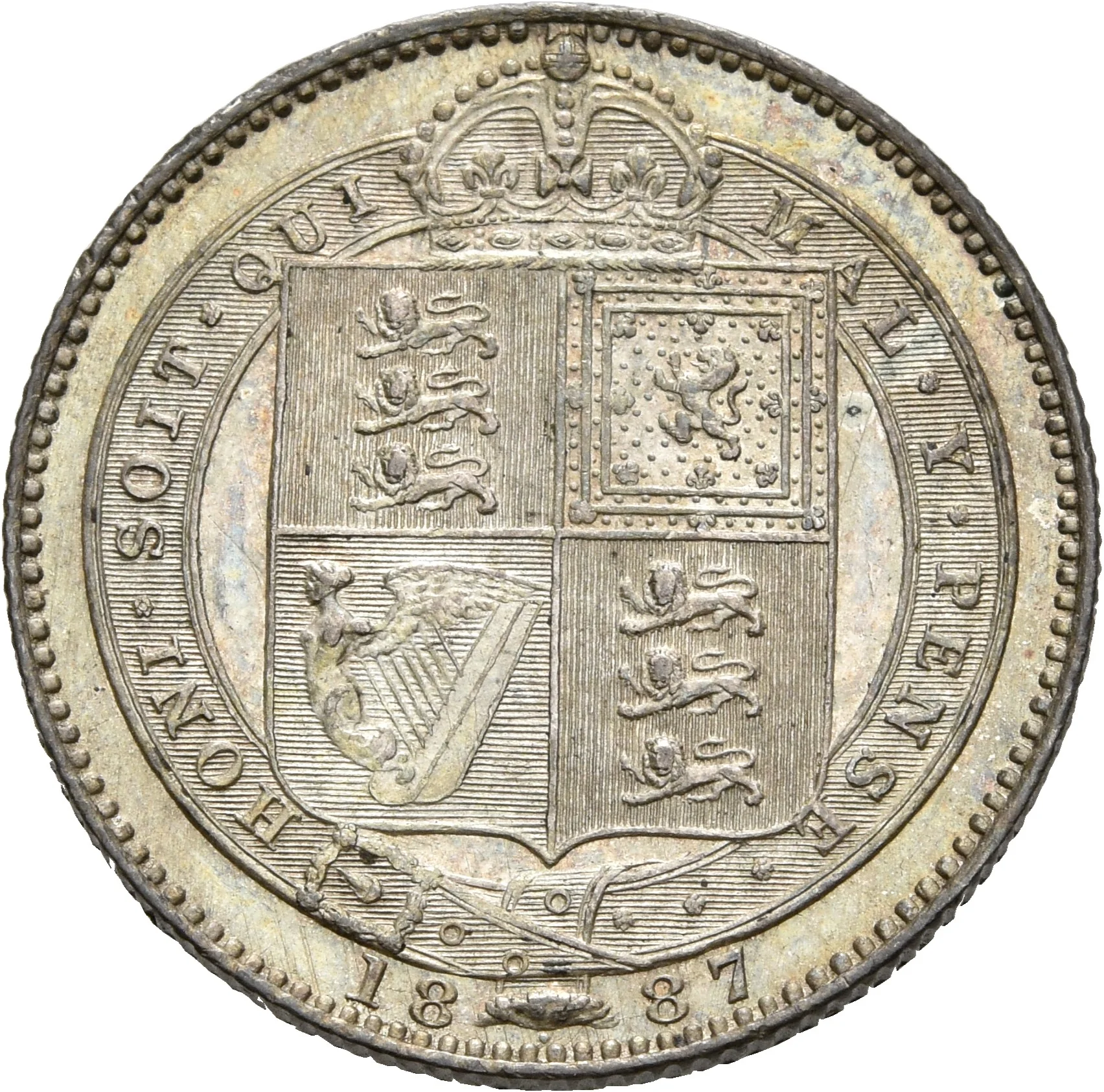
Description:
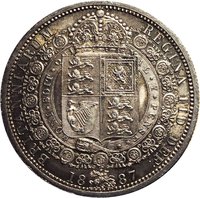
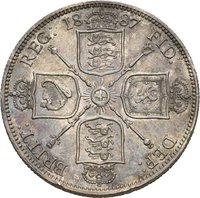
Royal shield in Garter, crowned; date divided below.
Inscription:
HONI SOIT QUI MAL Y PENSE
1887
1887
Translation:
Shame upon him who thinks evil of it.
Script: Latin
Language: French
Engraver: Leonard Charles Wyon
Edge
Reeded
Mints
| Name | Mark |
|---|---|
| Royal Mint (Tower Hill) | — |
Mintings
| Year | Mint Mark | Mintage | Quality | Collection |
|---|---|---|---|---|
| 1887 | — | 4,034,100 | ||
| 1887 | — | 1,300 | Proof | |
| 1888 | — | 4,526,800 | ||
| 1889 | — | 7,039,600 | ||
| 1889 | — | — | Proof |
Historical background
In 1887, the United Kingdom operated under the classical gold standard, a system where the value of the pound sterling was directly tied to a fixed quantity of gold. The Bank of England was legally obligated to buy and sell gold at the statutory price of £3 17s 10½d per standard ounce, ensuring the pound's stability and its position as the world's premier reserve currency. This system facilitated immense international trade and capital flows for the British Empire, but it also meant domestic monetary policy was largely automatic, dictated by gold inflows and outflows rather than deliberate economic management.
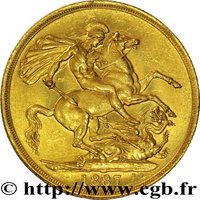
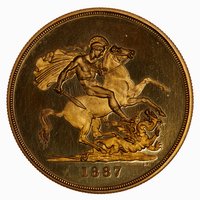
The domestic currency in circulation was a mix of gold sovereigns and half-sovereigns, Bank of England notes (primarily for larger transactions), and a vast quantity of token coinage for everyday use. Notably, the lowest-value Bank of England note was £5, a substantial sum equivalent to several weeks' wages for a labourer. This created a practical reliance on gold coin for routine commerce. The year 1887 itself saw the minting of a new "Jubilee Head" gold sovereign, celebrating Queen Victoria's Golden Jubilee, which became a symbol of imperial financial strength.
However, this apparent stability masked underlying tensions. Agricultural depression and price deflation in the late 19th century led to debt burdens and social unrest, with some groups, notably farmers and early proponents of bimetallism, criticising the gold standard for its deflationary pressure. Furthermore, recurrent financial crises, like the collapse of Overend, Gurney and Company in 1866, had exposed the system's vulnerability to liquidity panics. While 1887 was not a year of crisis, these fault lines were present, setting the stage for future debates about monetary management that would intensify in the next century.
The domestic currency in circulation was a mix of gold sovereigns and half-sovereigns, Bank of England notes (primarily for larger transactions), and a vast quantity of token coinage for everyday use. Notably, the lowest-value Bank of England note was £5, a substantial sum equivalent to several weeks' wages for a labourer. This created a practical reliance on gold coin for routine commerce. The year 1887 itself saw the minting of a new "Jubilee Head" gold sovereign, celebrating Queen Victoria's Golden Jubilee, which became a symbol of imperial financial strength.
However, this apparent stability masked underlying tensions. Agricultural depression and price deflation in the late 19th century led to debt burdens and social unrest, with some groups, notably farmers and early proponents of bimetallism, criticising the gold standard for its deflationary pressure. Furthermore, recurrent financial crises, like the collapse of Overend, Gurney and Company in 1866, had exposed the system's vulnerability to liquidity panics. While 1887 was not a year of crisis, these fault lines were present, setting the stage for future debates about monetary management that would intensify in the next century.
🌱 Very Common