

1 millieme – Egypt
Add to wishlist
Egypt
Context
Year: 1917
Islamic (Hijri) Year:: 1335
Issuer: Egypt
Ruler: Hussein Kamel
Currency:
(since 1916)
Demonetized: Yes
Total mintage: 4,002,000
Material
Diameter: 18 mm
Weight: 3 g
Thickness: 1.7 mm
Shape: Round with a round hole
Composition: Copper-nickel
Technique: Milled
Alignment: Medal alignment
flip
References
KM: #
Numista: #5592
Value
Exchange value: 0.001 EGP
Obverse
Description:
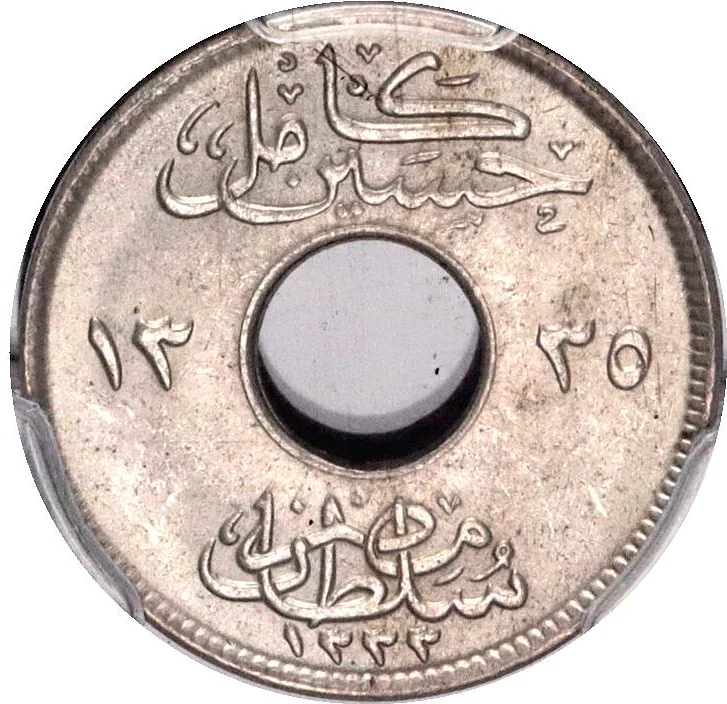
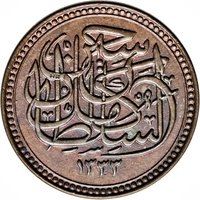
Center hole separates date from Sultan Hussein Kamil's legend and accession date. All obverses bear the date ١٣٣٥.
Inscription:
حسين كامل
٣٥ ١٣
مصر
سلطان
۱۳۳۳
٣٥ ١٣
مصر
سلطان
۱۳۳۳
Translation:
Hussein Kamel
35 13
Egypt
Sultan
1333
35 13
Egypt
Sultan
1333
Script: Arabic (naskh)
Language: Arabic
Reverse
Description:
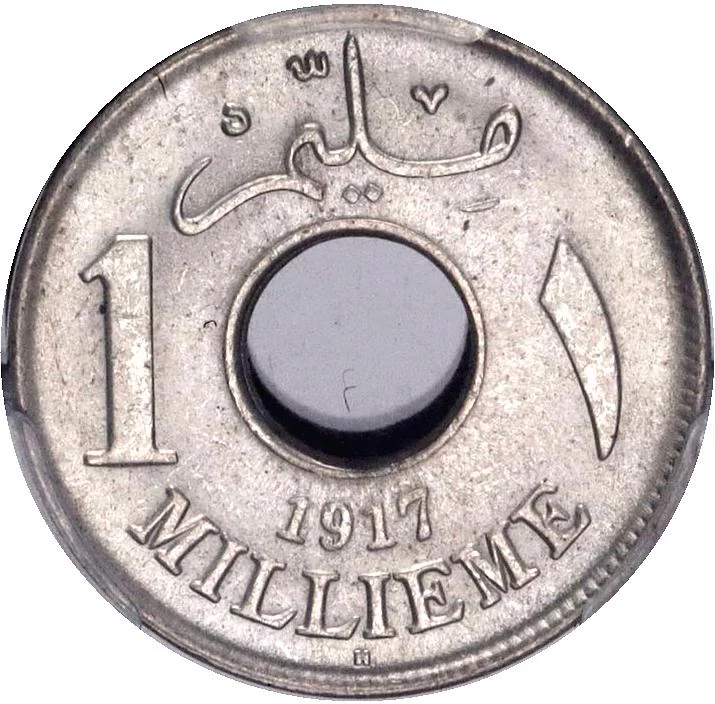
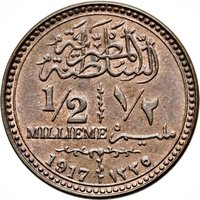
Denomination split by center hole, date beneath.
Inscription:
مليم
1 ١
1917
MILLIEME
1 ١
1917
MILLIEME
Translation:
One Millieme
1
1917
Millieme
1
1917
Millieme
Script: Arabic (naskh)
Language: Arabic
Designer: Hamed Effendi Serri
Edge
Plain
Mints
| Name | Mark |
|---|---|
| Mumbai / Bombay | — |
| Heaton and Sons / The Mint Birmingham | H |
Mintings
| Year | Mint Mark | Mintage | Quality | Collection |
|---|---|---|---|---|
| 1917 | — | 4,002,000 |
Historical background
In 1917, Egypt's currency situation was defined by its status as a British protectorate, established in 1914 after the outbreak of World War I. The country had officially moved off the bimetallic (gold and silver) standard and was operating under a de facto sterling exchange standard. The Egyptian pound (EE) was pegged to and fully backed by British pound sterling reserves held in London, at a fixed parity of EE 0.975 per £1 sterling. This arrangement ensured monetary stability but explicitly tied Egypt's economic fate to British fiscal policy and the demands of the war effort.
The war placed severe strain on this system. As a major military base and agricultural supplier for the Allied forces, Egypt experienced significant inflation due to increased government spending, supply chain disruptions, and a influx of Allied troops. The volume of paper currency in circulation expanded dramatically to finance British military operations and local procurement, raising concerns about the potential for depreciation. However, the strict sterling peg and the British Treasury's commitment to honour Egyptian currency notes in London largely maintained public confidence, preventing a collapse.
Consequently, the monetary landscape was one of controlled tension. While the formal structure appeared stable under the sterling guarantee, the underlying pressures were acute. The economy was distorted by wartime demands, with the currency system functioning primarily to facilitate British needs rather than domestic Egyptian economic development. This period solidified Egypt's financial integration into the British Empire, setting the stage for postwar debates about monetary sovereignty and economic independence that would intensify after the 1919 Egyptian Revolution.
The war placed severe strain on this system. As a major military base and agricultural supplier for the Allied forces, Egypt experienced significant inflation due to increased government spending, supply chain disruptions, and a influx of Allied troops. The volume of paper currency in circulation expanded dramatically to finance British military operations and local procurement, raising concerns about the potential for depreciation. However, the strict sterling peg and the British Treasury's commitment to honour Egyptian currency notes in London largely maintained public confidence, preventing a collapse.
Consequently, the monetary landscape was one of controlled tension. While the formal structure appeared stable under the sterling guarantee, the underlying pressures were acute. The economy was distorted by wartime demands, with the currency system functioning primarily to facilitate British needs rather than domestic Egyptian economic development. This period solidified Egypt's financial integration into the British Empire, setting the stage for postwar debates about monetary sovereignty and economic independence that would intensify after the 1919 Egyptian Revolution.
🌱 Common