

5 cents – Aruba
Add to wishlist
Netherlands
Context
Years: 1986–2023
Country: Netherlands
Issuer: Aruba
Ruler: Willem-Alexander
Currency:
(since 1986)
Total mintage: 17,545,851
Material
References
KM: #
Numista: #5589
Value
Exchange value: 0.05 AWG
Inflation-adjusted value: 0.11 AWG
Obverse
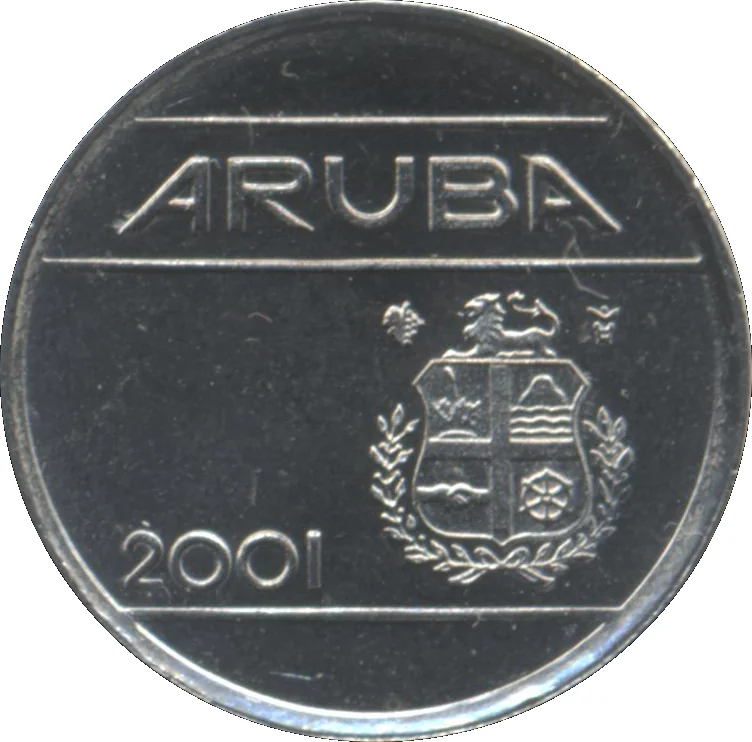
Description:
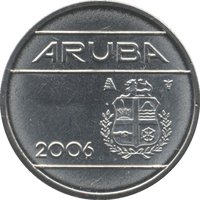
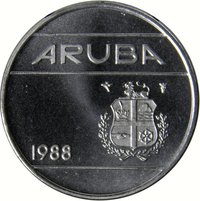
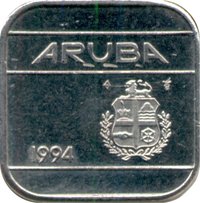
Coat of arms between lines. Year, privy, and mint mark.
Inscription:
ARUBA
2001
2001
Script: Latin
Engraver: Evelino Fingal
Reverse
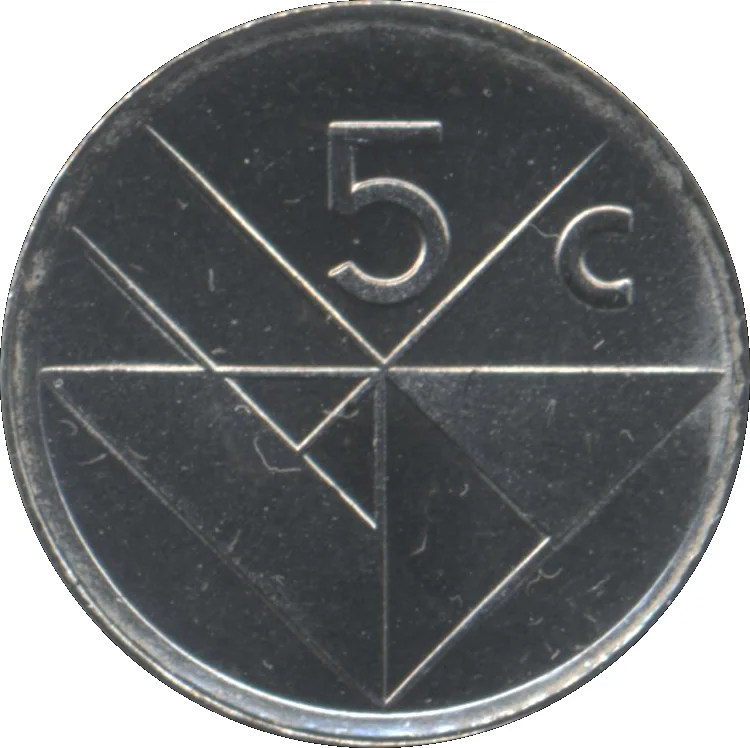
Description:
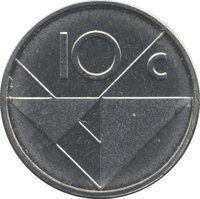
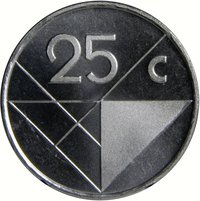
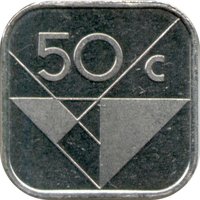
5 overline with solid shapes
Inscription:
5 c
Translation:
Five groszy
Script: Latin
Language: Polish
Engraver: Evelino Fingal
Edge
Plain
Categories
| Symbols> Coat of Arms |
Mints
| Name | Mark |
|---|---|
| Royal Dutch Mint | — |
Mintings
| Year | Mint Mark | Mintage | Quality | Collection |
|---|---|---|---|---|
| 1986 | — | 776,000 | ||
| 1987 | — | 461,651 | ||
| 1988 | — | 656,500 | ||
| 1989 | — | 770,000 | ||
| 1990 | — | 612,000 | ||
| 1991 | — | 412,000 | ||
| 1992 | — | 810,500 | ||
| 1993 | — | 709,100 | ||
| 1994 | — | 709,100 | ||
| 1995 | — | 808,500 | ||
| 1996 | — | 587,500 | ||
| 1997 | — | 535,500 | ||
| 1998 | — | 920,000 | ||
| 1999 | — | 823,000 | ||
| 2000 | — | 886,500 | ||
| 2001 | — | 946,900 | ||
| 2002 | — | 1,006,000 | ||
| 2003 | — | 1,104,100 | ||
| 2004 | — | 502,500 | ||
| 2005 | — | 602,500 | ||
| 2006 | — | 602,000 | ||
| 2007 | — | 1,152,000 | ||
| 2008 | — | 1,152,000 | ||
| 2009 | — | — | ||
| 2010 | — | — | ||
| 2011 | — | — | ||
| 2012 | — | — | ||
| 2013 | — | — | ||
| 2014 | — | — | ||
| 2015 | — | — | ||
| 2016 | — | — | ||
| 2018 | — | — | ||
| 2019 | — | — | ||
| 2020 | — | — | ||
| 2022 | — | — | ||
| 2023 | — | — |
Historical background
In 1986, Aruba's currency situation was directly tied to its historic political transition. On January 1st of that year, after a long process of "Status Aparte," Aruba seceded from the Netherlands Antilles federation to become an autonomous country within the Kingdom of the Netherlands. This political change, however, did not immediately alter its monetary system. The island continued to use the Netherlands Antillean guilder (ANG), which had been pegged to the U.S. dollar at a fixed rate of 1.79 ANG = 1 USD since 1971, a stability managed by the Bank of the Netherlands Antilles in Curaçao.
This continuity provided crucial economic stability during a period of significant political upheaval. The peg to the strong U.S. dollar helped control inflation and fostered confidence for the island's vital tourism industry, which was predominantly sourced from the United States. For Arubans and the business community, daily transactions and financial planning remained unchanged; the banknotes and coins in circulation were still those issued for the now-dissolving Netherlands Antilles.
Looking ahead, the 1986 transition agreement included provisions for Aruba to eventually establish its own central bank and introduce a distinct currency, the Aruban florin. This was planned to maintain the same peg to the U.S. dollar, ensuring a seamless future transition. Thus, the currency situation in 1986 was one of deliberate stability, with the familiar Netherlands Antillean guilder serving as a bridge between the old political structure and Aruba's new autonomous future, with a carefully planned monetary evolution on the horizon.
This continuity provided crucial economic stability during a period of significant political upheaval. The peg to the strong U.S. dollar helped control inflation and fostered confidence for the island's vital tourism industry, which was predominantly sourced from the United States. For Arubans and the business community, daily transactions and financial planning remained unchanged; the banknotes and coins in circulation were still those issued for the now-dissolving Netherlands Antilles.
Looking ahead, the 1986 transition agreement included provisions for Aruba to eventually establish its own central bank and introduce a distinct currency, the Aruban florin. This was planned to maintain the same peg to the U.S. dollar, ensuring a seamless future transition. Thus, the currency situation in 1986 was one of deliberate stability, with the familiar Netherlands Antillean guilder serving as a bridge between the old political structure and Aruba's new autonomous future, with a carefully planned monetary evolution on the horizon.
Series: 1986 Aruba circulation coins
🌱 Very Common