

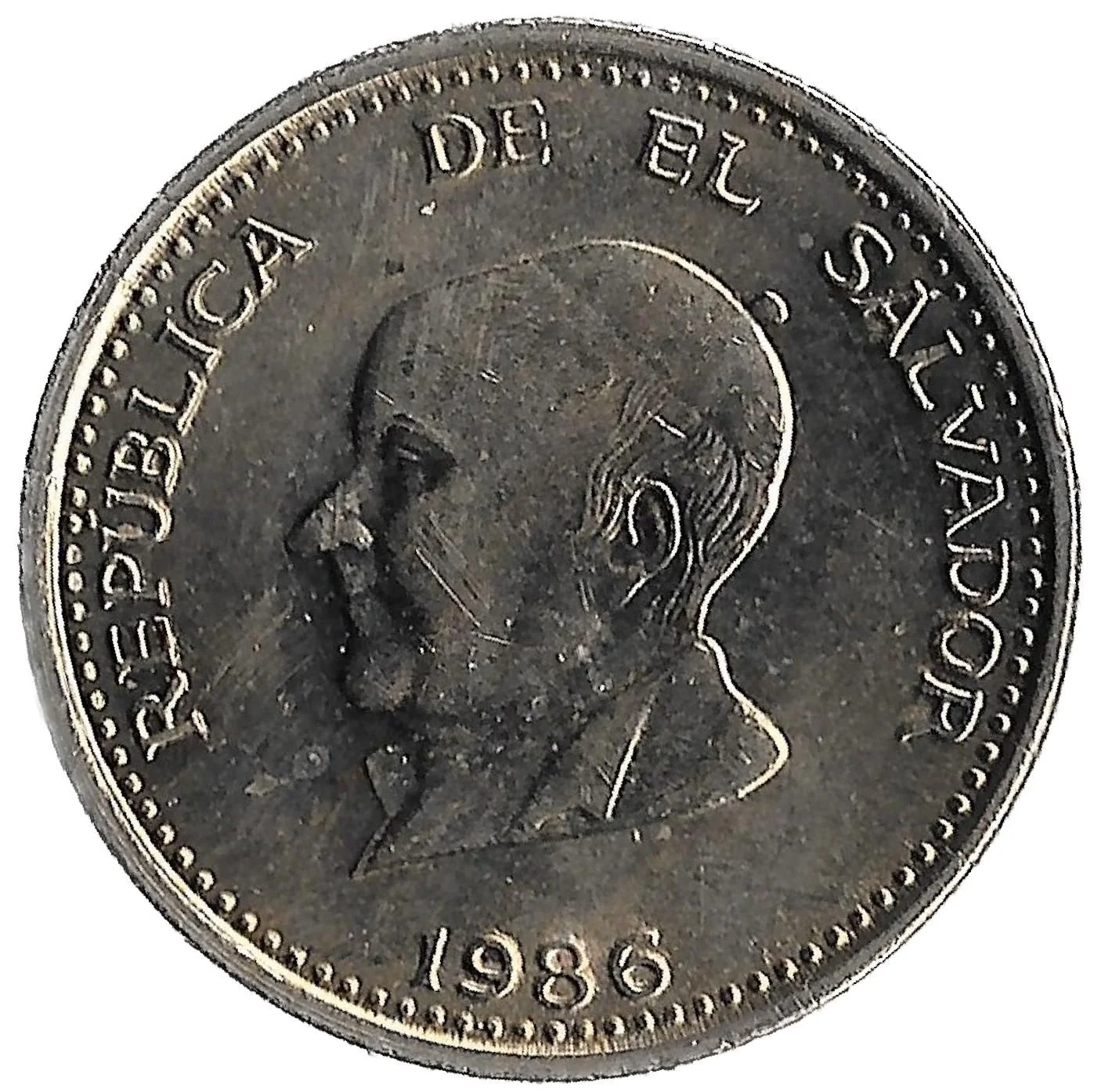
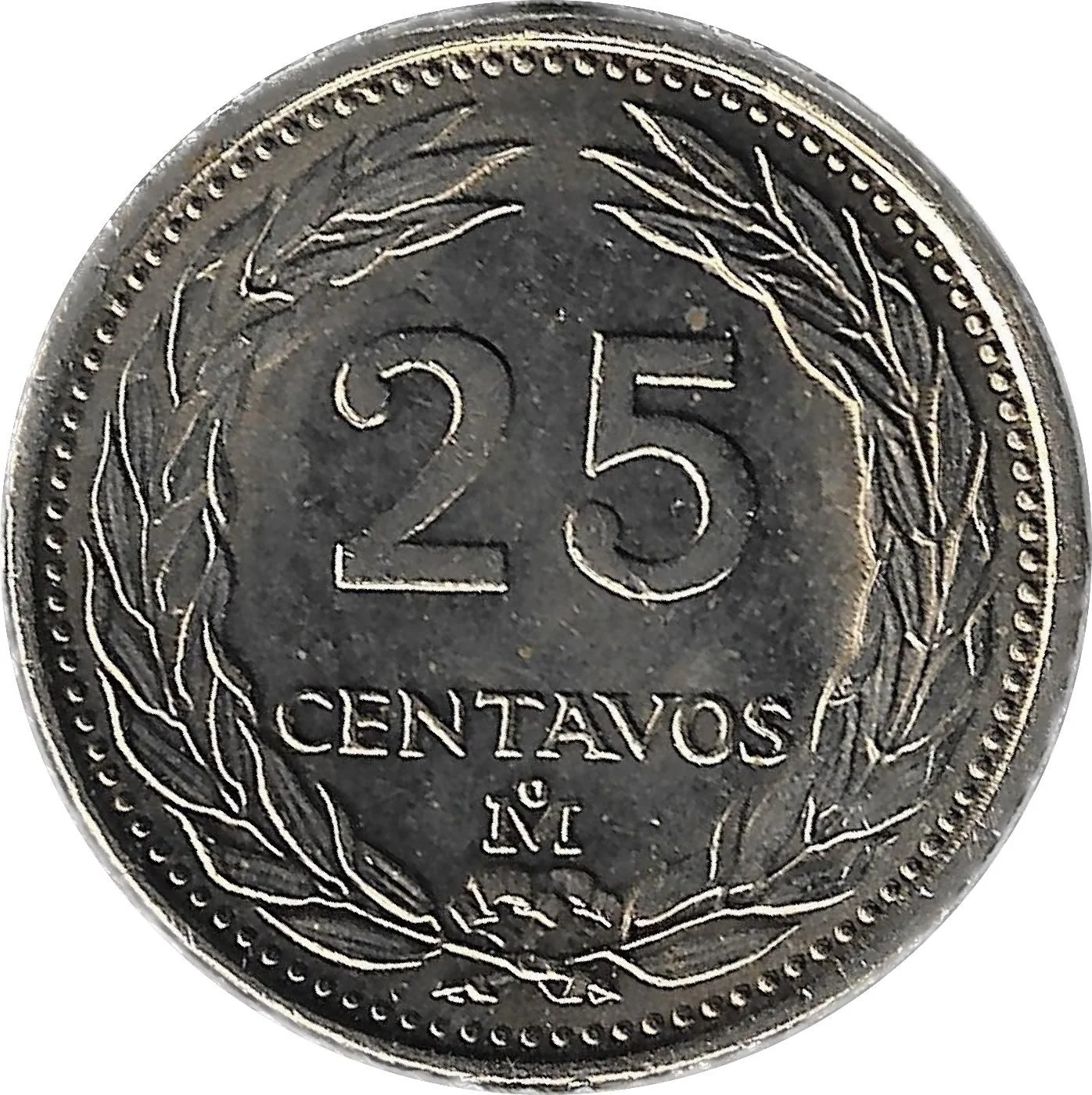
25 centavos – El Salvador
Add to wishlist
El Salvador
Context
Year: 1986
Issuer: El Salvador
Issuing organization: Central Reserve Bank of El Salvador
Period:
(since 1841)
Currency:
(since 1892)
Demonetization: 1 January 2001
Total mintage: 21,000,000
Material
Diameter: 18 mm
Weight: 2.5 g
Shape: Round
Composition: Copper-nickel
Technique: Milled
Alignment: Coin alignment
flip
References
KM: #
Numista: #5583
Value
Exchange value: 0.25 SVC
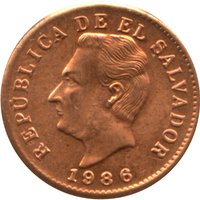
Obverse
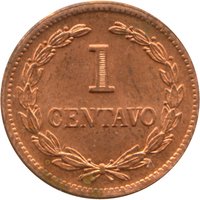
Reverse
Edge
Reeded
Categories
| Symbol> Wreath |
| Person> Politician |
Mints
| Name | Mark |
|---|---|
| Mexican Mint | (Mo) |
Mintings
| Year | Mint Mark | Mintage | Quality | Collection |
|---|---|---|---|---|
| 1986 | Mo | — | Proof | |
| 1986 | Mo | 21,000,000 |
Historical background
In 1986, El Salvador's currency situation was defined by a rigid and overvalued fixed exchange rate for the colón, pegged at 2.5 to the US dollar since 1934. This peg was maintained by the Central Reserve Bank through strict capital controls and required the surrender of all foreign exchange earnings to the monetary authority. While this system provided a façade of stability, it created severe economic distortions. The overvalued colón made Salvadoran exports expensive and uncompetitive on the world market, while making imports artificially cheap, which hurt domestic industries and contributed to a persistent and growing trade deficit.
The fixed exchange rate existed within a context of profound economic and political crisis. A devastating civil war, ongoing since 1979, crippled production, destroyed infrastructure, and led to massive capital flight. To finance both the war effort and a large public sector deficit, the government increasingly resorted to printing money, fueling significant inflationary pressures. This created a stark contradiction: an officially stable exchange rate alongside rising domestic prices, which further encouraged a thriving black market for US dollars where the colón traded at a significant discount, reflecting its true market weakness.
Consequently, 1986 represented the final year of this unsustainable monetary regime. The fixed rate, defended at great cost to dwindling foreign reserves, had become completely detached from economic reality. The distortions it created stifled growth and exacerbated the country's fiscal woes. This set the stage for a major economic liberalization program in 1987, which included a series of controlled devaluations, moving toward a crawling peg system to correct the overvaluation and begin aligning the official exchange rate with market forces.
The fixed exchange rate existed within a context of profound economic and political crisis. A devastating civil war, ongoing since 1979, crippled production, destroyed infrastructure, and led to massive capital flight. To finance both the war effort and a large public sector deficit, the government increasingly resorted to printing money, fueling significant inflationary pressures. This created a stark contradiction: an officially stable exchange rate alongside rising domestic prices, which further encouraged a thriving black market for US dollars where the colón traded at a significant discount, reflecting its true market weakness.
Consequently, 1986 represented the final year of this unsustainable monetary regime. The fixed rate, defended at great cost to dwindling foreign reserves, had become completely detached from economic reality. The distortions it created stifled growth and exacerbated the country's fiscal woes. This set the stage for a major economic liberalization program in 1987, which included a series of controlled devaluations, moving toward a crawling peg system to correct the overvaluation and begin aligning the official exchange rate with market forces.
🌱 Common