

20 cents – French Indochina
Add to wishlist
Context
Years: 1921–1937
Issuer: French Indochina
Period:
(1870—1940)
Currency:
(1880—1952)
Demonetized: Yes
Total mintage: 48,299,000
Material
References
KM: #
Numista: #10064
Value
Exchange value: 0.20 ICFP
Bullion value: $8.94
Obverse
Description:
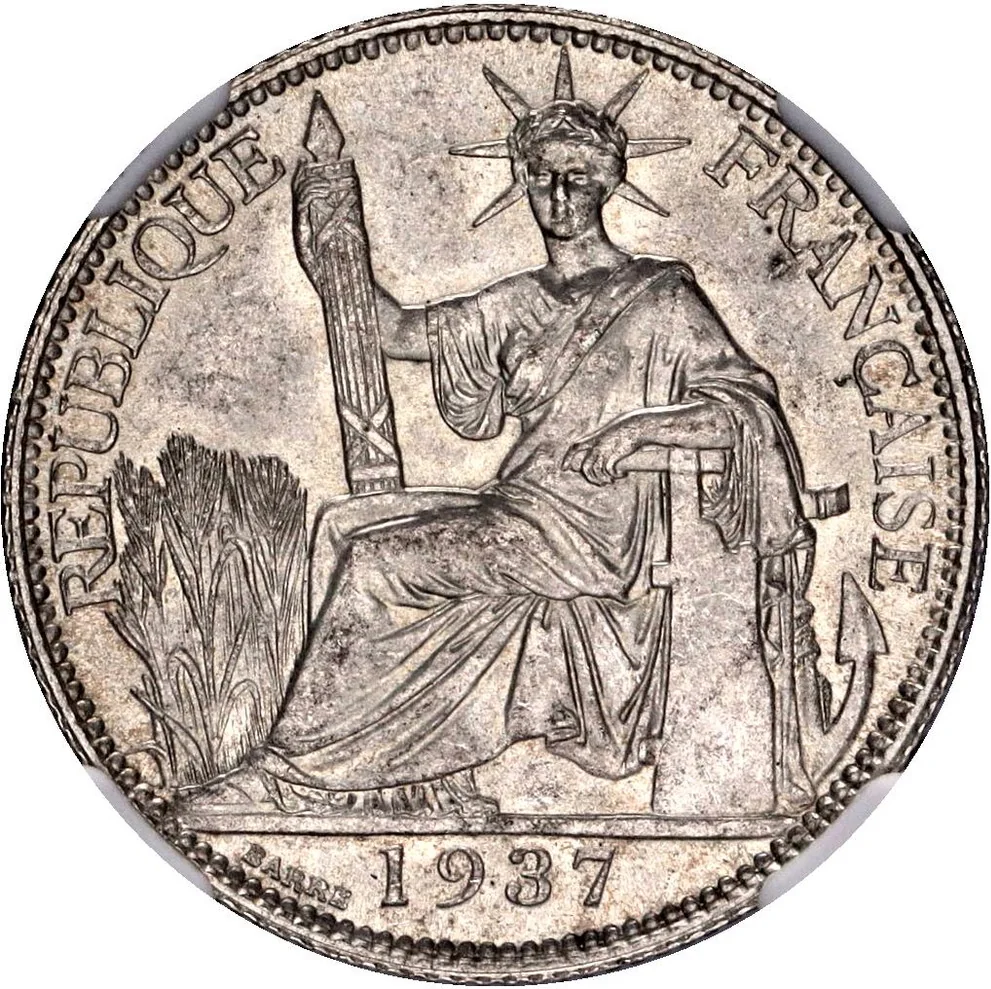
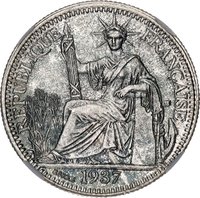
Marianne seated left, holding fasces, date below.
Inscription:
REPUBLIQUE FRANÇAISE
1937
BARRE
1937
BARRE
Translation:
FRENCH REPUBLIC
1937
BARRE
1937
BARRE
Script: Latin
Language: French
Engraver: Jean-Auguste Barre
Reverse
Description:
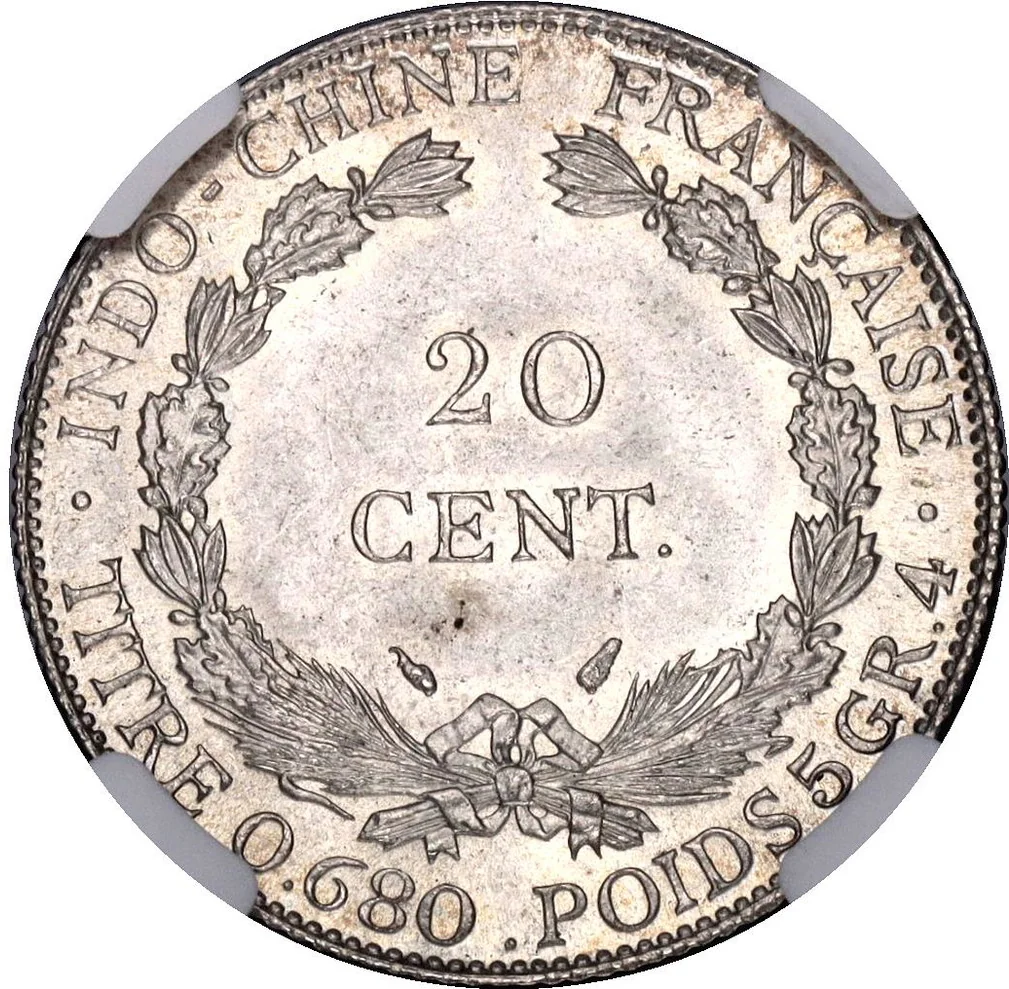
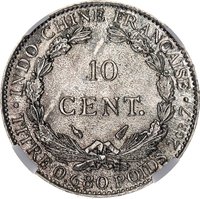
Wreath denomination
Inscription:
INDO-CHINE FRANÇAISE
20
CENT.
TITRE 0.680.POIDS 5GR.4
20
CENT.
TITRE 0.680.POIDS 5GR.4
Translation:
FRENCH INDO-CHINA
20
CENTS
TITLE 0.680.WEIGHT 5GR.4
20
CENTS
TITLE 0.680.WEIGHT 5GR.4
Script: Latin
Language: French
Engraver: Jean-Auguste Barre
Edge
Reeded
Mints
| Name | Mark |
|---|---|
| Monnaie de Paris | (A) |
Mintings
| Year | Mint Mark | Mintage | Quality | Collection |
|---|---|---|---|---|
| 1921 | A | 3,663,000 | ||
| 1922 | A | 5,812,000 | ||
| 1923 | A | 7,109,000 | ||
| 1924 | A | 1,400,000 | ||
| 1925 | A | 2,556,000 | ||
| 1927 | A | 3,245,000 | ||
| 1928 | A | 794,000 | ||
| 1929 | A | 644,000 | ||
| 1930 | A | 5,576,000 | ||
| 1937 | — | 17,500,000 |
Historical background
In 1921, the currency situation in French Indochina was defined by the exclusive dominance of the Piastre de Commerce, a silver-based currency issued by the government-controlled Banque de l'Indochine. Established in the late 19th century, this system was designed to stabilize trade and integrate the colony into the French economic sphere. The piastre was pegged not to the French franc but to the value of silver on the international market, which gave it a unique and often problematic independence. Consequently, its exchange rate against the franc fluctuated significantly, at times making the piastre far more valuable in Hong Kong or Singapore than in Paris, much to the frustration of metropolitan French businesses and officials.
This monetary autonomy created persistent economic tensions. French exporters and investors complained that the strong, silver-backed piastre made their goods expensive in the region, hindering trade, while local Vietnamese, Cambodian, and Lao populations saw the currency as an instrument of colonial extraction. The Banque de l'Indochine, holding a monopoly on issuance, operated with considerable profit, further fueling resentment. By 1921, pressure was mounting from Paris to abandon the silver standard and peg the piastre directly to the franc to better align the colony's economy with metropolitan interests.
Thus, 1921 stood as a pivotal year within a prolonged debate. It fell in a period between the dramatic silver price spikes during and after World War I and the eventual, decisive reform in 1930 when the piastre was finally pegged to the franc. The discussions throughout the early 1920s centered on finding a balance between facilitating French capital flows and maintaining the currency's stability for regional commerce. The situation underscored the fundamental colonial conflict between administering Indochina as a profitable, semi-autonomous economic unit within Asia and subordinating it fully to the needs of the metropolitan economy.
This monetary autonomy created persistent economic tensions. French exporters and investors complained that the strong, silver-backed piastre made their goods expensive in the region, hindering trade, while local Vietnamese, Cambodian, and Lao populations saw the currency as an instrument of colonial extraction. The Banque de l'Indochine, holding a monopoly on issuance, operated with considerable profit, further fueling resentment. By 1921, pressure was mounting from Paris to abandon the silver standard and peg the piastre directly to the franc to better align the colony's economy with metropolitan interests.
Thus, 1921 stood as a pivotal year within a prolonged debate. It fell in a period between the dramatic silver price spikes during and after World War I and the eventual, decisive reform in 1930 when the piastre was finally pegged to the franc. The discussions throughout the early 1920s centered on finding a balance between facilitating French capital flows and maintaining the currency's stability for regional commerce. The situation underscored the fundamental colonial conflict between administering Indochina as a profitable, semi-autonomous economic unit within Asia and subordinating it fully to the needs of the metropolitan economy.
🌱 Common